10 Famous Korean Food Chains Every Traveler Should Try
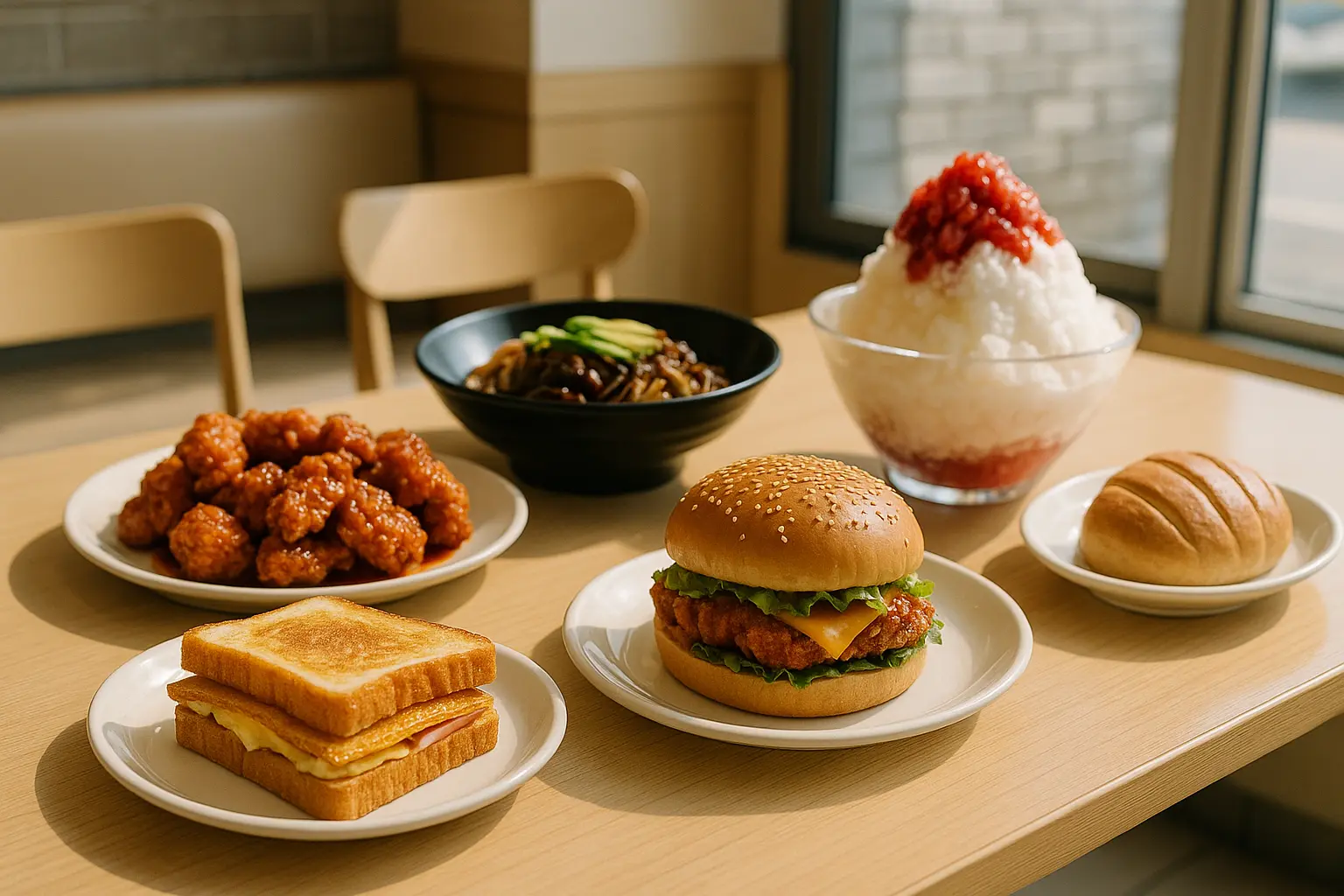
Korea’s best meal may come from a family restaurant with six tables. But when you have just landed, cannot read the menu and need dinner near the hotel, a good chain is useful in a way that restaurant snobbery is not. Chains give you recognizable signs, repeatable signature dishes and branches that are usually easy to locate in Seoul, Busan and Jeju.
This is not an audited ranking by sales or store count. It is our traveler-first shortlist: Korean-born or Korea-defining chains with broad visibility, a clear signature order and enough consistency that we would send a visiting friend there. Search the Korean name in Naver Map or KakaoMap; Google Maps can miss branches or show stale hours.
- Kyochon Chicken — Thin, crisp soy-garlic chicken.
- bhc Chicken — Big flavors, including cheese-seasoned chicken.
- Mom’s Touch — A Korean chicken burger that eats like an actual piece of chicken.
- Lotteria — Korea’s familiar fast-food institution and home of the bulgogi burger.
- Bonjuk & Bibimbap — Gentle rice porridge and dependable one-bowl meals.
- Hong Kong Banjeom 0410 — Korean-Chinese comfort food, especially jajangmyeon.
- Isaac Toast — Sweet-savory Korean breakfast toast cooked to order.
- Myeongrang Hot Dog — Korean corn dogs with cheese, sausage and crisp coatings.
- Sulbing — Shareable Korean shaved ice.
- Paris Baguette — The Korean bakery stop that solves breakfast and train snacks.
How to find them: Copy the Hangul name from each heading into Naver Map or KakaoMap, then filter by distance. Check recent photos to confirm that a chicken branch has seats; many are designed mainly for delivery and pickup.
How we chose these ten
We prioritized chains with a recognizable Korean signature, branches a traveler can realistically encounter, a straightforward first order and enough consistency to work as a backup in more than one city. This is why the list mixes full meals, snacks and dessert rather than pretending ten chicken brands make a useful itinerary.
🍗 Korean chicken chains: 1–2
1. Kyochon Chicken (교촌치킨)
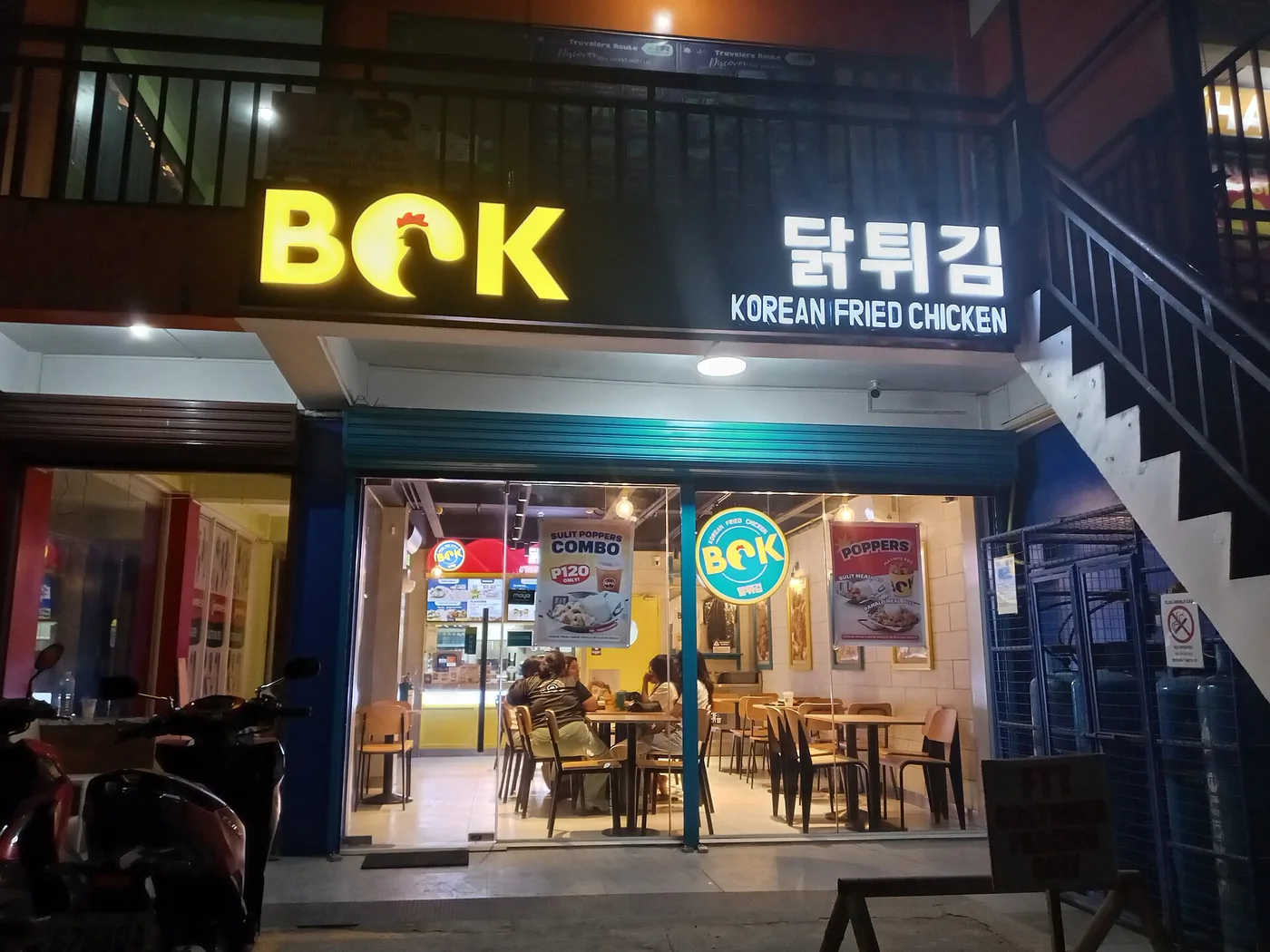
Kyochon is the chain we choose when someone wants Korean fried chicken but does not want a thick, heavy crust. The signature Kyochon Original flavor is brushed with a salty-sweet soy-and-garlic glaze; the Red series is genuinely hot, while Honey is the safer crowd-pleaser. Pieces tend to be smaller and crisp rather than heavily battered.
Orders are made for sharing and can take longer than a fast-food meal because chicken is cooked after you order. Look for a branch marked as a restaurant rather than a pickup counter, then order a mixed or half-and-half option if the branch offers one. Beer is the obvious partner.
2. bhc Chicken (BHC 치킨)
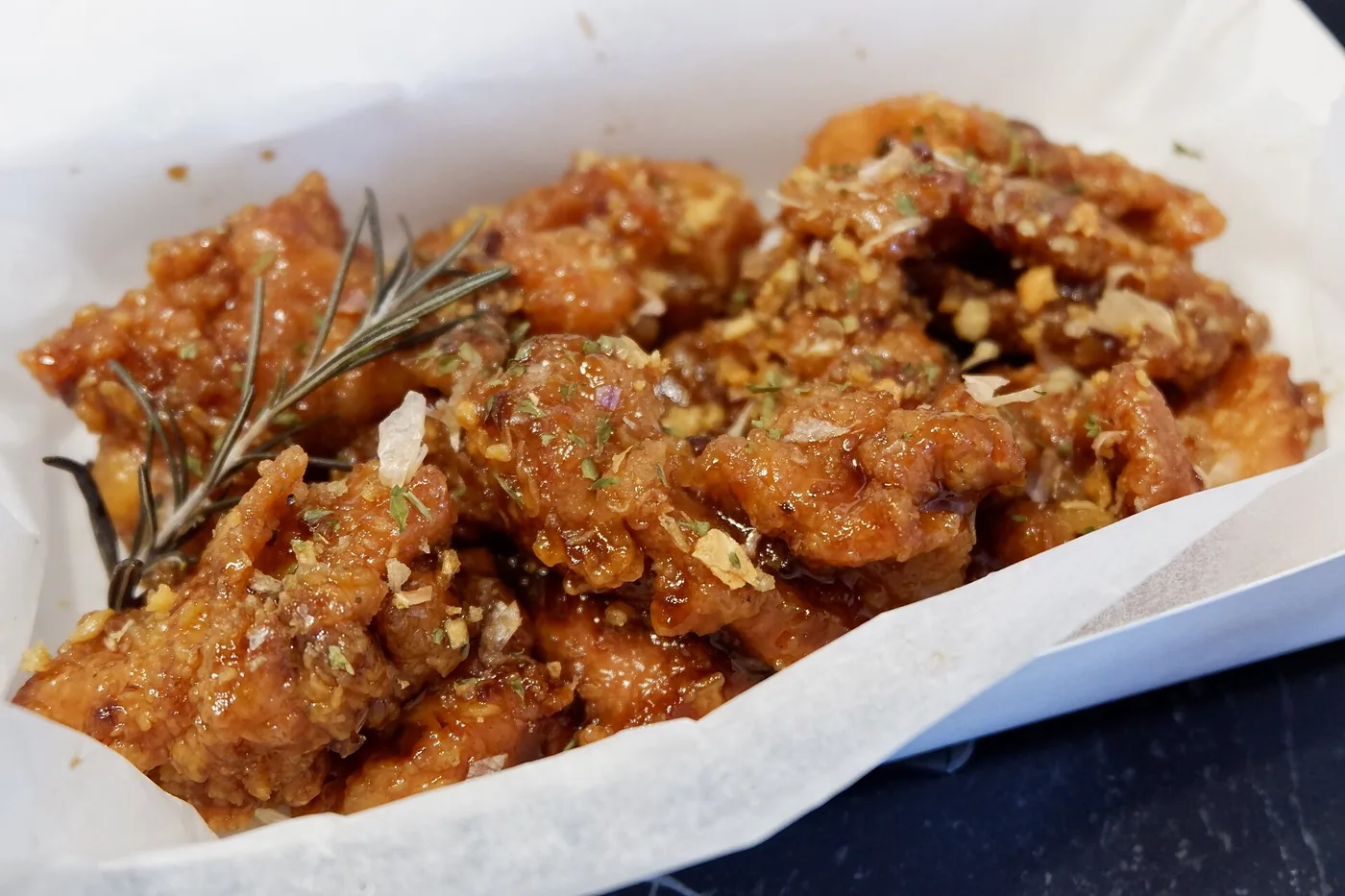
bhc is for the other side of the Korean chicken spectrum: louder seasoning and playful flavors. Bburinkle is its famous order—fried chicken dusted with a sweet-savory cheese seasoning and commonly paired with a creamy dipping sauce. It is fun, messy and more divisive than soy garlic. If powdered cheese is not your thing, choose a plain or sauced chicken instead.
The Korean menu distinguishes bone-in (ppyeo) and boneless (sunsal). Boneless is easier in a hotel room or park, but the cut of meat can differ by product. Check the photo and portion before paying; a full chicken order is usually a meal for two or more, not a personal snack.
Ordering tip: At chicken chains, ask for banban (half-and-half) when available. It is the easiest way to compare a plain or soy flavor with a sweeter or spicier one without buying two full orders.
🍔 Korean burger chains: 3–4
3. Mom’s Touch (맘스터치)
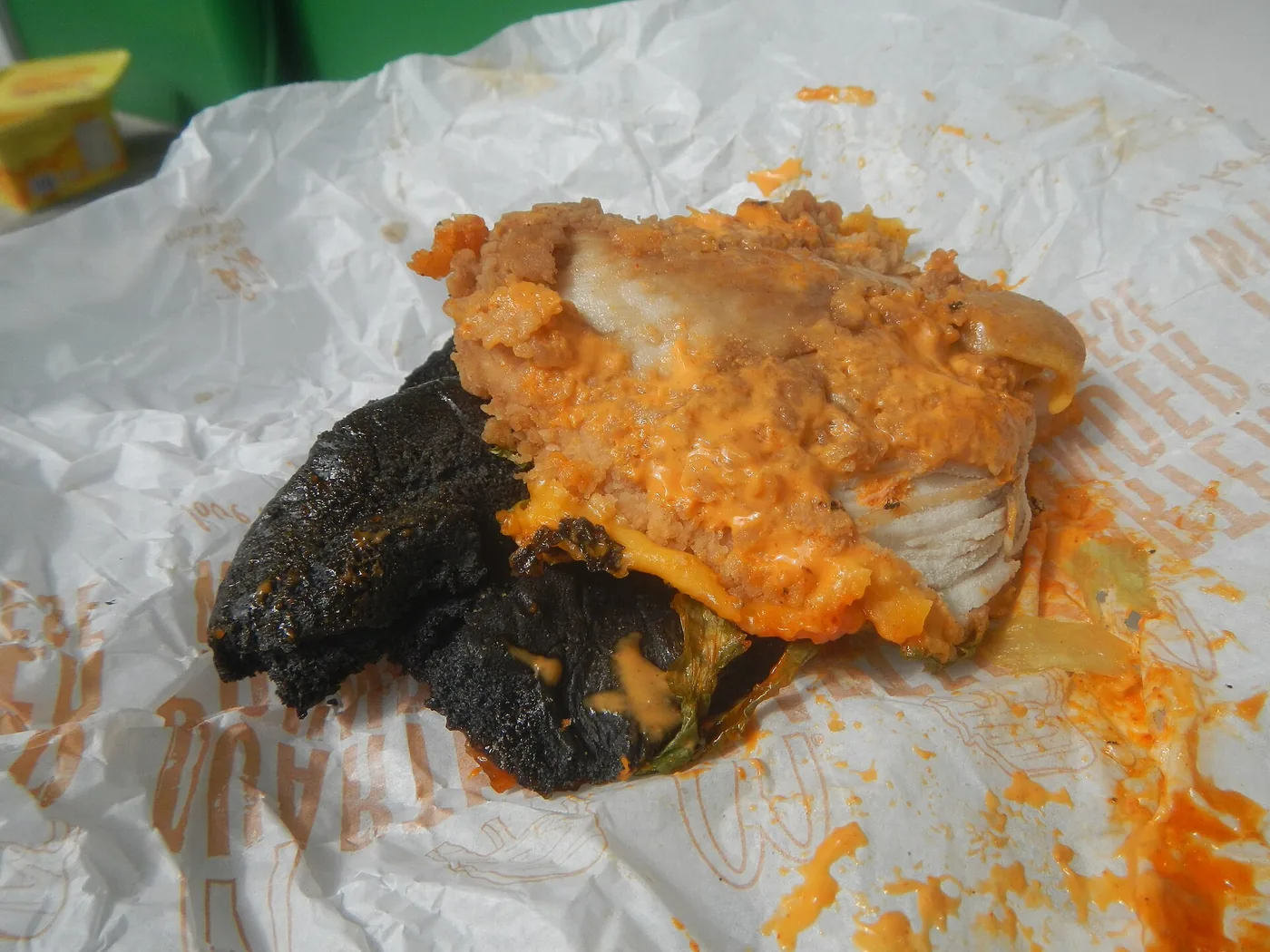
Mom’s Touch looks like a burger chain, but its identity is fried chicken. The standard first order is the Ssai Burger (싸이버거): a craggy chicken-thigh fillet, lettuce and sauce in a soft bun. It is juicier and less uniform than a formed fast-food patty, which is exactly the appeal. Cajun-style fries make the sensible set.
Order at the counter or kiosk and note whether the displayed price is for the burger alone (danpum) or a set (seteu). Menus rotate, so we would not cross town for a limited edition. The basic Ssai Burger is the useful benchmark and often the better value.
4. Lotteria (롯데리아)
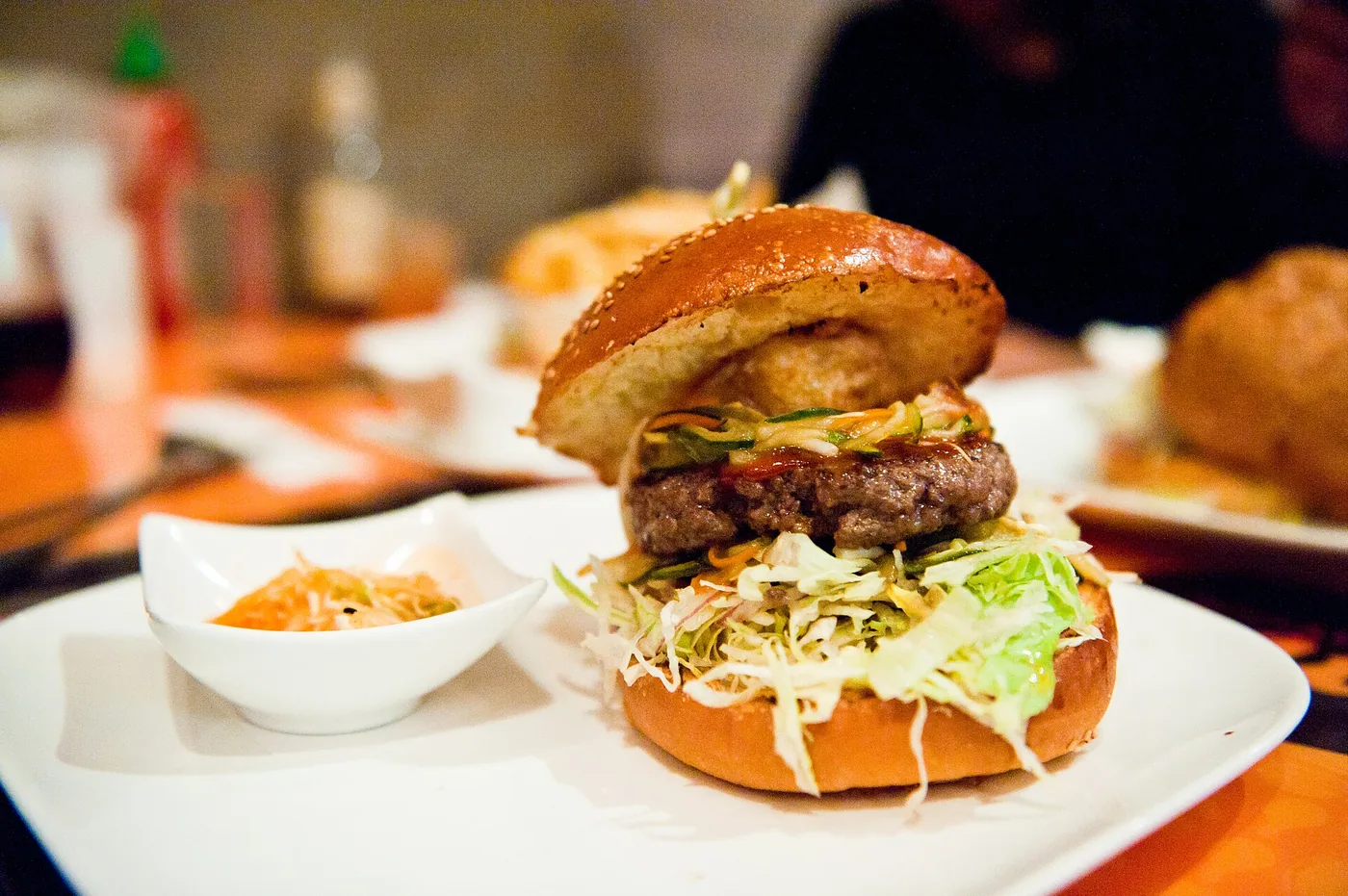
Lotteria is part of the everyday Korean fast-food landscape. Its most Korea-specific starting point is the Bulgogi Burger, built around a sweet soy-based sauce rather than an American-style grilled-beef profile. It is soft, saucy and unapologetically sweet. Seasonal shrimp, rice-bun and regional products come and go, so the menu can be more interesting than the familiar storefront suggests.
This is not our pick for the country’s greatest burger. It is useful for a quick meal at a station, mall or airport and for understanding what Korean fast food tastes like. If you already know Lotteria from another Asian country, prioritize Mom’s Touch or one of the Korean meal chains below.
🍚 One-bowl Korean meals: 5–6
5. Bonjuk & Bibimbap (본죽&비빔밥)
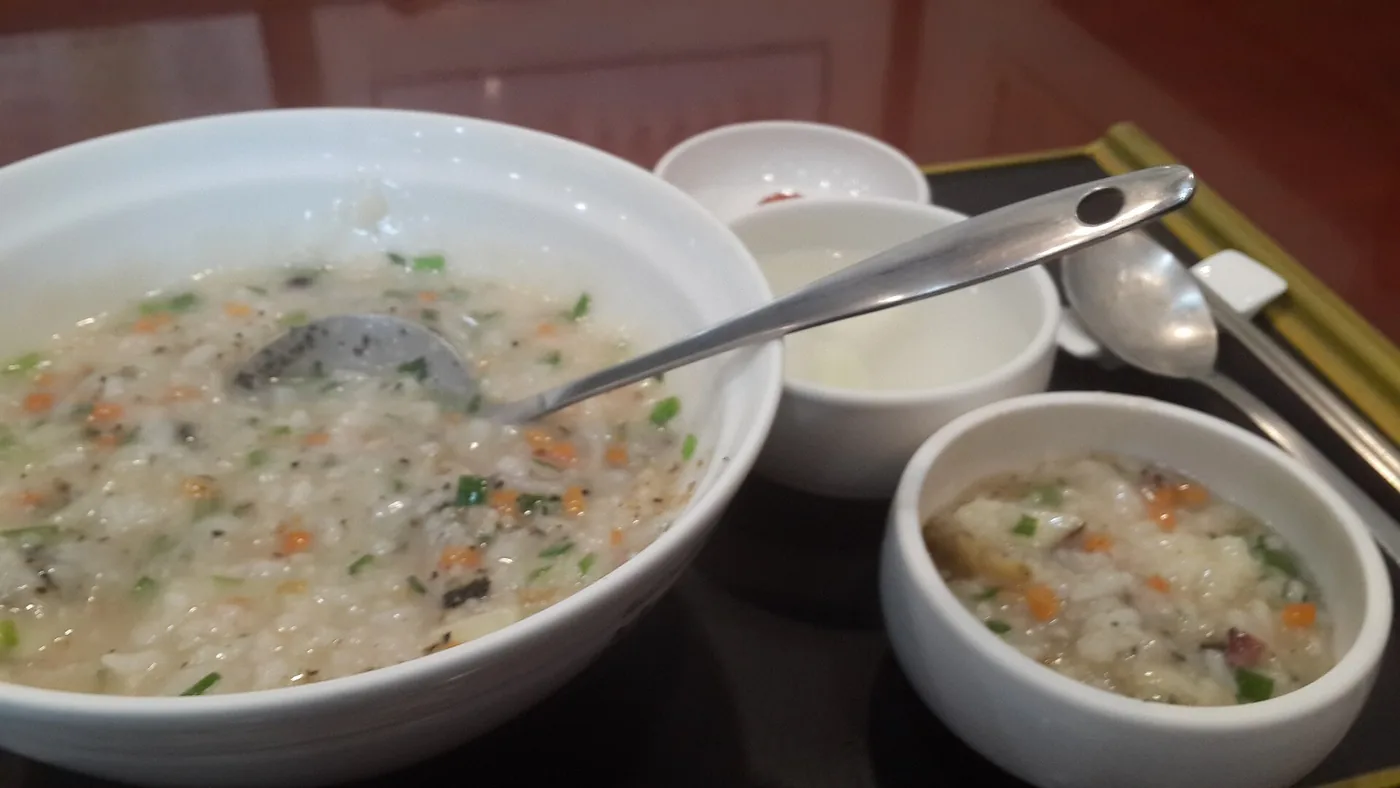
Bonjuk specializes in juk, slow-cooked rice porridge that Koreans eat when they want something warm, mild or restorative. Abalone porridge is the recognizable visitor order, while beef, mushroom, pumpkin and seafood versions broaden the menu. Some locations also carry bibimbap and heartier bowls under the combined Bonjuk & Bibimbap format.
One bowl is a full meal and works especially well for breakfast, solo dining, children or a tired stomach. Porridge arrives hotter and more filling than it looks. Seafood and meat may be finely chopped into the rice, so dietary restrictions need to be confirmed rather than judged from the surface.
6. Hong Kong Banjeom 0410 (홍콩반점0410)
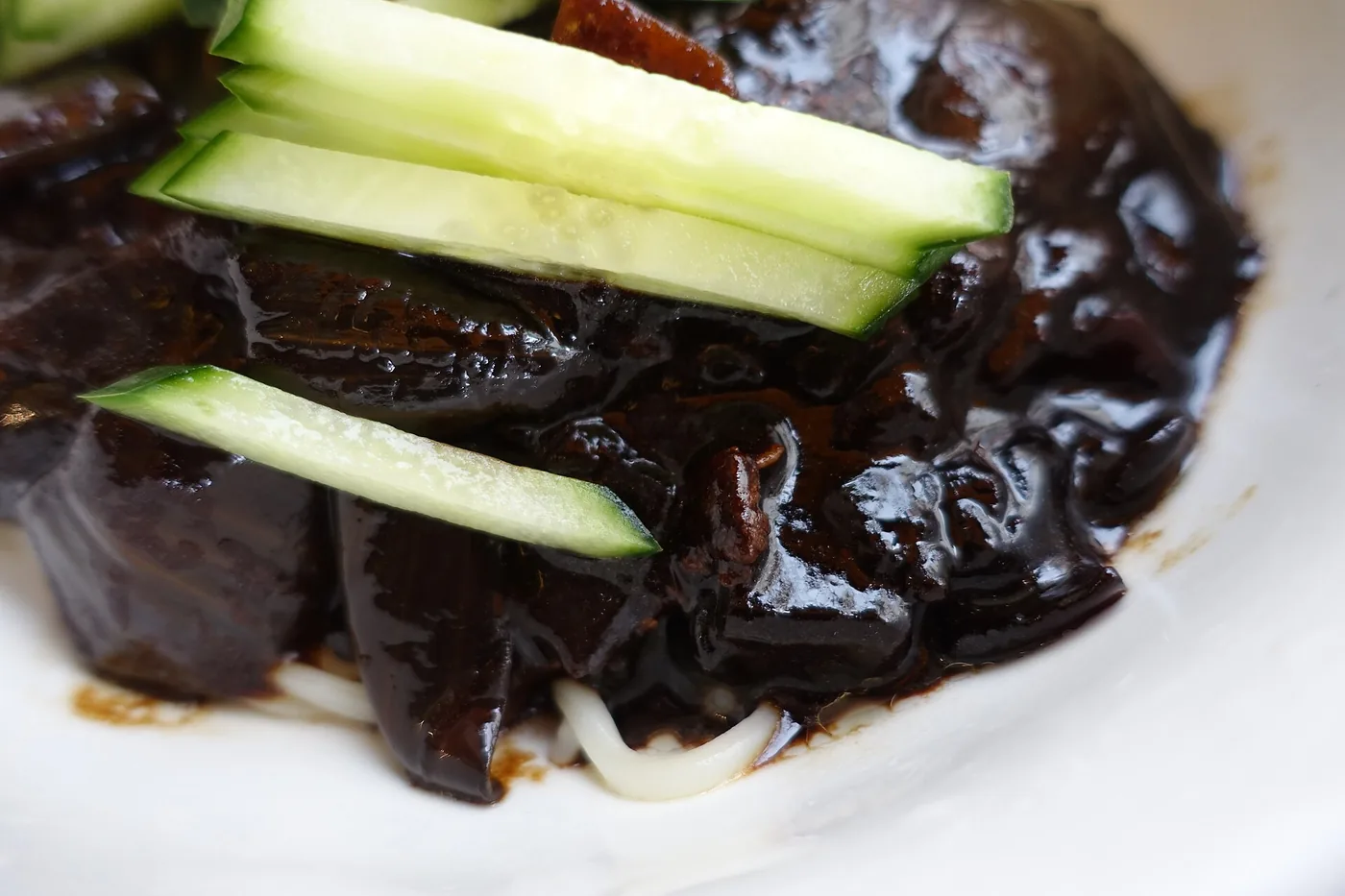
Despite the name, this is Korean-Chinese food: the localized cuisine built around jajangmyeon (noodles in black bean sauce), jjamppong (spicy seafood noodle soup) and tangsuyuk (sweet-and-sour pork). Start with jajangmyeon if you want mild comfort food; choose jjamppong for a red, seafood-heavy broth with real heat.
The practical advantage is clarity. The menu is short, the dishes arrive quickly and one noodle bowl is a normal solo order. Tangsuyuk is a shared plate. Jajang sauce commonly contains pork even though the dish looks like noodles and vegetables, so it is not a vegetarian fallback.
Spice check: Jajangmyeon is dark but mild; jjamppong is red and usually spicy. Color is a more useful warning here than the English word “noodles.”
🥪 Toast and corn dogs: 7–8
7. Isaac Toast (이삭토스트)
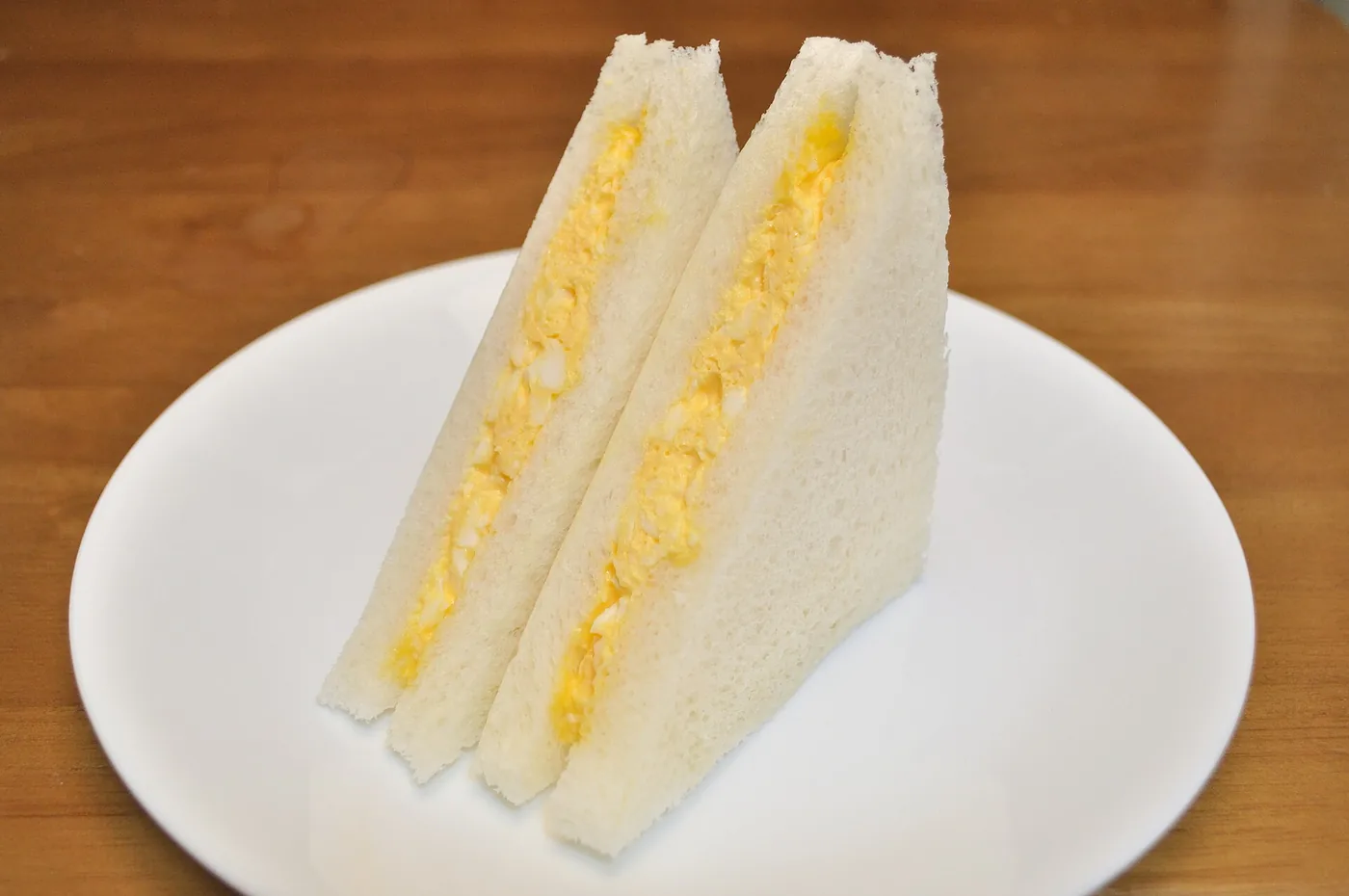
Isaac Toast turns humble white bread into a distinctly Korean breakfast: buttered toast, a thin egg-and-cabbage patty, cheese or meat and a sweet house-style sauce, pressed together while warm. Ham Special is an easy first order; bulgogi and hash-brown versions are heavier. The sweetness surprises visitors expecting a salty deli sandwich.
Most branches are small and optimized for takeaway. Order before boarding a train or starting a long walking day, but eat it while warm—the crisp-soft contrast fades in a bag. Vegetarian choices are limited because egg, cheese, ham and sauces appear throughout the menu.
8. Myeongrang Hot Dog (명랑핫도그)
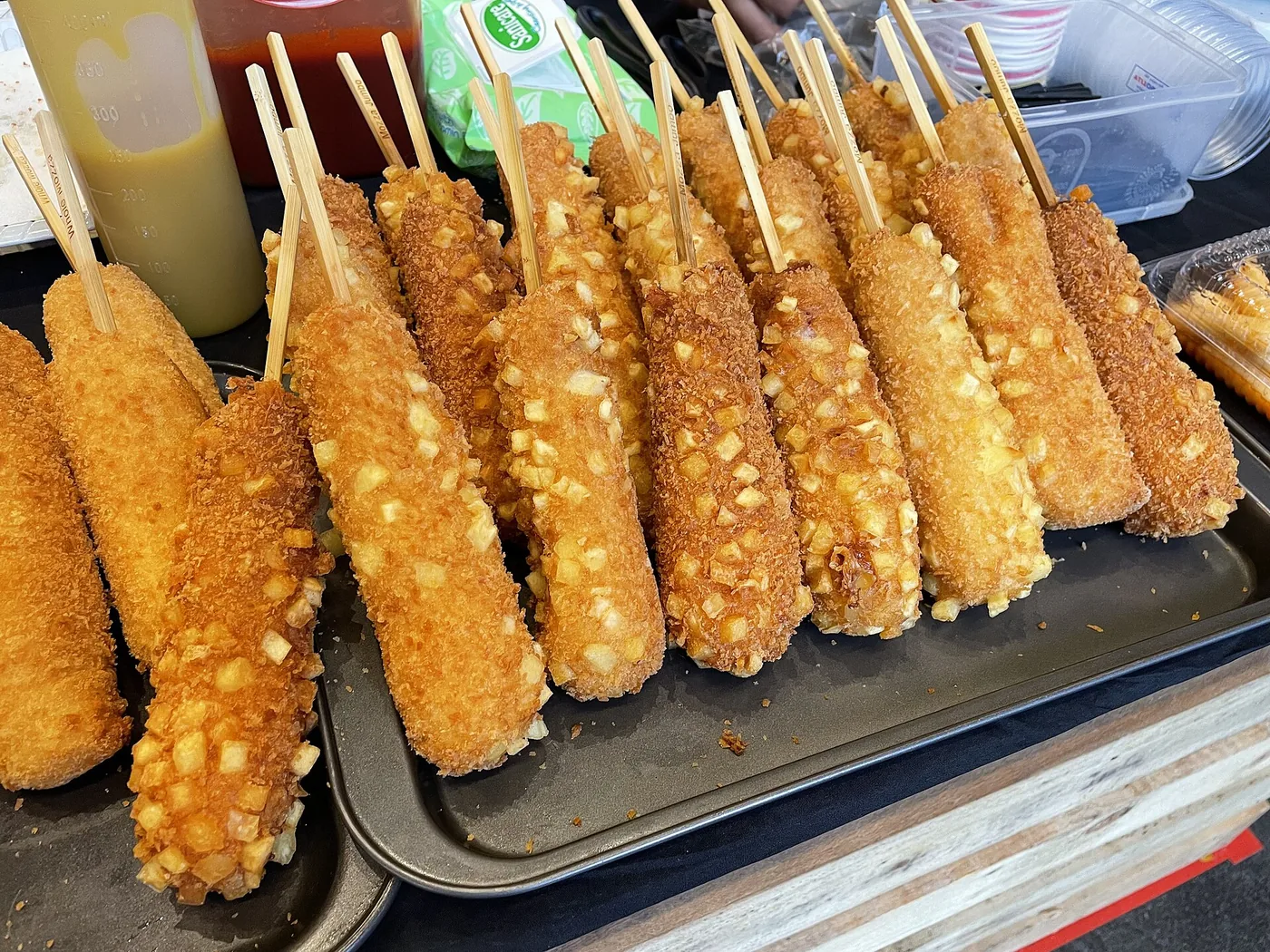
Korea calls this snack a hot dog, though English speakers will recognize the format as a corn dog. Myeongrang helped standardize the modern version: sausage, mozzarella or both inside a chewy batter, sometimes coated with potato cubes or other crunchy extras. Sugar on the outside is normal, followed by ketchup and mustard.
Choose half cheese and half sausage for the full texture without committing to an all-cheese pull. It is best eaten immediately and can be surprisingly filling. The viral photo is the stretch, but chasing the longest stretch usually means letting the snack cool while filming it—a poor trade.
With kids: Isaac Toast, a half-cheese corn dog and the basic Mom’s Touch burger are approachable, but sauces may still be sweet, spicy or egg-based. Ordering sauce lightly or on the side is more useful than assuming “not red” means simple.
🍧 Dessert and bakery chains: 9–10
9. Sulbing (설빙)
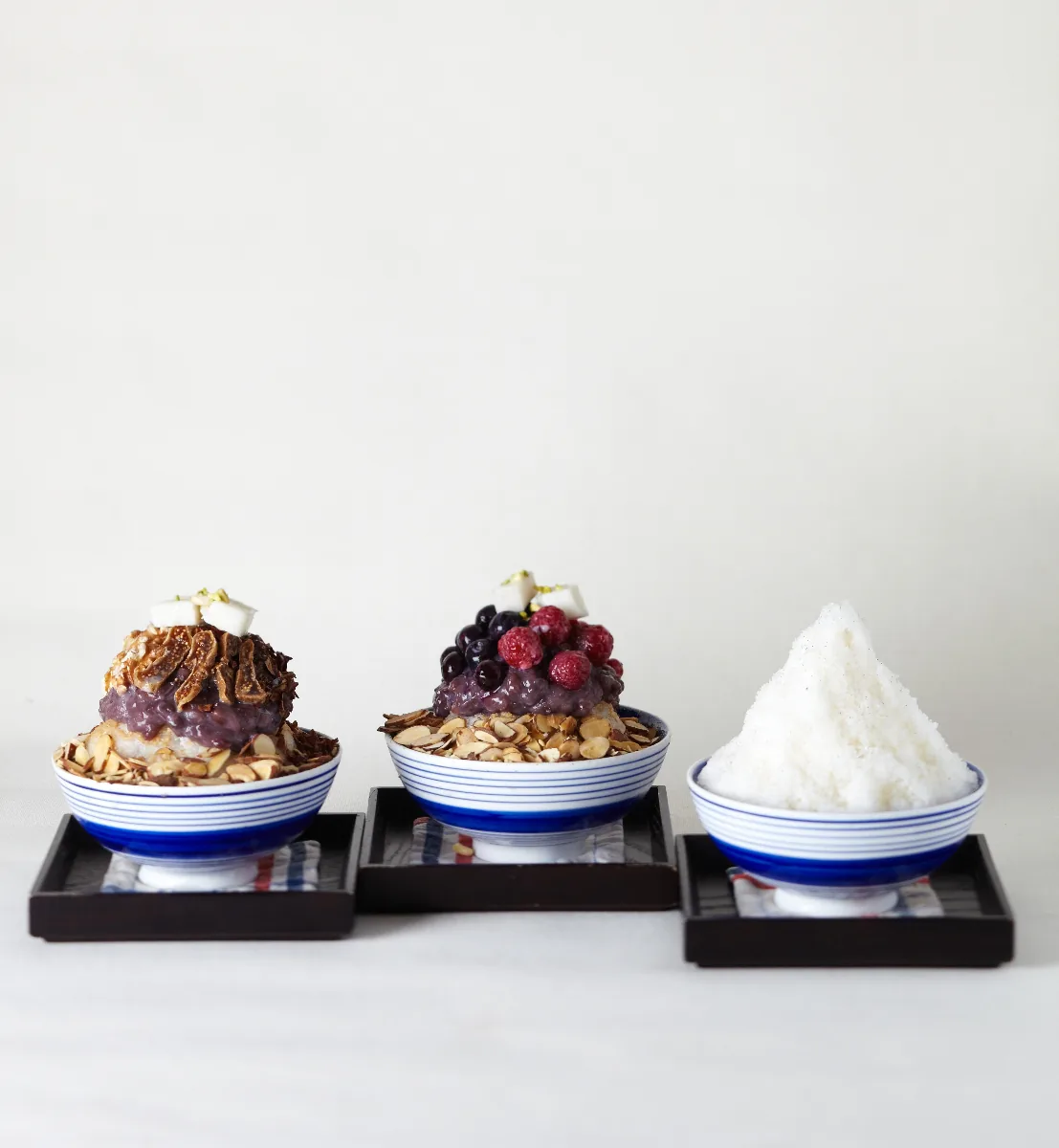
Sulbing is Korea’s best-known modern bingsu chain. Its foundational order is injeolmi sulbing: fine milk-based shaved ice covered with roasted soybean powder, chewy rice cake pieces and almonds. Mango, strawberry, chocolate and seasonal towers are easier for some first-timers, but injeolmi is the one that explains why the chain became famous.
Bowls are large and designed to share. Mix only part of the topping into the ice at a time so the powder does not fly everywhere or turn into paste. Condensed milk may be served separately. One bowl for two after dinner is reasonable; ordering one per person is an ambitious misunderstanding.
10. Paris Baguette (파리바게뜨)
Paris Baguette is a Korean bakery-café chain despite its French name. The experience is self-service: take a tray and tongs, choose soft breads, sausage pastries, croquettes, sandwiches or cake, then pay at the counter. The selection leans softer and sweeter than a traditional French bakery, with savory fillings often tucked inside glossy buns.
Use it for an early breakfast, KTX snack or emergency meal when restaurant hours do not cooperate. We would skip items pretending to be crusty European artisan bread and choose what Korean chains do well: filled buns, castella-style cakes and convenient savory pastries. Branch selection varies by neighborhood and time of day.
Save time: Food chains are backups, not a checklist that deserves cross-city detours. Search the Korean name when hunger arrives, choose a nearby branch with recent reviews, and save your long journeys for genuinely local restaurants and markets.
All ten chains can be found most easily in Seoul, and several have wide coverage in Busan and Jeju. Individual branches set their own hours, seating and menu availability. For dishes rather than brands, use our 20 must-eat Korean foods checklist; for gentler choices, see the non-spicy Korean food guide.
Photo credits
- 1. Kyochon Chicken — Wide Awake!, Wikimedia Commons, CC BY 4.0; resized and converted to WebP.
- 2. bhc Chicken — Vee Satayamas, Wikimedia Commons, CC BY 2.0; resized and converted to WebP.
- 3. Mom's Touch — JFVelasquez Floro, Wikimedia Commons, CC BY-SA 4.0; resized and converted to WebP.
- 4. Lotteria — star5112, Wikimedia Commons, CC BY-SA 2.0; resized and converted to WebP.
- 5. Bonjuk & Bibimbap — Mar del Este, Wikimedia Commons, CC BY-SA 4.0; resized and converted to WebP.
- 6. Hong Kong Banjeom 0410 — Guilhem Vellut from Paris, France, Wikimedia Commons, CC BY 2.0; resized and converted to WebP.
- 7. Isaac Toast — Ocdp, Wikimedia Commons, CC0; resized and converted to WebP.
- 8. Myeongrang Hot Dog — Aerous, Wikimedia Commons, CC BY-SA 4.0; resized and converted to WebP.
- 9. Sulbing — 국립국어원, Wikimedia Commons, CC BY-SA 2.0 kr; resized and converted to WebP.
- 10. Paris Baguette — 국립국어원, Wikimedia Commons, CC BY-SA 2.0 kr; resized and converted to WebP.
.jpg)


