20 Must-Eat Foods in Korea: A First-Timer’s Checklist
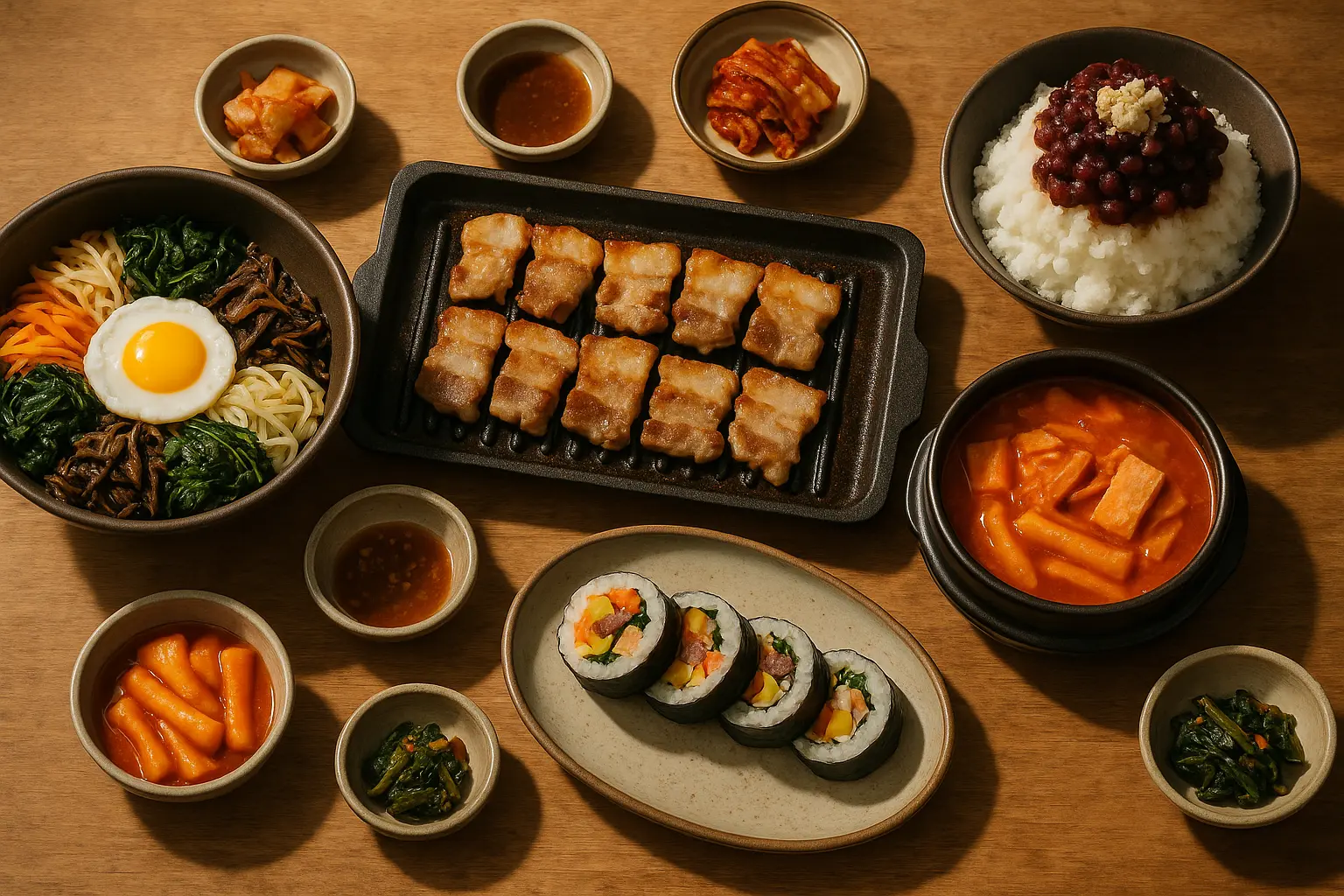
You do not need a restaurant spreadsheet to eat well in Korea. You need a shortlist of dishes, a rough idea of when to order each one, and the confidence to press the call button when nobody comes to your table. This is the checklist we give friends on their first trip: 20 foods that show how Koreans grill, ferment, simmer, fry, wrap and cool down.
This is a food-first guide, not a restaurant ranking. It works in Seoul, Busan, Jeonju and almost any Korean city—and it will not send you across town for a two-hour queue. Every one of the 20 dishes gets its own explanation below: what it is, what it tastes like, how Koreans eat it and what a first-timer should know. For Seoul-specific neighborhoods and eating tactics, continue with our local Seoul food guide.
The 20-food checklist at a glance
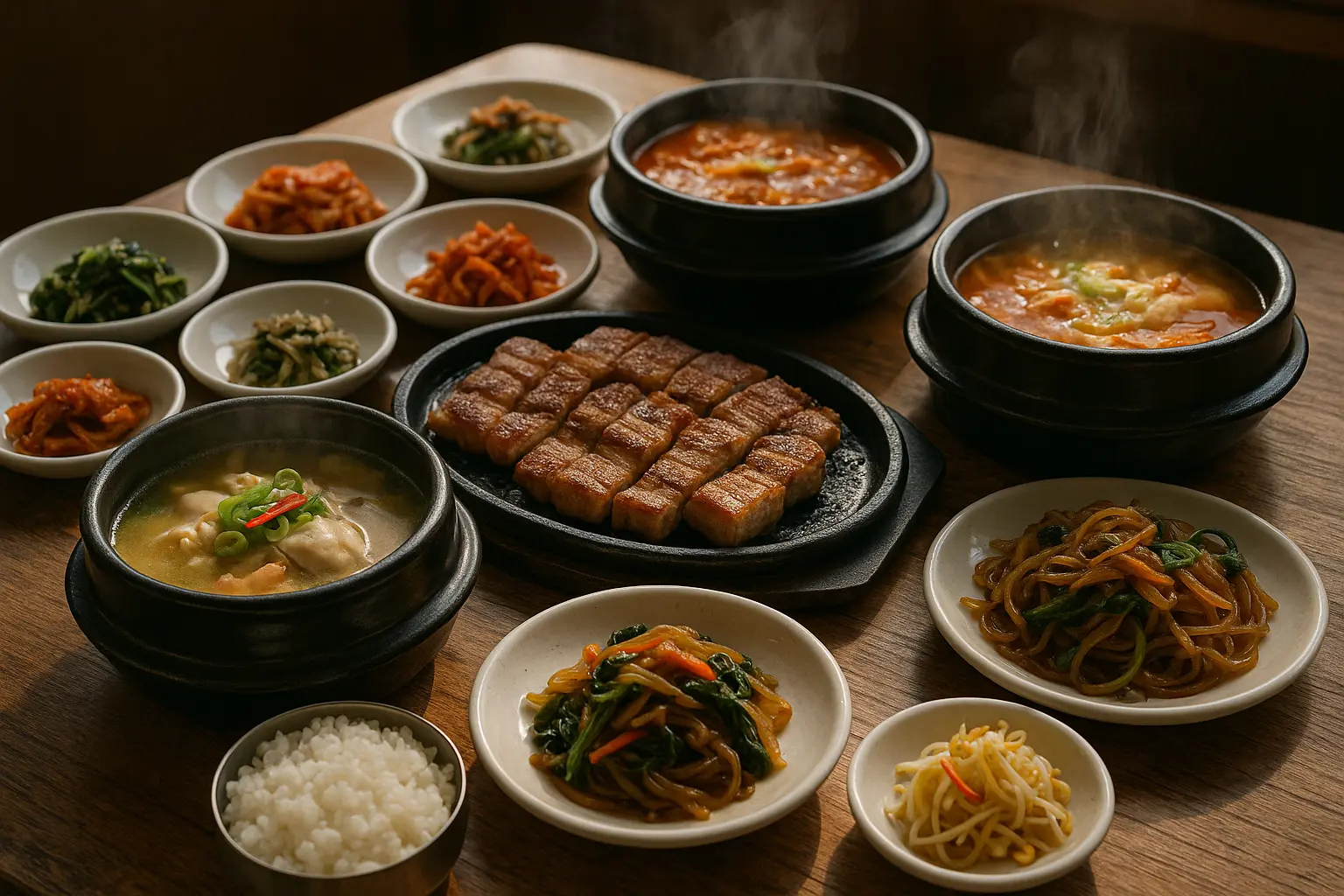
- Samgyeopsal — Pork belly grilled at the table and wrapped with lettuce, ssamjang and garlic.
- Bulgogi — Thin beef in a sweet-savory marinade; an easy first Korean meal.
- Galbi — Marinated beef or pork ribs with a richer flavor and higher price.
- Korean fried chicken — Extra-crisp chicken, best ordered half plain and half sauced.
- Bibimbap — Rice, vegetables and often beef or egg, mixed with gochujang.
- Gimbap — Seaweed rice rolls made for trains, picnics and quick lunches.
- Japchae — Springy sweet-potato noodles stir-fried with vegetables and meat.
- Naengmyeon — Cold buckwheat noodles served in icy broth or spicy sauce.
- Kimchi — Fermented vegetables and Korea’s essential side dish.
- Kimchi jjigae — Tangy kimchi stew, usually cooked with pork and tofu.
- Doenjang jjigae — Earthy fermented-soybean stew with serious everyday appeal.
- Samgyetang — A whole young chicken simmered with rice, ginseng and garlic.
- Seolleongtang — Mild, milky ox-bone soup seasoned at the table.
- Tteokbokki — Chewy rice cakes in a sweet, spicy red sauce.
- Eomuk — Fish-cake skewers served with hot broth.
- Bindaetteok — Crisp mung-bean pancake, ideally paired with makgeolli.
- Hotteok — Griddled pancake filled with molten brown sugar, seeds and cinnamon.
- Mandu — Korean dumplings, steamed, fried or served in soup.
- Jajangmyeon — Noodles in glossy black-bean sauce; classic delivery comfort food.
- Bingsu — Fine shaved ice topped with red bean, fruit or modern extras.
🔥 Korean grill and chicken: 1–4
1. Samgyeopsal (삼겹살)
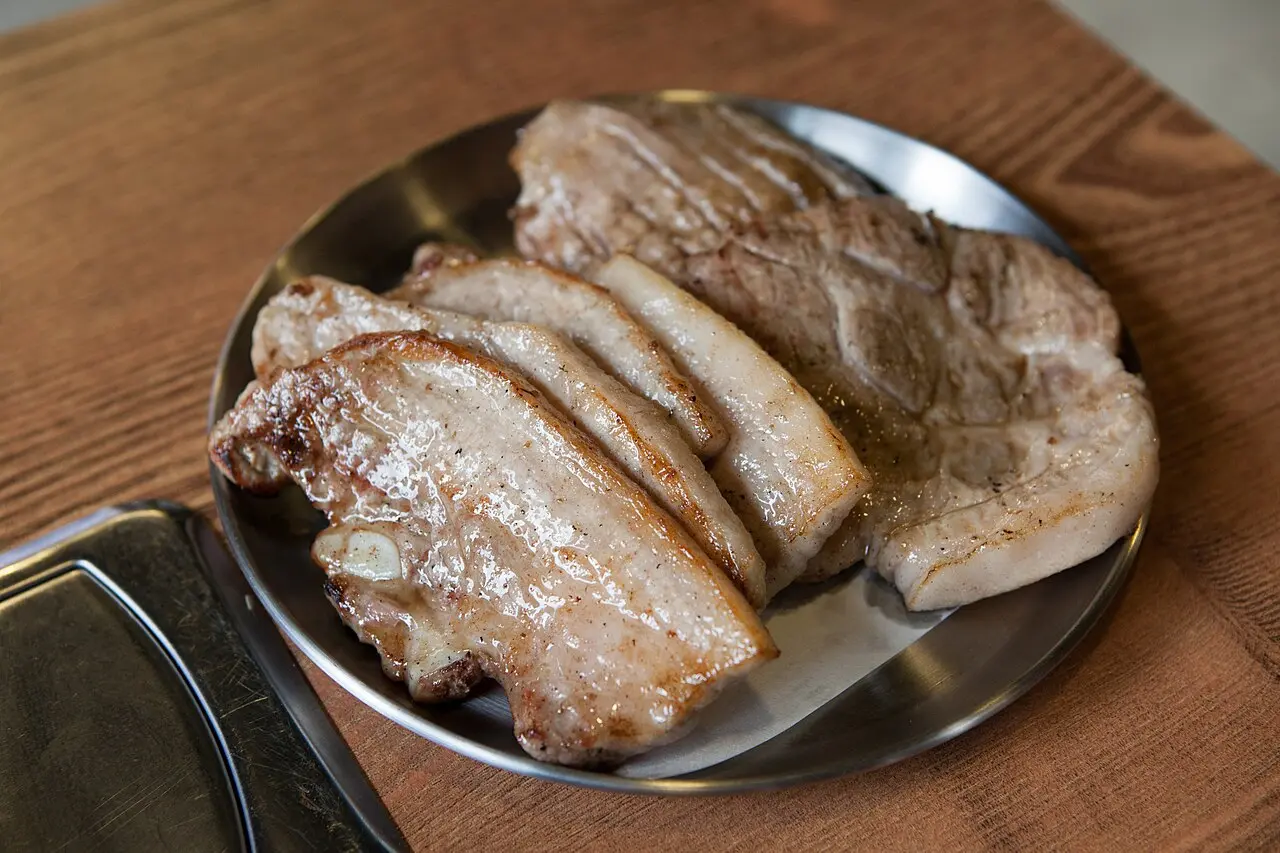
Photo: jinsoo jang, Wikimedia Commons, CC0; resized and converted to WebP.

Samgyeopsal is thick, unseasoned pork belly grilled at your table. Its appeal is not a complicated marinade but the contrast between crisp edges, juicy fat and sharp accompaniments. Wrap one piece in lettuce or perilla with ssamjang, garlic and perhaps grilled kimchi, then eat the parcel in one bite.
This is a social meal, so restaurants commonly require two portions. Staff may start the grill, but diners usually turn and cut the meat themselves. Order rice or doenjang jjigae near the end. If you dislike fatty meat, ask for moksal—pork shoulder—which is leaner but keeps the same tabletop ritual.
2. Bulgogi (불고기)
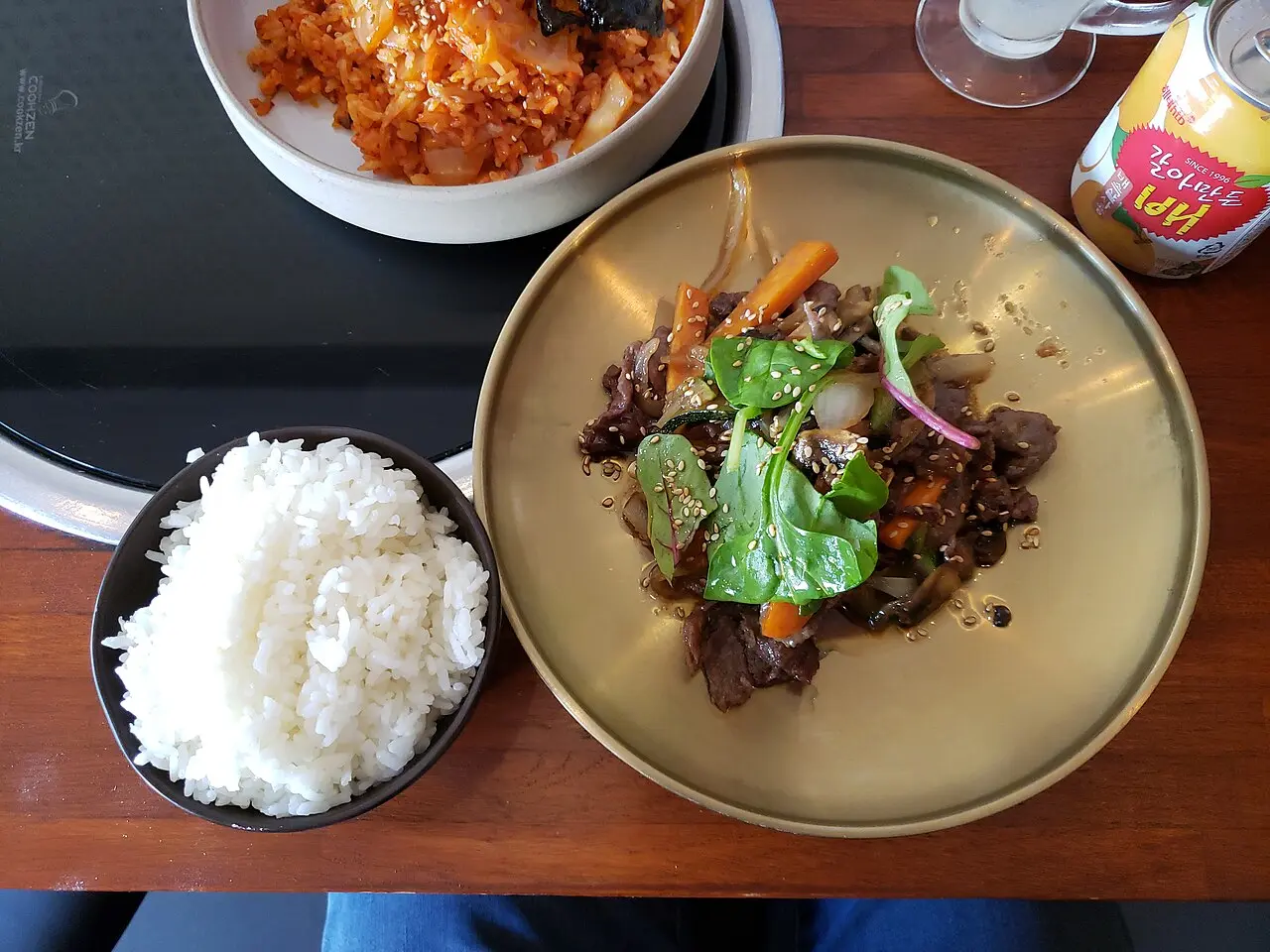
Photo: Andy Li, Wikimedia Commons, CC0; resized and converted to WebP.
_-_Kogi_2023-09-11.jpg)
Bulgogi uses thinly sliced beef marinated with soy sauce, sugar or pear, garlic and sesame oil. It is tender, sweet-savory and usually not spicy, making it one of the easiest Korean dishes for children and cautious first-timers. Depending on the restaurant, it may arrive grilled, sizzling on a hot plate or simmering with mushrooms and glass noodles.
Eat it with rice and banchan, or make a lettuce wrap as you would with BBQ. One useful distinction: bulgogi’s sweetness is intentional, not a sign that you found a tourist version. If you want a smokier, less saucy meat experience, choose samgyeopsal or unmarinated galbi instead.
3. Galbi (갈비)
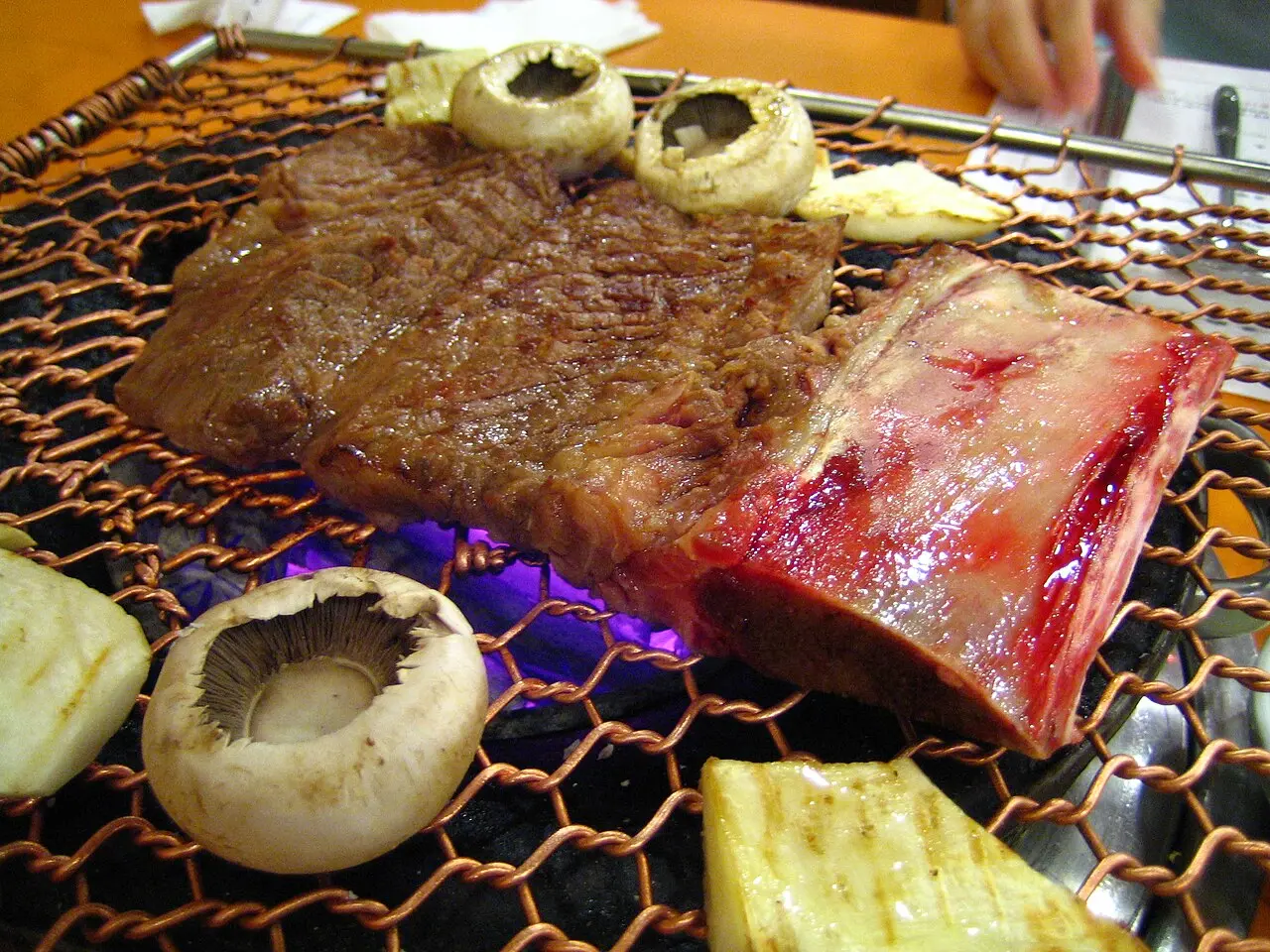
Photo: ayustety, Wikimedia Commons, CC BY-SA 2.0; resized and converted to WebP.

Galbi means ribs. Beef galbi is the premium version most visitors picture, while pork galbi is more affordable and often more heavily marinated. Both are typically sweet-savory, garlicky and cooked over a tabletop grill. The meat may be cut across the bone or prepared in a long strip that staff snip with scissors.
Galbi costs more than samgyeopsal, so we treat it as the table’s special shared order rather than the automatic default. Wrap it lightly; too much ssamjang can bury the marinade. Also check whether the menu says beef or pork before ordering—the English word “galbi” alone does not tell you which one will arrive.
4. Korean fried chicken (치킨)
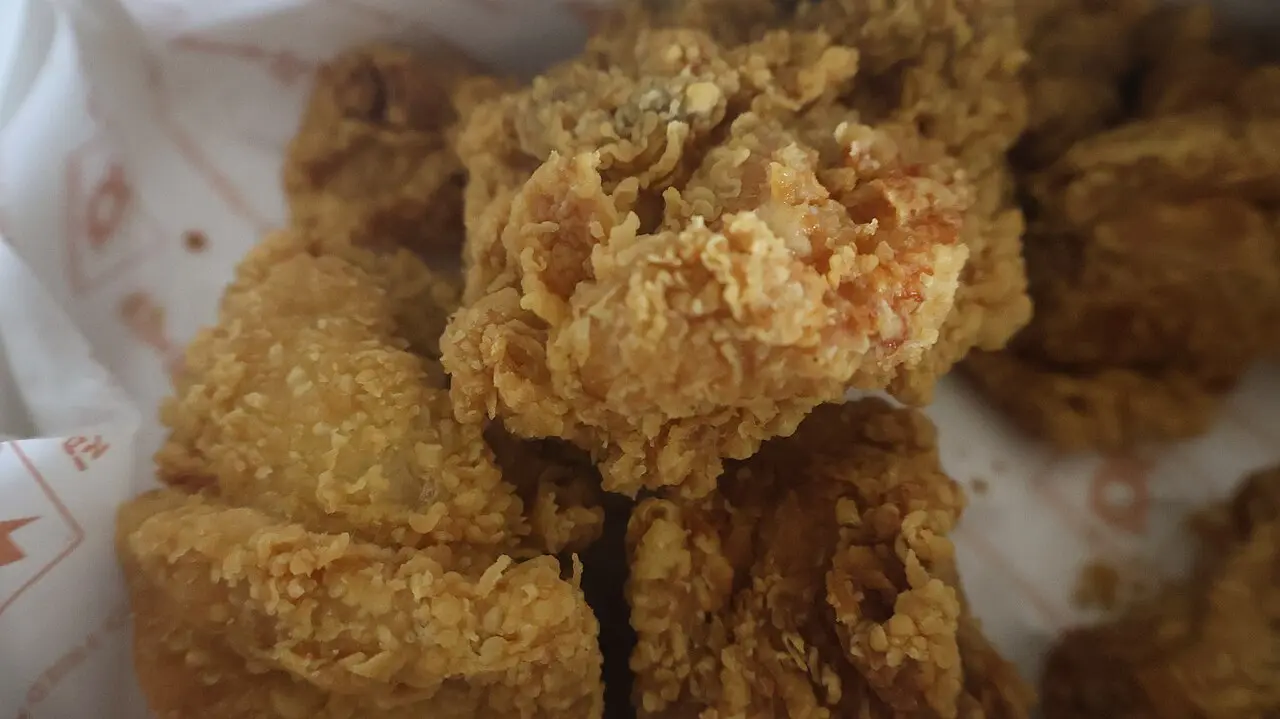
Photo: Startandstar, Wikimedia Commons, CC0; resized and converted to WebP.

Korean fried chicken is defined by a thin, brittle crust that stays crisp under sauce. The two essential styles are huraideu, plain fried, and yangnyeom, coated in a sticky sweet-spicy glaze. Ask for banban to get half of each. Bone-in chicken is juicier; boneless is easier for a picnic or hotel-room dinner.
Chicken and beer—chimaek—is the classic pairing, especially beside the Han River in warm weather. Portions are designed for sharing, and one whole order can be too much for a solo diner. Sauces may contain soy, sesame or nuts, so travelers with allergies should confirm before ordering rather than judging by color.
Solo-dining tip: BBQ is the awkward category alone because of minimum orders. Bulgogi lunch sets, fried-chicken half portions and food-hall grills are easier options.
🍚 Rice and noodles: 5–8
5. Bibimbap (비빔밥)
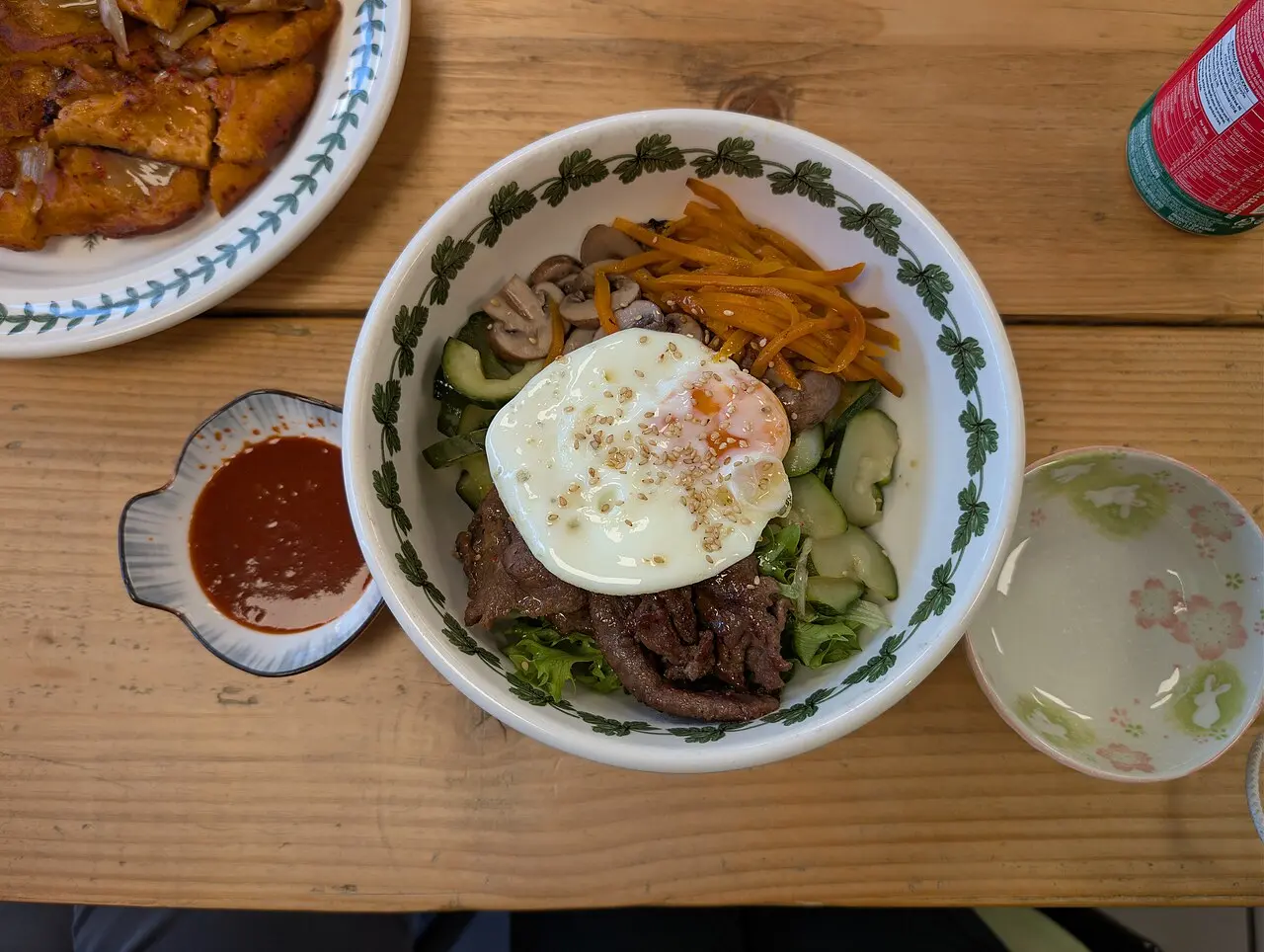
Photo: Andy Li, Wikimedia Commons, CC0; resized and converted to WebP.

Bibimbap is rice topped with seasoned vegetables, egg and often beef. The name literally tells you what to do: mix the rice. Add gochujang gradually, break the egg and stir until the separate colors become one seasoned bowl. Leaving the toppings untouched may preserve the photograph, but it misses the dish.
Jeonju is famous for elaborate bibimbap, while dolsot bibimbap arrives in a hot stone bowl that crisps the rice at the bottom. Let it sit briefly before mixing if you want that crust. Vegetarian versions are possible, but ask about meat toppings and broth used to season the vegetables.
6. Gimbap (김밥)
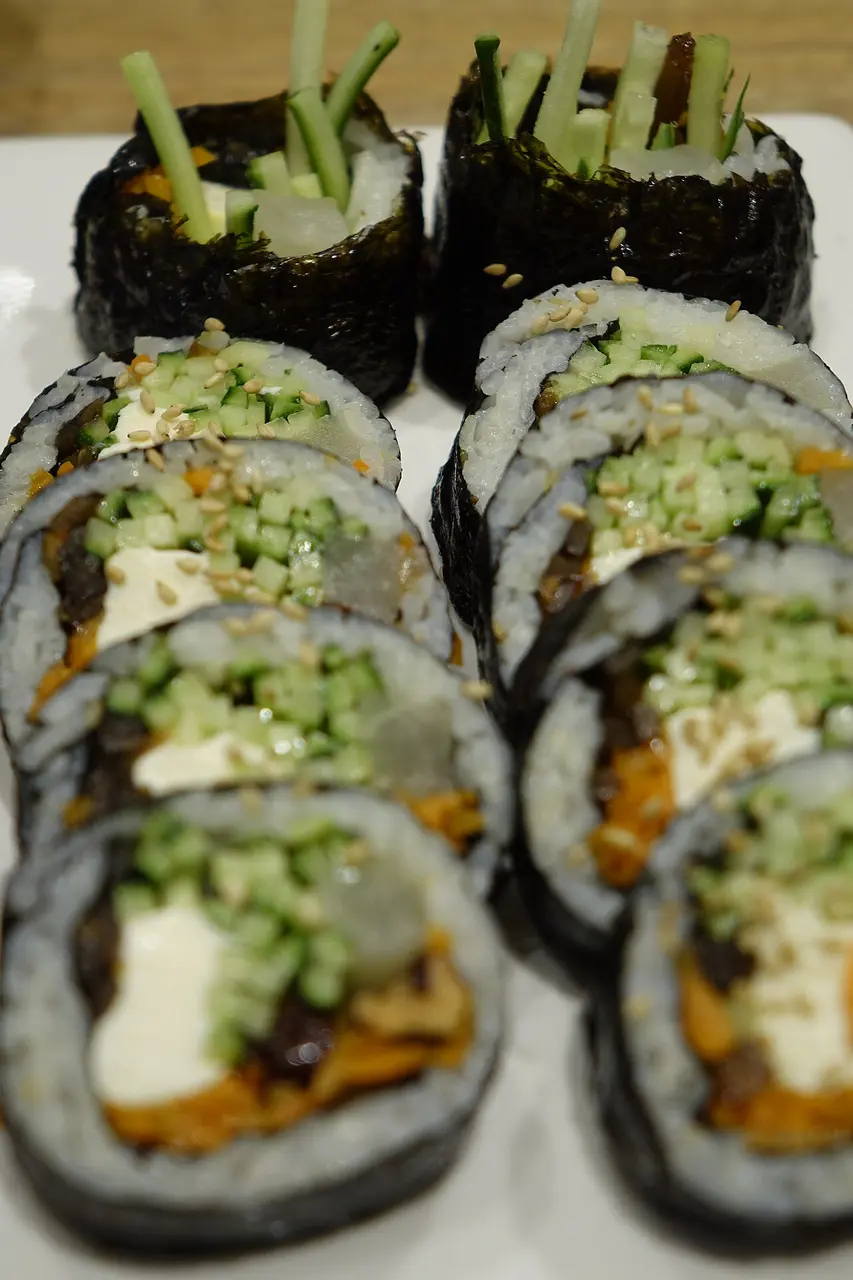
Photo: 최광모, Wikimedia Commons, CC0; resized and converted to WebP.

Gimbap is rice and fillings rolled in seaweed, brushed with sesame oil and sliced into bite-size rounds. Common fillings include egg, pickled radish, carrot, spinach and ham; tuna, bulgogi and cheese versions are everywhere. It resembles sushi visually, but the rice is seasoned differently and raw fish is not the default.
This is everyday food: portable, inexpensive and ideal before a train ride, hike or park visit. Eat each slice whole so the filling does not fall out. Vegetarians should not assume a vegetable-looking roll is meat-free—ham, imitation crab and fish cake often hide inside—so request yachae gimbap and still check the ingredients.
7. Japchae (잡채)
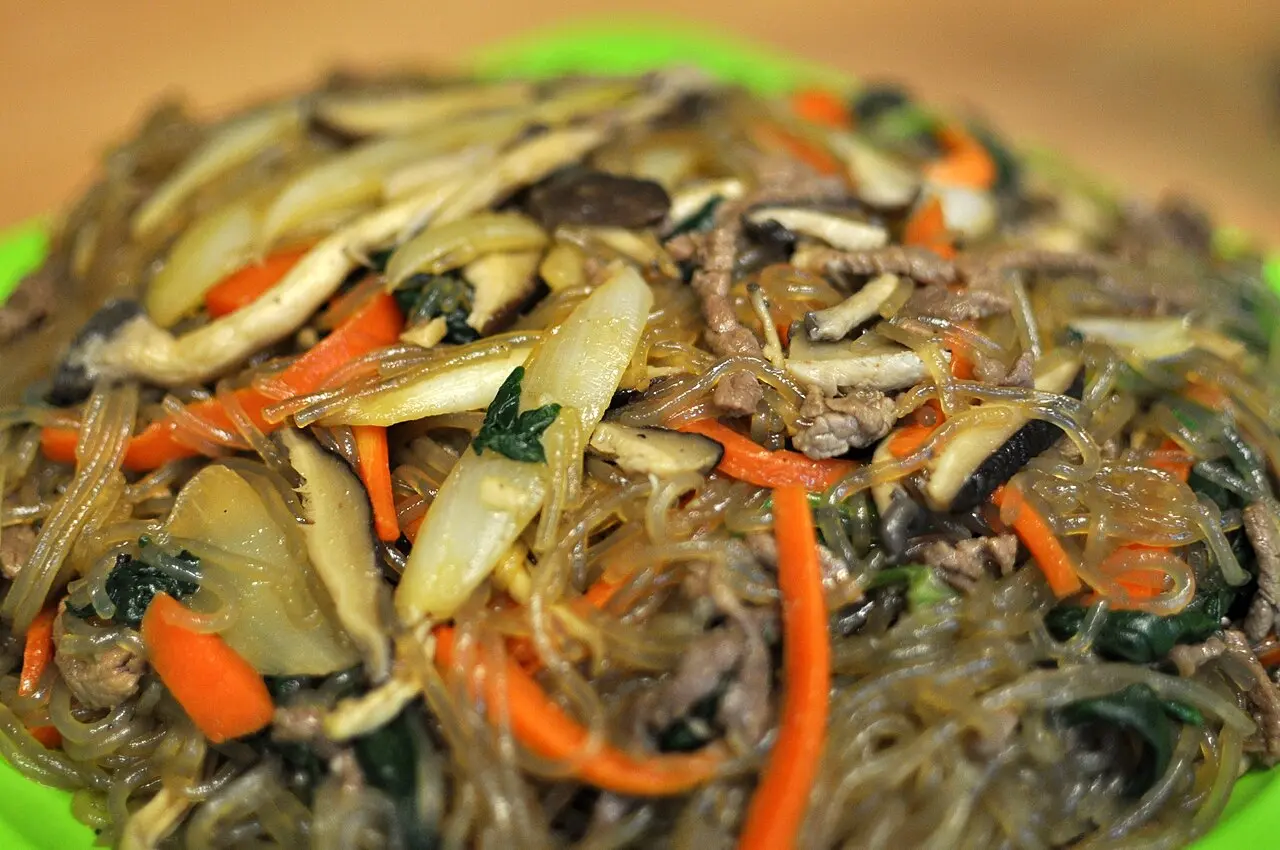
Photo: Jordi Sanchez, Wikimedia Commons, CC BY-SA 2.0; resized and converted to WebP.

Japchae is made from translucent sweet-potato starch noodles stir-fried with vegetables, mushrooms and often beef. The noodles are springy rather than soft, with a glossy soy-and-sesame seasoning that leans gently sweet. It is usually mild and therefore useful when the table needs relief from spicy dishes.
Koreans often serve japchae at celebrations, but restaurants also offer it as a shared plate or banchan. It may look vegetarian, yet beef is common and the sauce can include animal-based seasoning. Eat it with chopsticks and share it; a large plate is rarely intended as one person’s complete meal.
8. Naengmyeon (냉면)
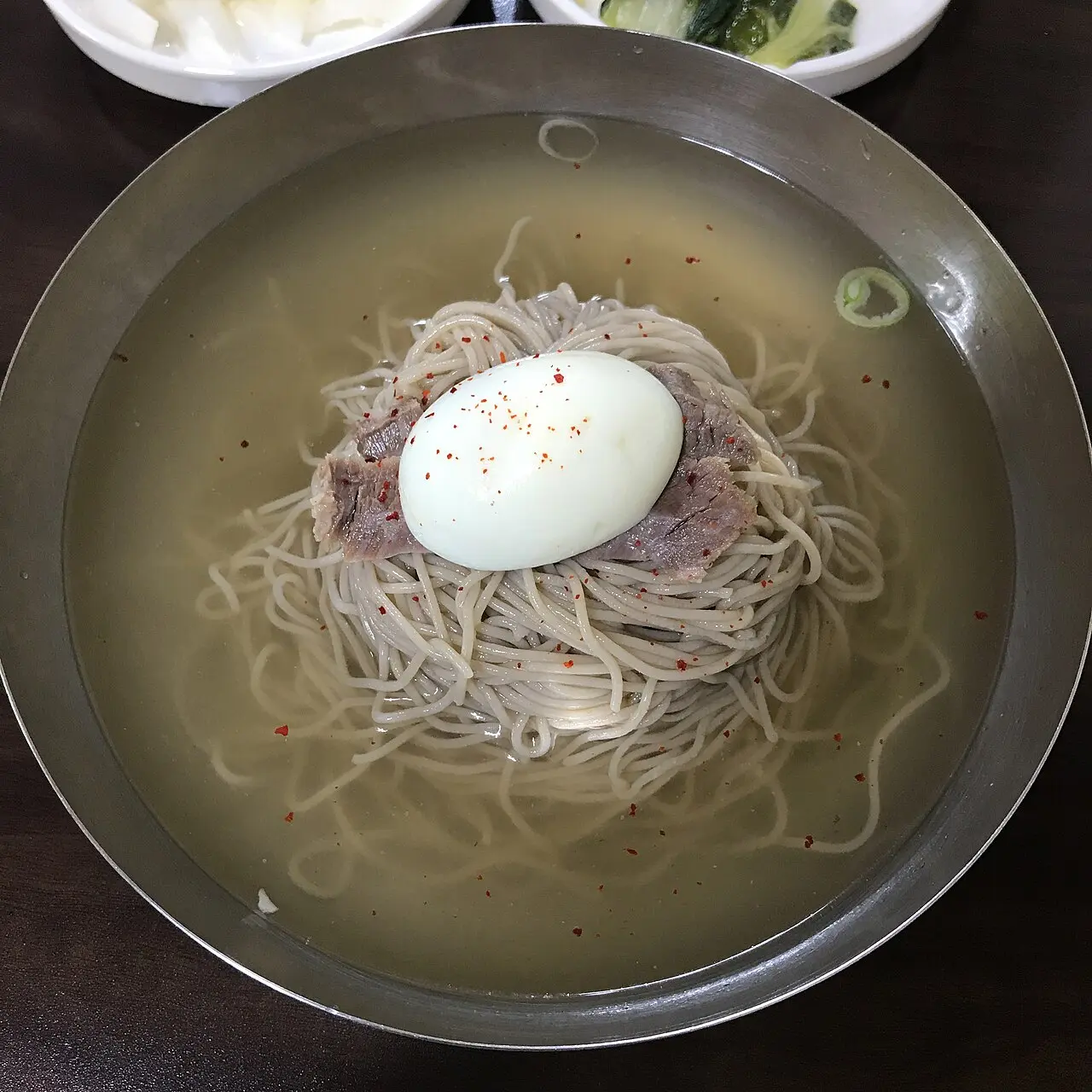
Photo: chomjong, Wikimedia Commons, CC BY 2.0; resized and converted to WebP.

Naengmyeon is a bowl of long, chewy buckwheat noodles served cold. Mul naengmyeon comes in an icy, lightly tangy broth; bibim naengmyeon replaces most of the broth with a spicy red sauce. Mustard and vinegar are provided so you can sharpen the flavor yourself.
It is a summer staple and a traditional finish after grilled meat. The noodles can be surprisingly elastic, and restaurants may offer scissors, but many diners prefer to keep them long. First-timers sometimes mistake the restrained broth for blandness—taste it before adding condiments, then adjust a little at a time.
🥣 Fermentation and restorative soups: 9–13
9. Kimchi (김치)
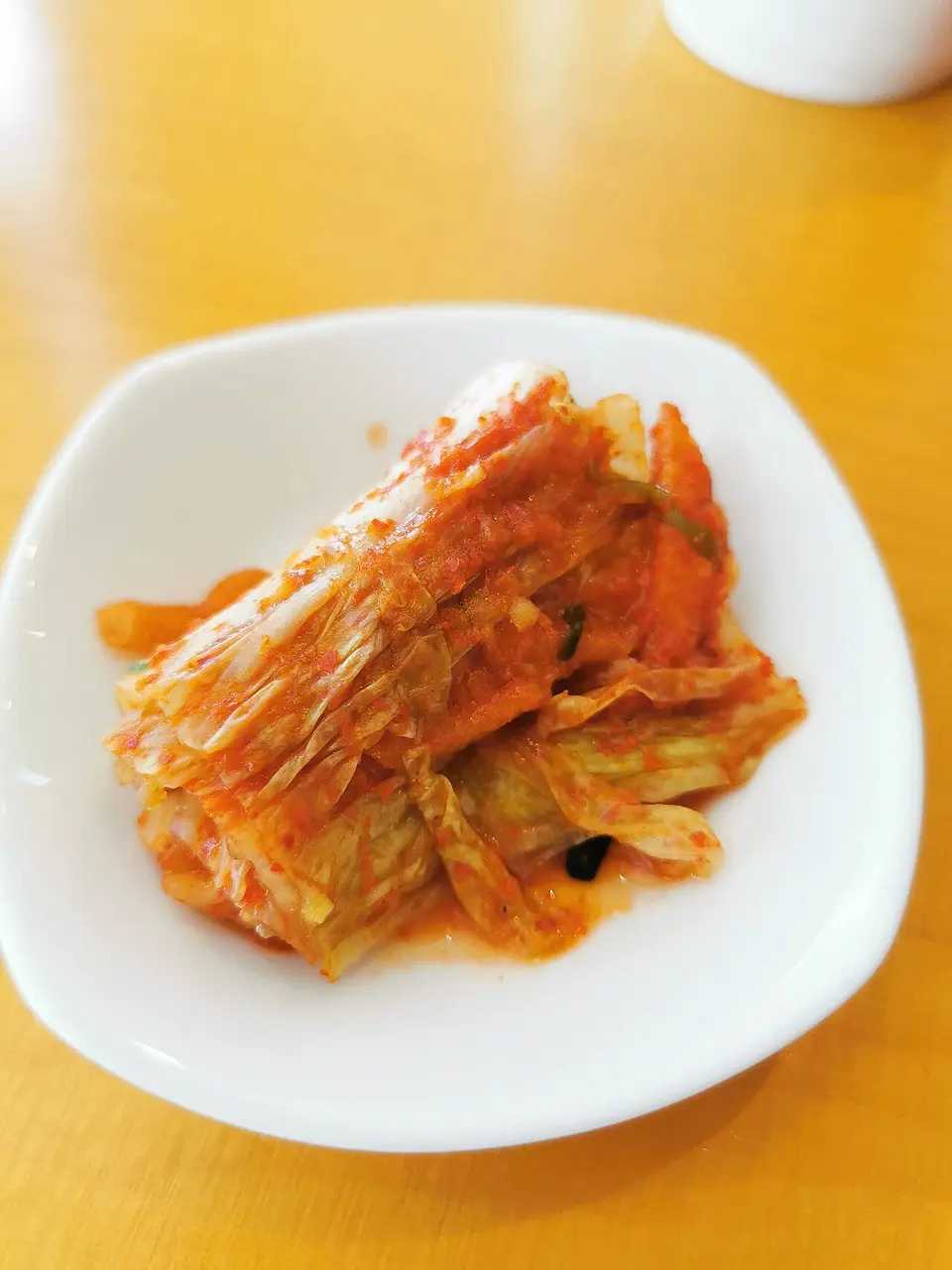
Photo: AhmadElq, Wikimedia Commons, CC BY-SA 4.0; resized and converted to WebP.

Kimchi is a family of fermented vegetables, not one red cabbage recipe. Napa cabbage kimchi is the standard, but you may also meet crisp radish cubes, cucumber kimchi, watery dongchimi or mild white kimchi. Flavor changes with ingredients and age—from fresh and crunchy to deeply sour and funky.
Basic kimchi normally arrives free as banchan and can usually be refilled. Try it both alone and with rice or meat; grilled aged kimchi beside pork belly is especially good. Most kimchi contains fish sauce or salted seafood, so it is not automatically vegetarian even when no meat is visible.
10. Kimchi jjigae (김치찌개)
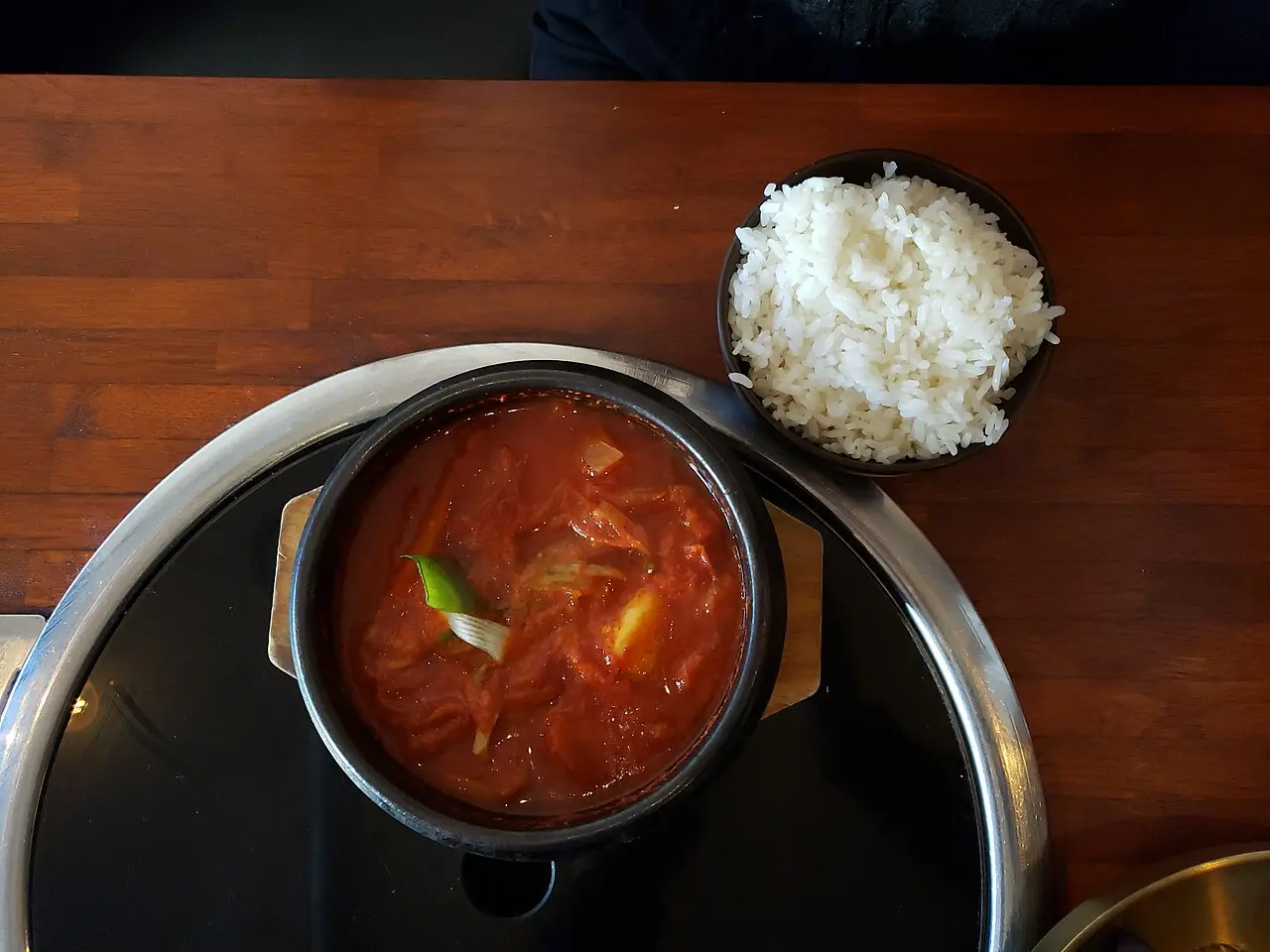
Photo: Andy Li, Wikimedia Commons, CC0; resized and converted to WebP.

Kimchi jjigae turns well-fermented kimchi into a bubbling, tangy stew, commonly with pork, tofu, onion and green onion. Older kimchi gives the broth its sour depth, while pork adds richness. It arrives aggressively hot and keeps cooking in its metal or earthenware pot.
Spoon the stew over rice rather than drinking it like a delicate soup. The dish is everyday comfort food, especially satisfying in cold or rainy weather. Spice levels vary, but the bigger dietary surprise is the broth: pork and seafood seasoning are common, so a tofu-heavy bowl is not necessarily vegetarian.
11. Doenjang jjigae (된장찌개)
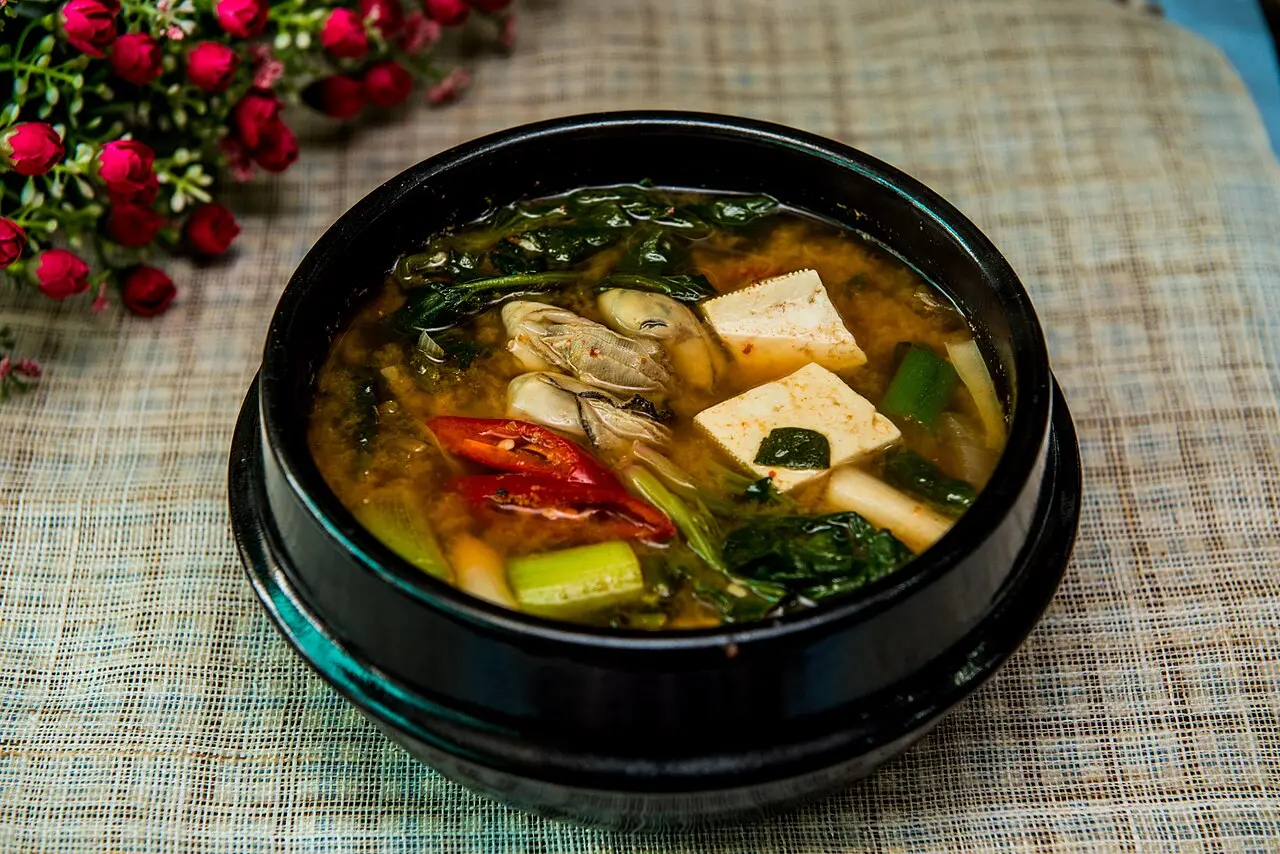
Photo: jyleen21, Wikimedia Commons, CC0; resized and converted to WebP.

Doenjang jjigae is a rustic stew based on fermented soybean paste, usually with tofu, zucchini, onion and mushrooms. It is salty, earthy and distinctly funky—less immediately photogenic than red stews, but closer to the flavor of a Korean home meal. Many BBQ restaurants serve a small pot near the end of the meal.
Eat it with rice and banchan, using the rice to soften the stew’s intensity. Doenjang itself is soybean-based, but restaurants frequently use anchovy or meat stock. Travelers avoiding animal products need to ask about the broth, not just the visible ingredients.
12. Samgyetang (삼계탕)
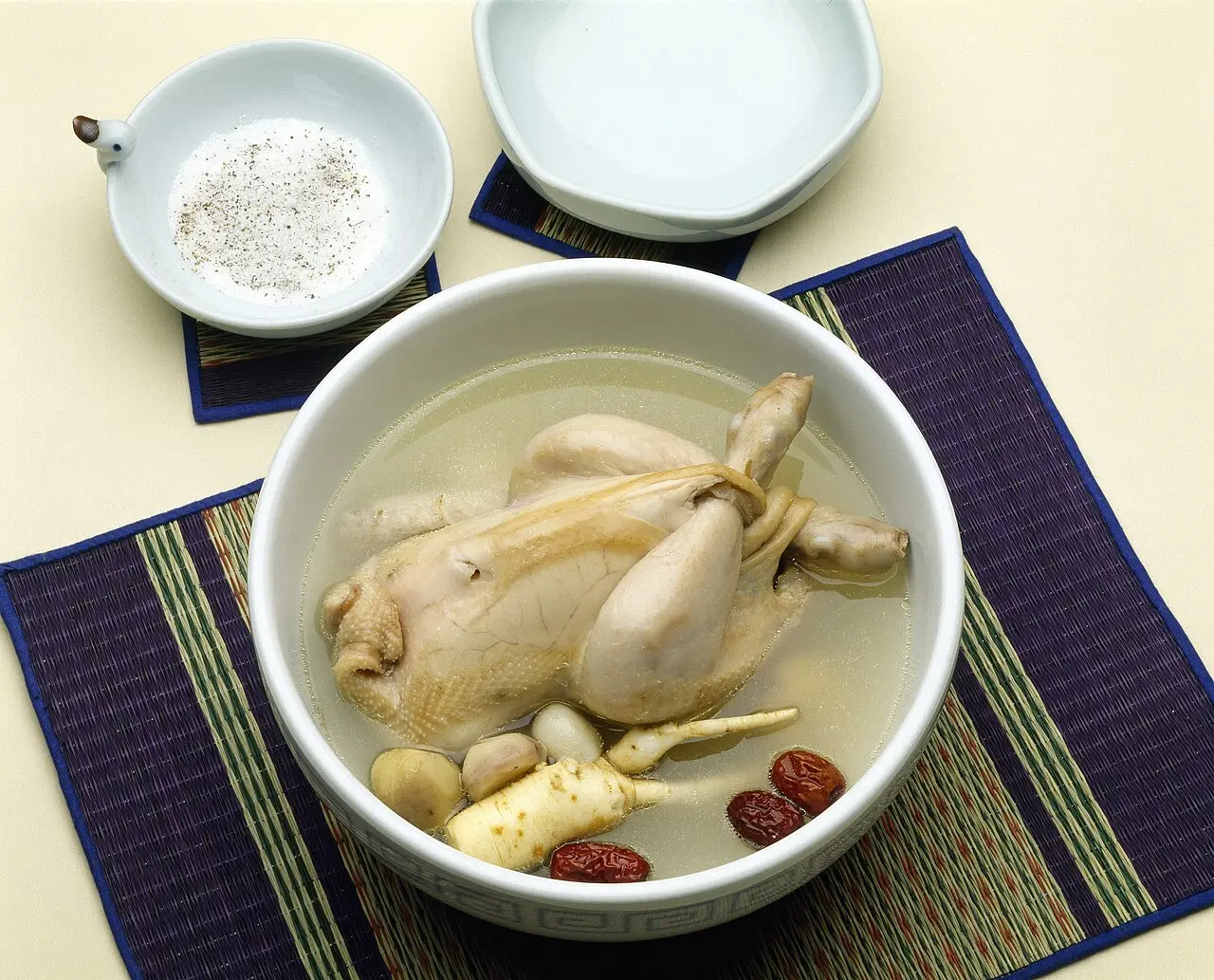
Photo: wizdata, Wikimedia Commons, CC0; resized and converted to WebP.

Samgyetang is a whole young chicken simmered until tender, with glutinous rice, garlic, jujube and often ginseng tucked inside. The broth is mild and clean rather than heavily spiced. Salt and pepper are served separately, allowing you to season each spoonful or dip pieces of chicken.
Koreans traditionally eat samgyetang on the hottest days of summer to restore energy—“fight heat with heat”—but restaurants serve it year-round. One bird is generally one portion. Pull the meat from the bones carefully, then finish the soft rice inside; that rice has absorbed the best part of the broth.
13. Seolleongtang (설렁탕)
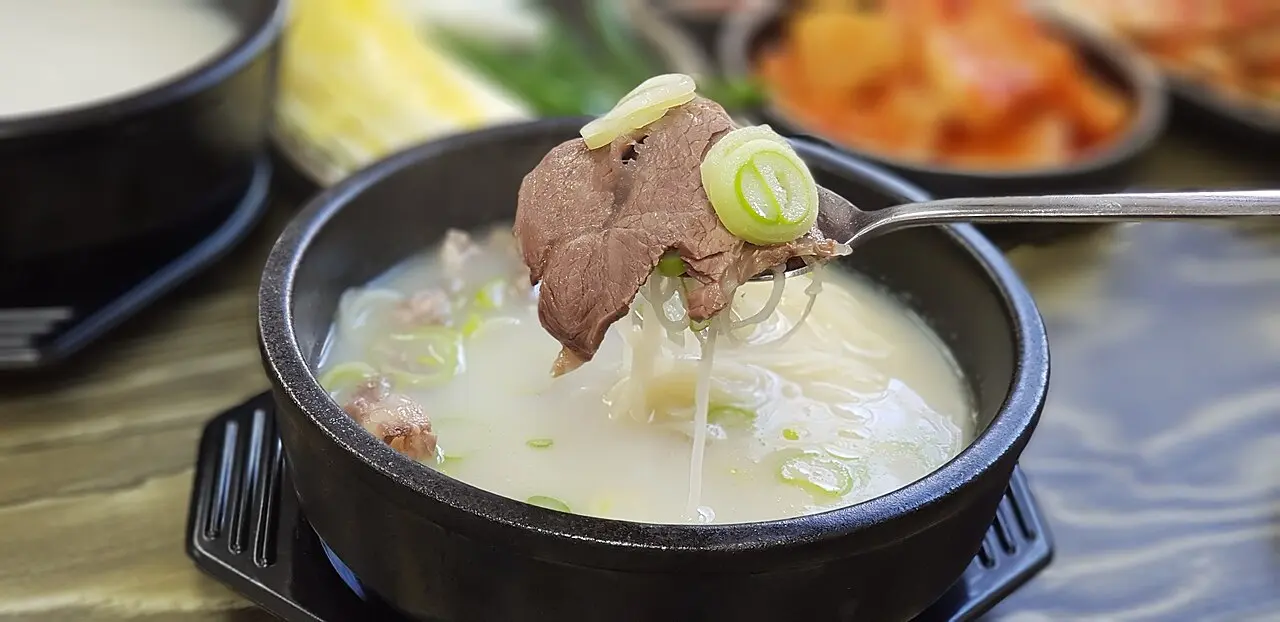
Photo: 이동원, Wikimedia Commons, CC0; resized and converted to WebP.

Seolleongtang is ox bones and beef simmered for hours until the broth turns pale and milky. It arrives deliberately under-seasoned, with chopped green onion, salt and pepper on the table. Add them yourself before deciding the soup lacks flavor. Rice may arrive separately or already submerged.
This is gentle, warming food for breakfast, a solo lunch or the morning after drinks. Add kkakdugi—crisp radish kimchi—for acidity and crunch. Unlike bright red stews, it is not spicy, but it is unmistakably a beef dish and unsuitable for vegetarian diners.
🌶️ Street food and market snacks: 14–18
14. Tteokbokki (떡볶이)
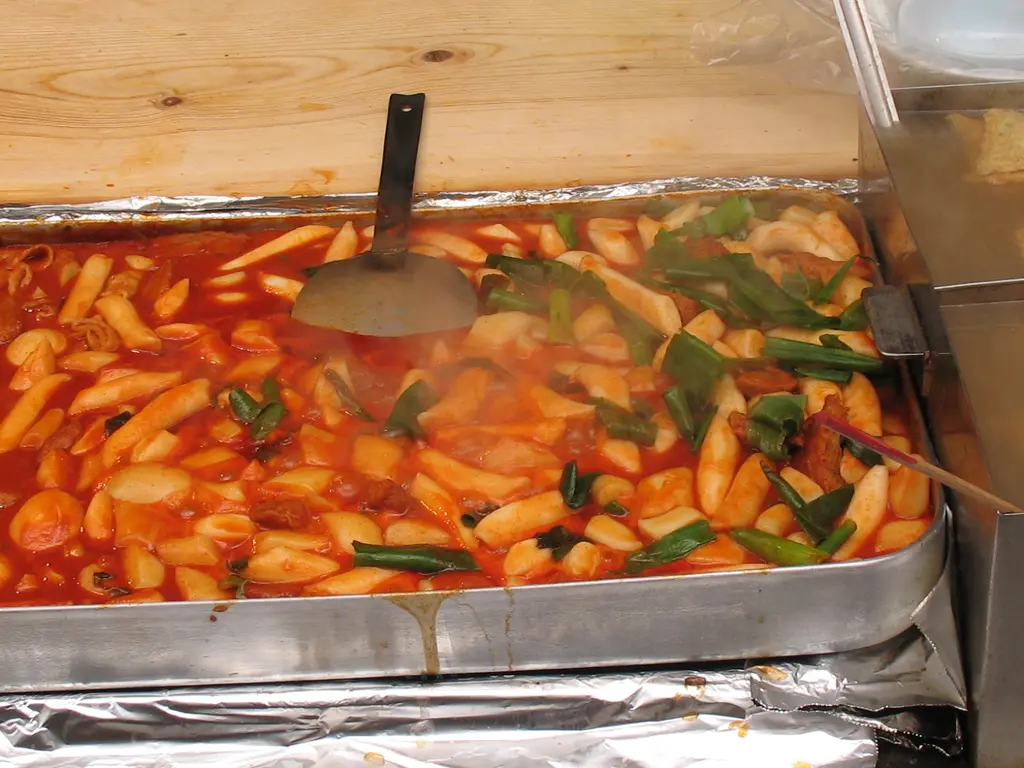
Photo: johl, Wikimedia Commons, CC BY-SA 2.0; resized and converted to WebP.

Tteokbokki is chewy cylindrical rice cake simmered in a glossy gochujang sauce. The classic version is sweet, savory and hotter than its snack-food appearance suggests. Fish cake, cabbage and boiled egg often share the pan; modern versions add cream, cheese or extra-hot sauce.
Order it at a market or neighborhood snack shop and combine it with eomuk, fried snacks or gimbap. Koreans often dip twigim—tempura-style vegetables or seafood—into the remaining sauce. If you do not handle spice well, do not assume cheese makes it mild; ask for a less spicy version or share a small portion first.
15. Eomuk (어묵)
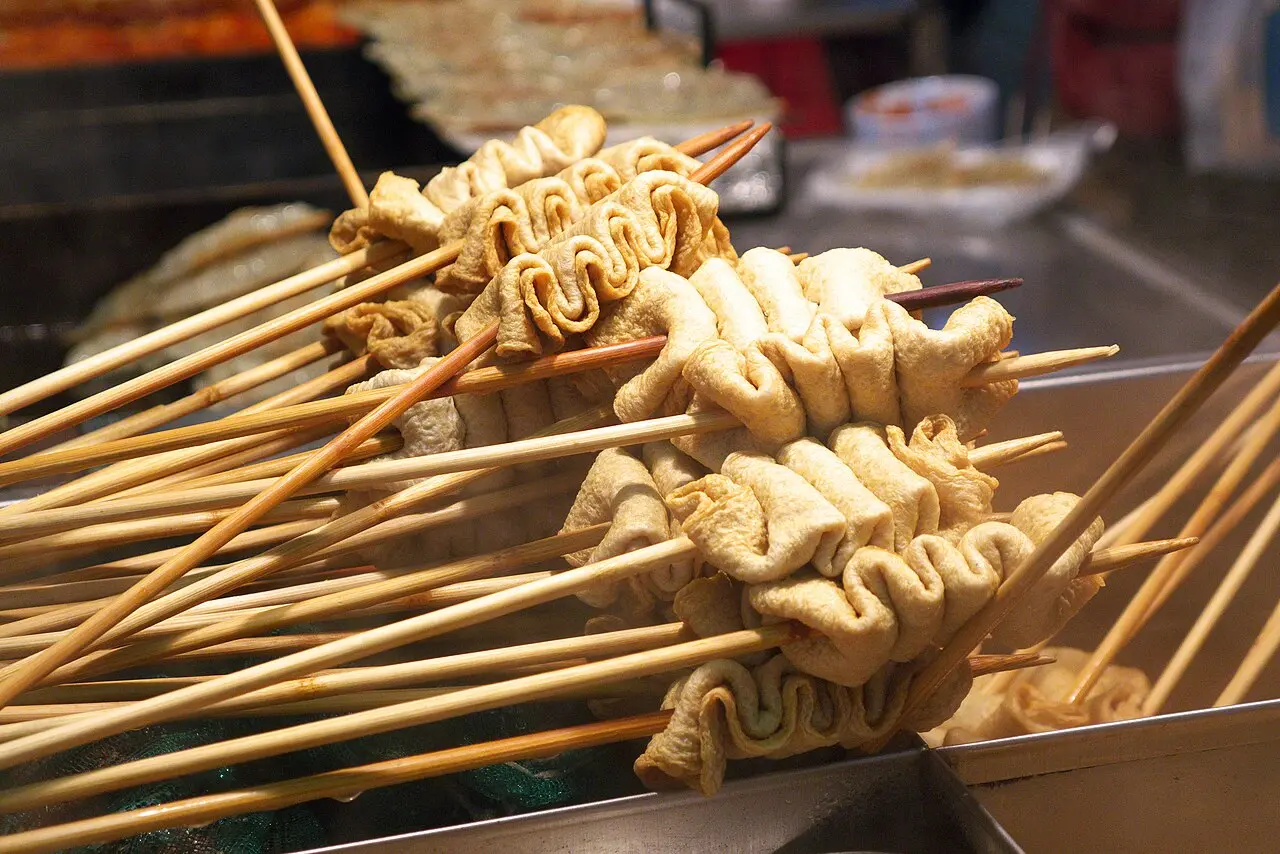
Photo: travel oriented, Wikimedia Commons, CC BY-SA 2.0; resized and converted to WebP.

Eomuk is seasoned fish paste shaped into sheets or cakes, folded onto skewers and warmed in a light broth. At street stalls, you eat the skewer standing up and sip the broth from a paper cup. It is salty, comforting and far milder than the neighboring tteokbokki pan.
This is at its best in cold weather, particularly in Busan, a city strongly associated with fish cake. Count your empty skewers because stalls often calculate the bill from them. Eomuk contains fish by definition and can include wheat, soy or other seafood, so it is neither vegetarian nor automatically safe for gluten or shellfish allergies.
16. Bindaetteok (빈대떡)
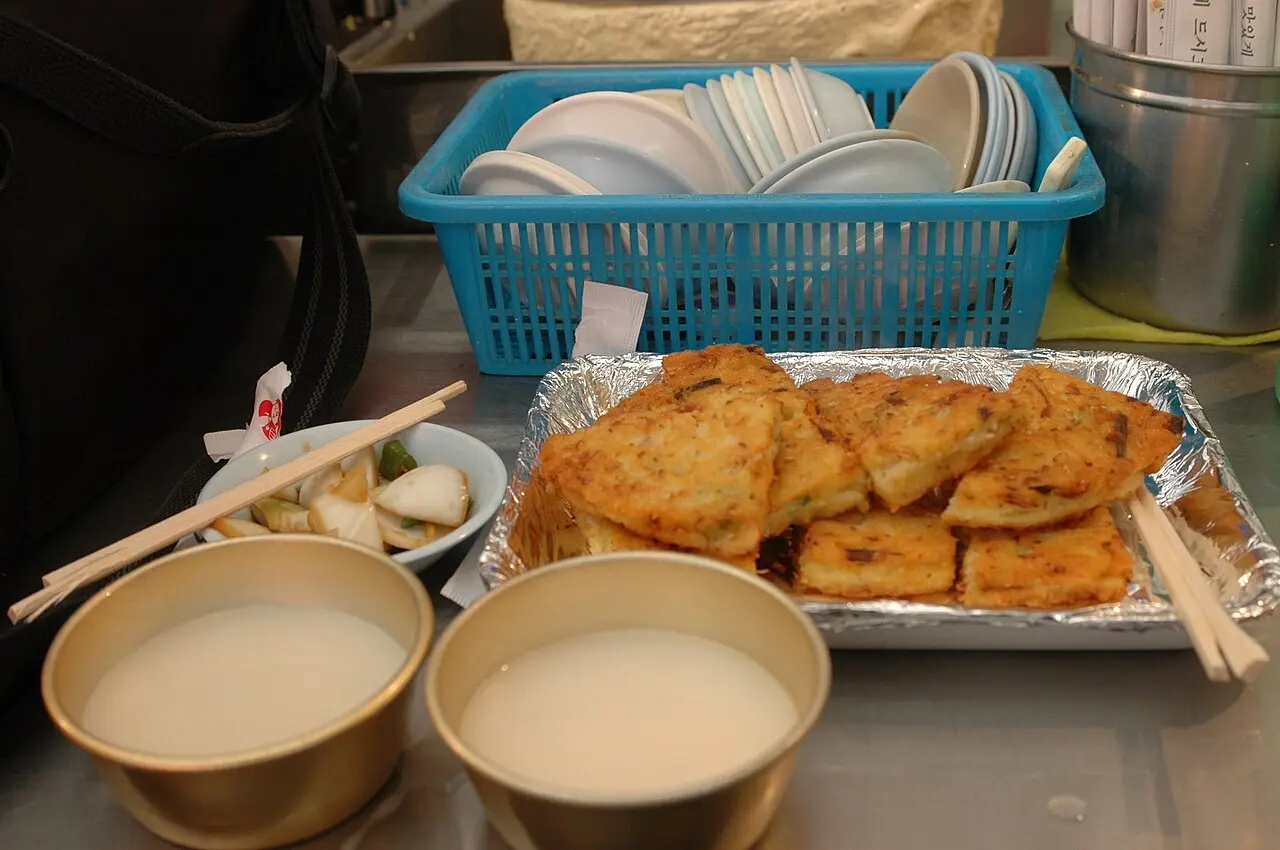
Photo: Pfc. Bo Park, U.S. Army, Wikimedia Commons, public domain; resized and converted to WebP.

Bindaetteok is a thick pancake made from ground mung beans, usually mixed with bean sprouts, kimchi and pork before being fried until crisp. The center stays dense and nutty while the rough edges become the part everyone reaches for first. It is heartier than the word “pancake” suggests.
Gwangjang Market is famous for it, but traditional markets and specialist restaurants serve it across Korea. Tear or cut it into shared pieces and dip lightly in soy sauce with onion. A bowl of makgeolli is the standard partner. Vegetarians should ask about pork and kimchi seasoning before ordering.
17. Hotteok (호떡)
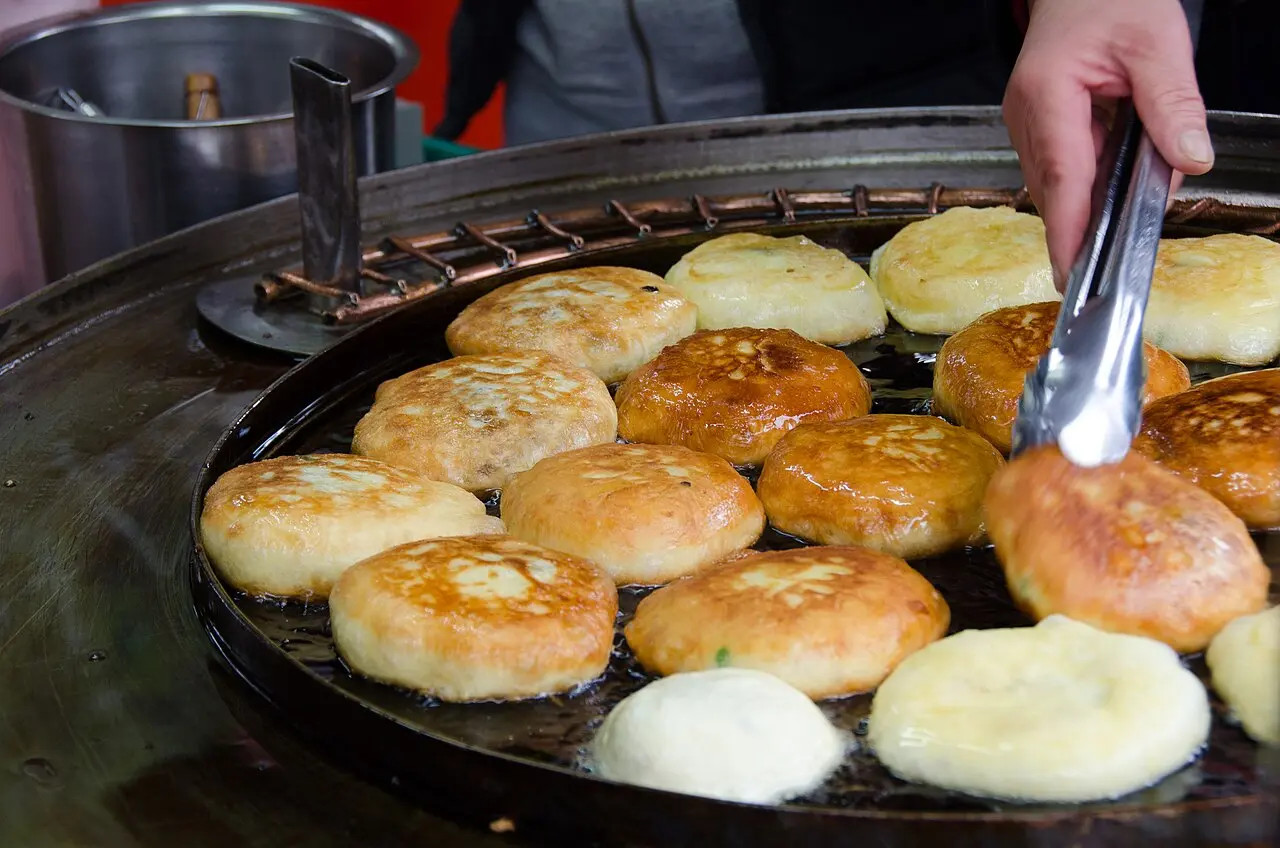
Photo: Sandra Vallaure, Wikimedia Commons, CC BY 2.0; resized and converted to WebP.

Hotteok is yeasted dough pressed on a griddle around a filling of brown sugar, cinnamon and seeds or nuts. The outside becomes crisp and chewy while the center melts into syrup. Busan’s seed-heavy ssiat hotteok is a particularly satisfying regional version.
It is a cold-weather street snack, although busy markets may sell it year-round. Hold it in the paper cup, bite from the edge and wait before reaching the molten center—every Korean editor has learned that lesson the painful way. Nut and seed allergies matter here, and some doughs may contain milk.
18. Mandu (만두)
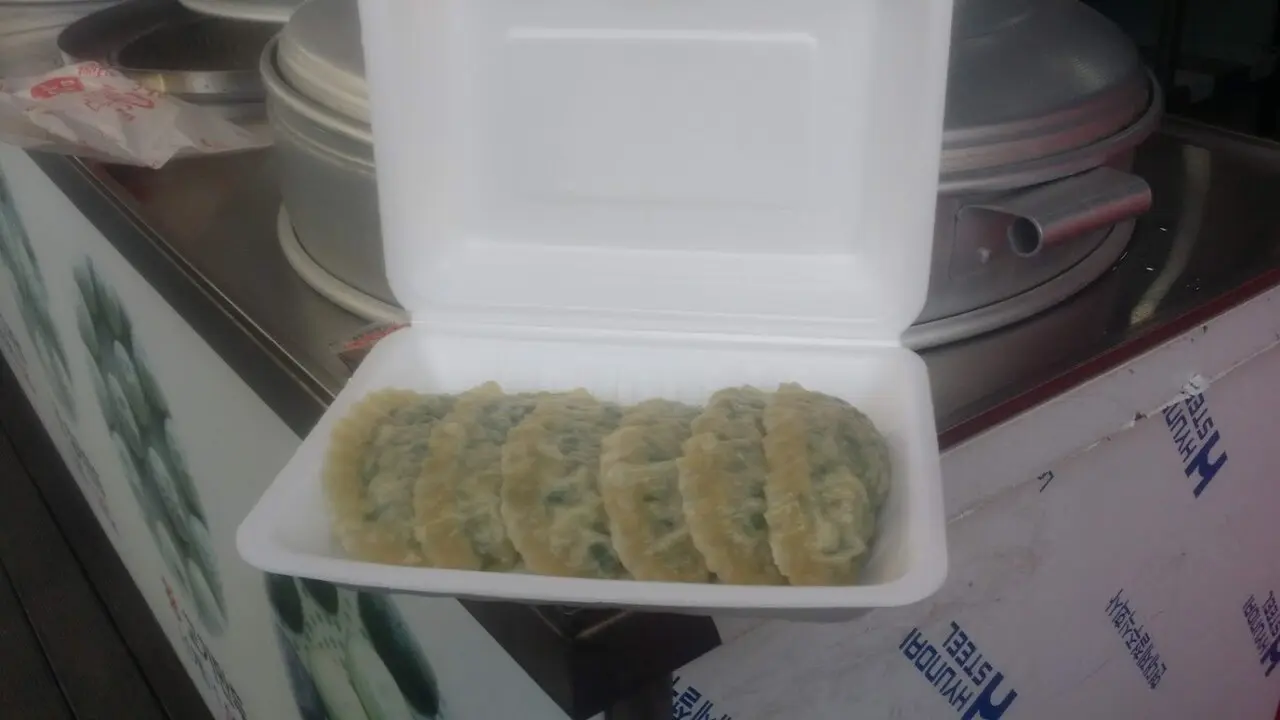
Photo: Piotrus, Wikimedia Commons, CC BY-SA 4.0; resized and converted to WebP.

Mandu are Korean dumplings filled with combinations of pork, tofu, vegetables, kimchi and glass noodles. Jjin mandu are steamed, gun mandu are pan-fried, and mandu-guk serves them in soup. Kimchi mandu are sharper and spicier; meat mandu are usually milder and juicier.
A mixed plate is the best first order because cooking style changes the experience as much as filling. Dip sparingly in soy-vinegar sauce. Vegetable mandu are available but not guaranteed to be vegan, and dumpling wrappers normally contain wheat. Soup versions can also use beef or anchovy broth.
🍜 Delivery comfort and dessert: 19–20
19. Jajangmyeon (짜장면)
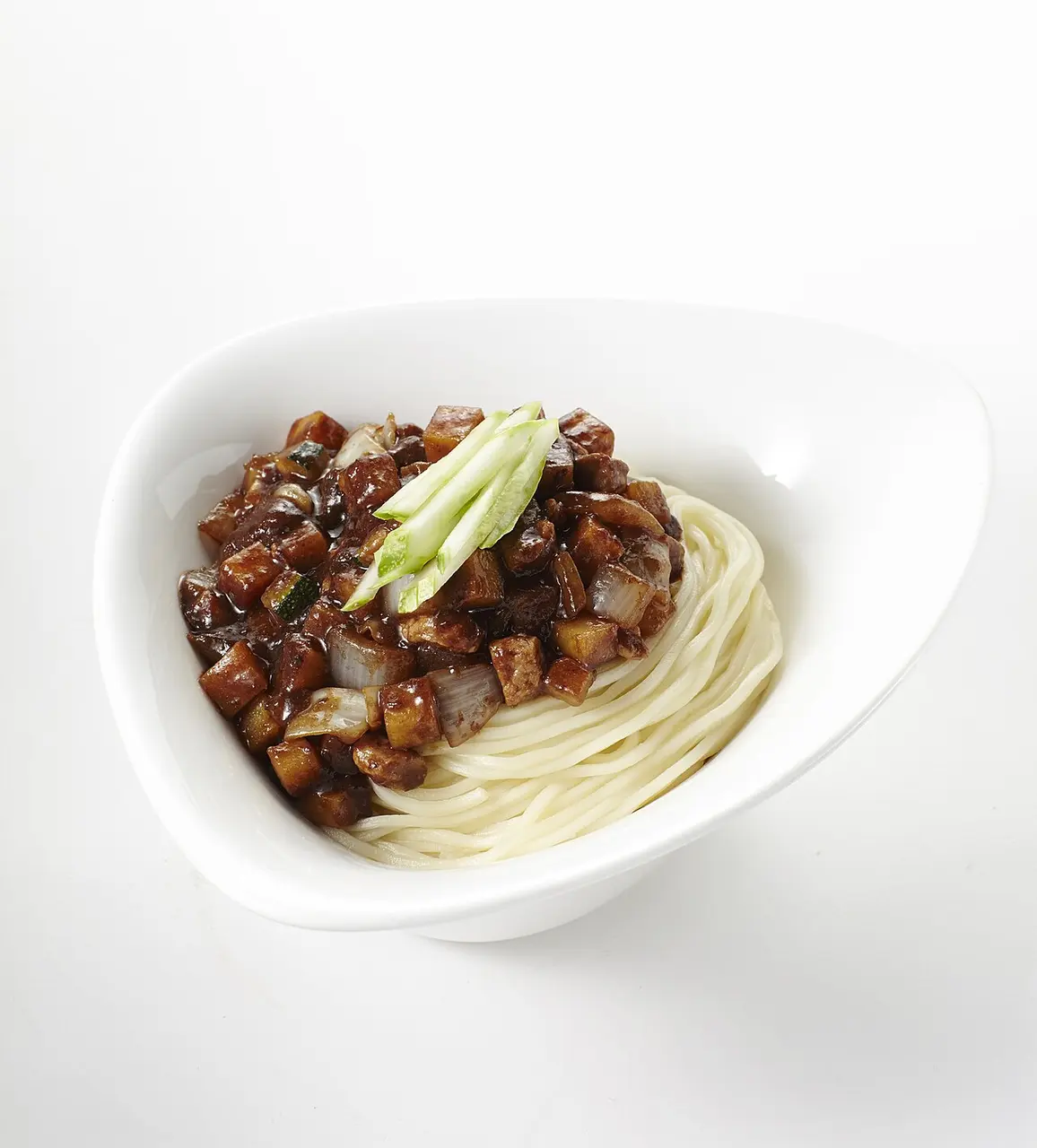
Photo: 국립국어원, Wikimedia Commons, CC BY-SA 2.0 KR; resized and converted to WebP.

Jajangmyeon came through Korea’s Chinese restaurant tradition and became a Korean comfort food of its own: springy wheat noodles covered in a dark sauce made from fried black-bean paste, onion and usually pork. The flavor is savory-sweet and earthy, not spicy.
Mix until every noodle is coated, then eat it with yellow pickled radish. It is a classic delivery meal and Korea’s traditional food for moving day; it is also associated with Black Day on April 14. The sauce stains enthusiastically, so a white shirt is poor planning. Vegetarian versions exist but are not the standard.
20. Bingsu (빙수)
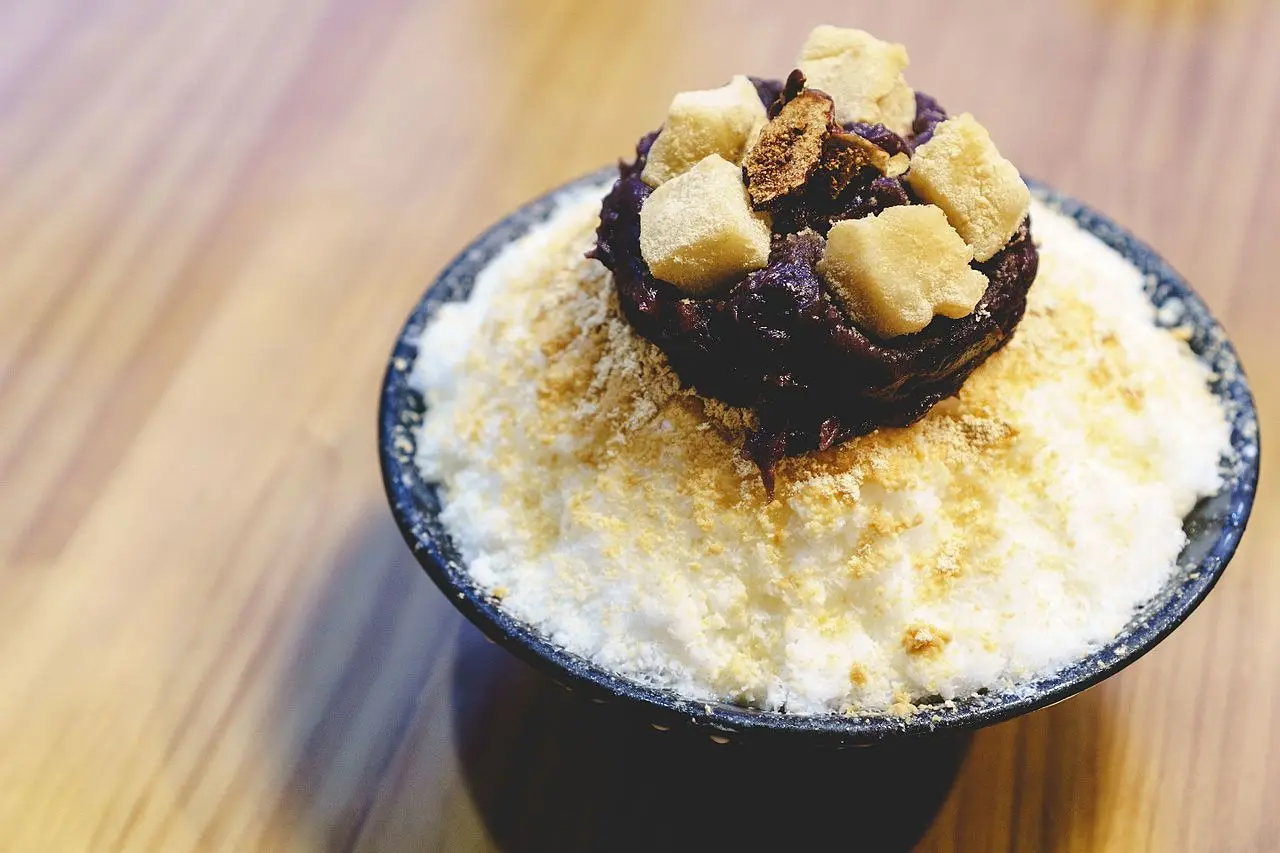
Photo: tookapic, Wikimedia Commons, CC0; resized and converted to WebP.

Bingsu is finely shaved ice served as a large, shareable dessert. Traditional patbingsu adds sweet red beans and chewy rice cake, while modern cafés pile on mango, strawberries, green tea, chocolate or condensed milk. The best versions have ice so fine that it feels closer to fresh snow than crushed ice.
Mix lightly as you eat instead of immediately collapsing the whole bowl into soup. Summer is peak season, but dessert cafés often serve bingsu beyond the hottest months. One bowl usually feeds two or more people. Dairy, nuts and soybean powder are common, so check toppings if allergies matter.
How to order, pay and choose your first five
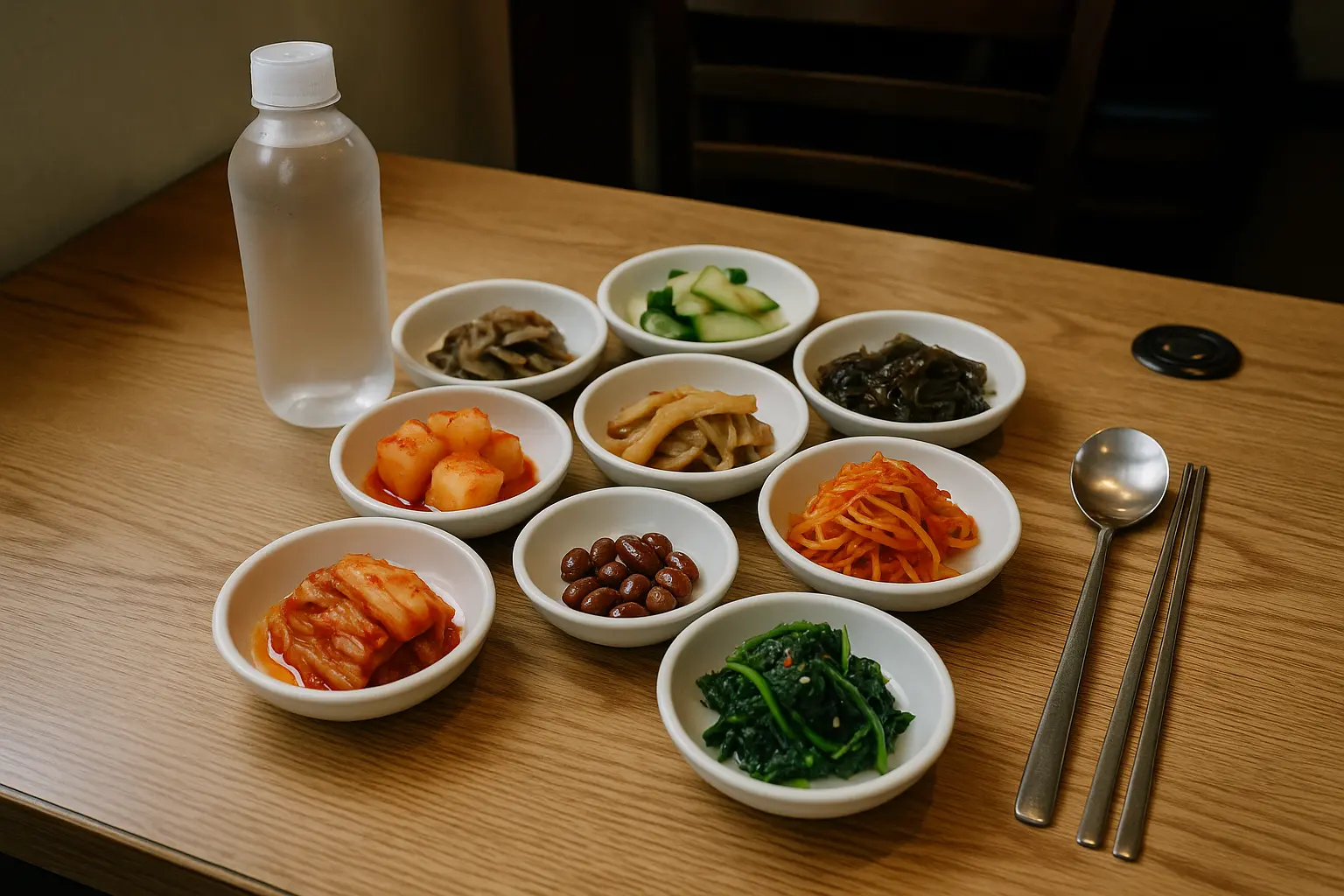
- Look for the table button. Pressing it is normal; staff are not ignoring you.
- Say “jeogiyo” when there is no button and you need to call someone over.
- Expect sharing. Grills, pancakes, fried chicken and large stews are communal.
- Pay at the counter. In many casual restaurants, you settle the bill while leaving.
- Use cards, but carry some cash. International cards work widely; market stalls can be less predictable.
- Do not tip. It is neither required nor expected.
Useful search trick: Enter the Korean food name from this article in Naver Map or Google Maps, then add the neighborhood—for example, 삼겹살 홍대 or 비빔밥 명동. This usually produces better nearby options than searching “best Korean restaurant.”
If time is short, choose one from each experience: samgyeopsal for the grill, bibimbap for rice, kimchi jjigae for stew, tteokbokki with eomuk at a market, and bingsu for dessert. That gives you range without turning the trip into competitive eating.
Spice, dietary limits and what we would skip
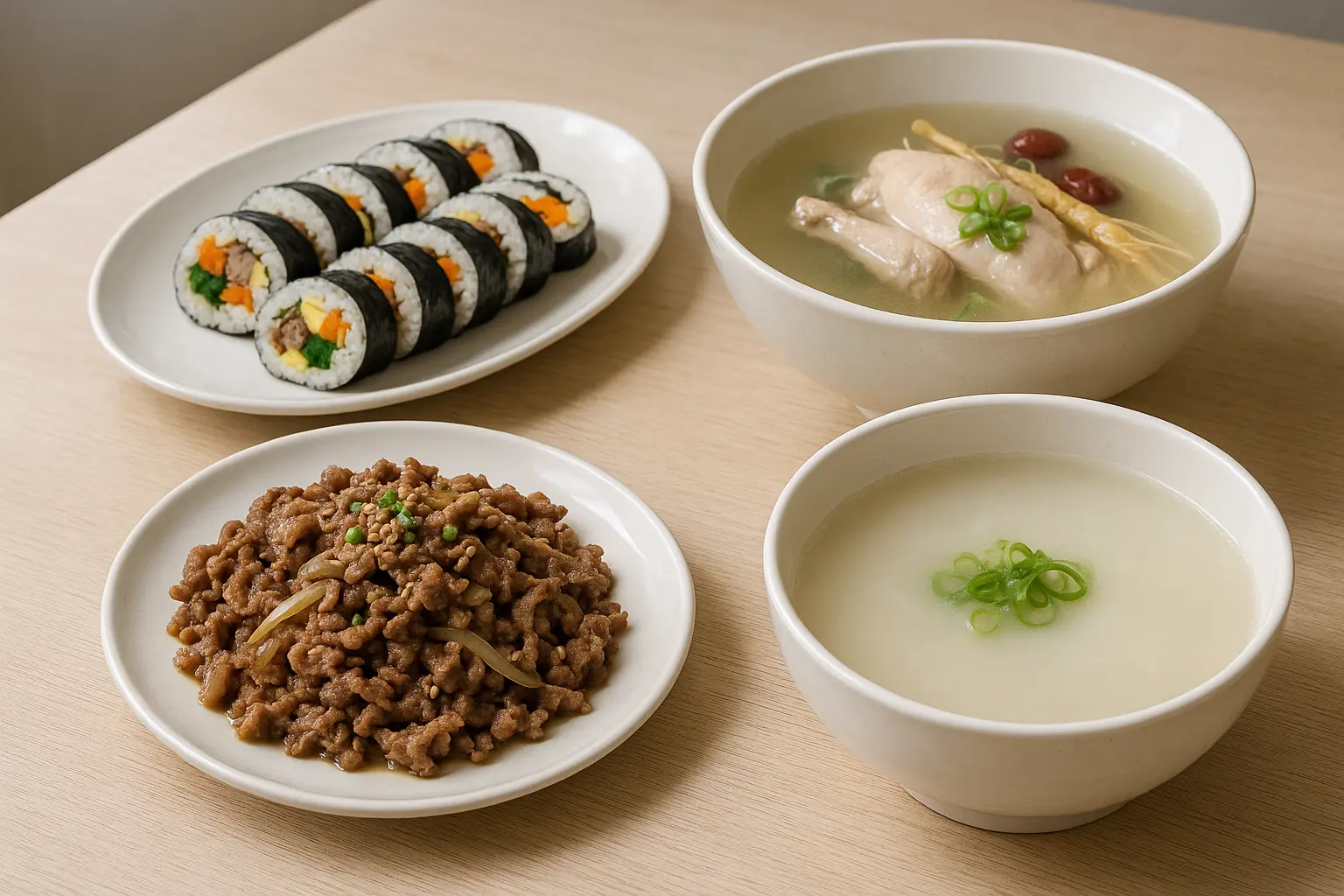
Red does not always mean unbearable, and brown does not mean vegetarian. For mild meals, begin with bulgogi, gimbap, japchae, samgyetang or seolleongtang. Vegetarians need to confirm broth and seasoning as well as visible meat: anchovy, beef, pork, fish sauce and salted seafood appear in dishes that look vegetable-heavy.
A translated allergy card is more reliable than improvised English because sesame, soy, shellfish, wheat and nuts can hide in sauces, broths and garnishes. Market vendors may not be able to prevent cross-contact.
What would we skip? Any oversized “viral” snack famous mainly for stretching cheese toward a camera. Try the classic version first. Korea’s everyday dishes—a stew with rice, a clean roll of gimbap, a properly crisp pancake—usually explain the country better than stunt food does.
Everything above was checked on foot (and at the table) by Korea Tripbook editors, most recently August 2026.