What to Eat in Seoul: A Local's Food Guide
The question we get more than any other isn’t about palaces or day trips — it’s “what should I actually eat?” Fair. Seoul food is a full itinerary on its own, and it’s also where visitors waste the most money on mediocre versions of great things. So here’s the list we send every friend who visits: the dishes that matter, where locals really eat them, and the small rules that make everything easier. For the full city rundown, our Seoul food & drink section goes deeper.
The must-eat list at a glance
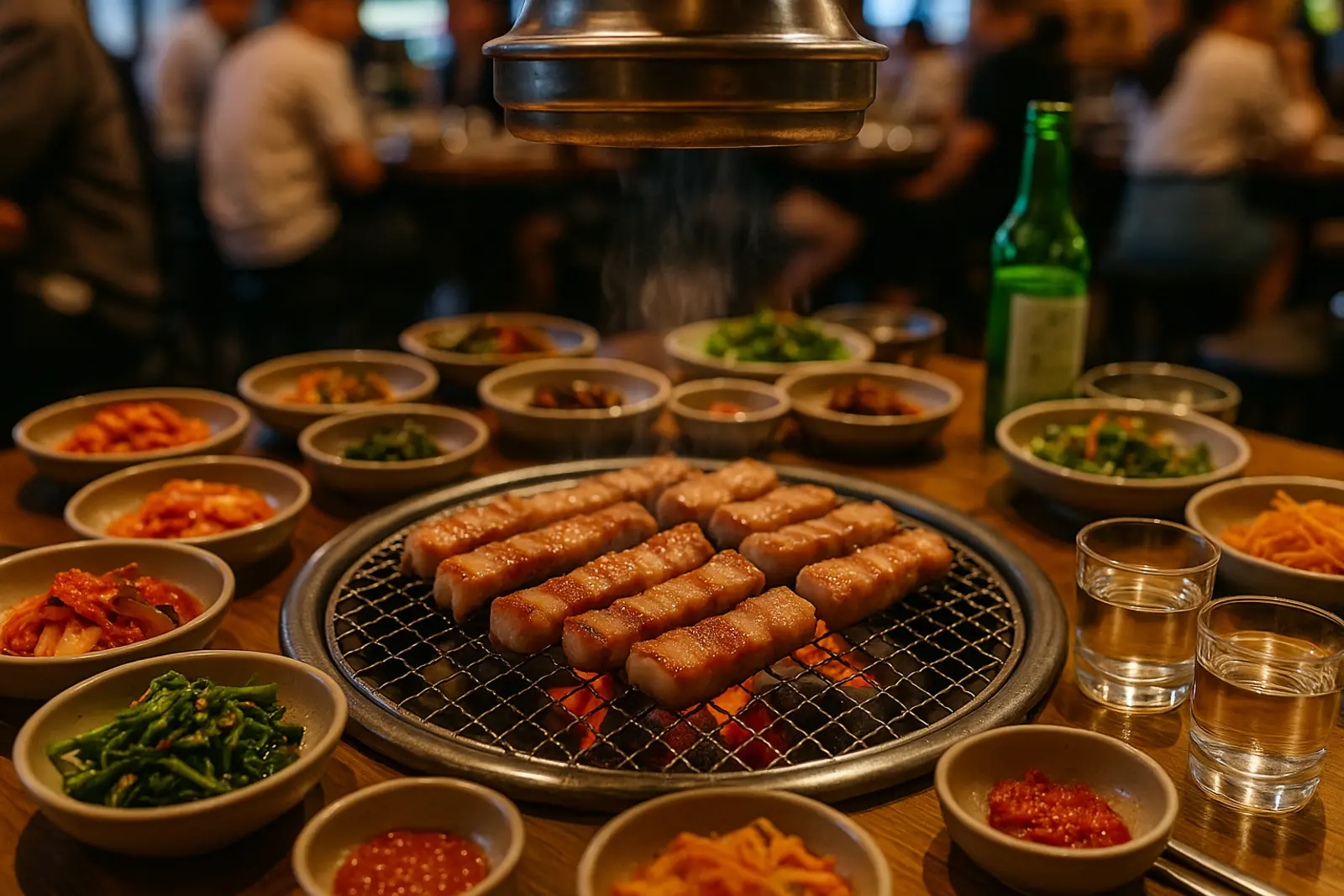
- Korean BBQ Samgyeopsal at minimum, galbi if the budget allows. The smoky grill alleys of Jongno-3-ga and Mapo beat any hotel-district chain.
- Gwangjang Market classics Bindaetteok fried crisp with a bowl of makgeolli — the correct answer — then mayak gimbap, and yukhoe if you’re feeling brave.
- Tteokbokki from a street cart Chewy rice cakes in gochujang sauce, eaten standing up with a cup of eomuk broth to put out the fire.
- Chimaek by the Han River Fried chicken and beer delivered straight to a riverside park — Yeouido or Ttukseom, on a claimed patch of grass.
- Convenience-store ramyeon at the river Cook it yourself at the hot-water machine and eat it at a plastic table facing the water — one of Seoul’s great cheap dinners.
Korean BBQ: the one meal to plan around
If you book only one dinner, make it BBQ — samgyeopsal (pork belly) at minimum, galbi if the budget allows. Meat hits the charcoal, someone hands you scissors and tongs, and the table becomes a group project. That’s the point: KBBQ is Korea’s social meal, and eating it properly means wrapping meat in a lettuce leaf with ssamjang and garlic, then eating the whole parcel in one go. Our honest advice on where: the smoky, low-ceilinged grill alleys of Jongno-3-ga and Mapo are where office workers go after work, and the difference from a hotel-district BBQ chain is real. Loud, cramped, perfect.
Gwangjang Market: the classics, done right
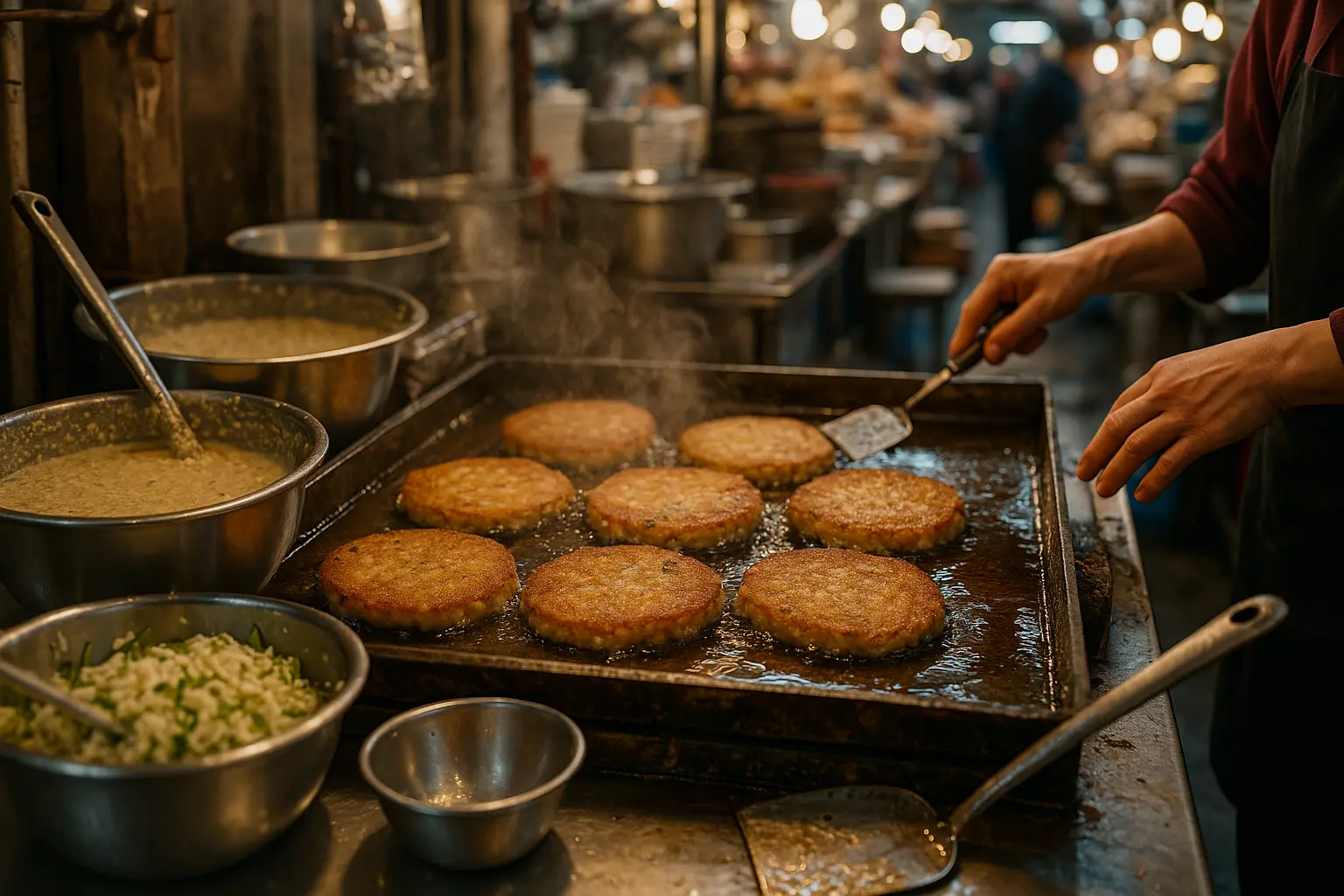
Gwangjang is the street-food classic for a reason. The order we always repeat: bindaetteok (mung bean pancake) fried crisp in a shallow pool of oil — the combination with a bowl of makgeolli is the correct answer — then mayak gimbap, the little “narcotic” seaweed rolls named for how hard they are to stop eating, and yukhoe (Korean beef tartare) if you’re feeling brave. Sit at a stall, point at what your neighbor is having, and you’ll be fine.
Tip: Bring cash — the grandmother flipping your bindaetteok does not take Apple Pay — and go hungry but not at peak lunch, when the aisles turn into a slow river of people.
If you want a preview of the chaos, this tour captures it well:
Tteokbokki and the street food circuit
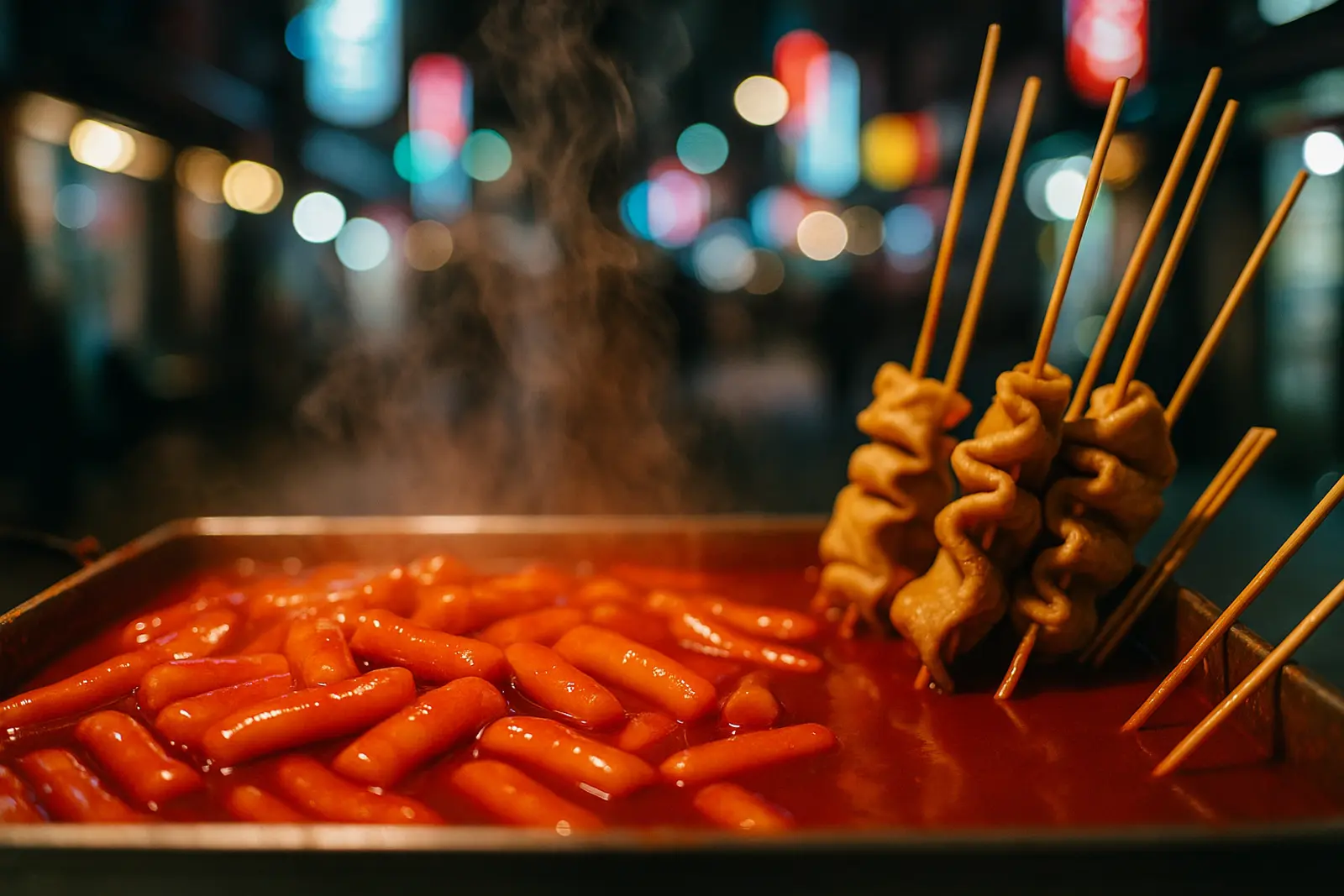
Tteokbokki — chewy rice cakes in gochujang sauce — is the taste of every Korean’s school years, and the street-cart version is the one to have: standing up, slightly too spicy, with a cup of the broth from the fish cake (eomuk) skewers to put out the fire. The reliable rule for all Korean street food: eat where the ajummas are cooking and where locals are queuing. A cart with a line of office workers at 6pm will beat any food street built for tourists. In winter, add hotteok — a molten brown-sugar pancake that has burned every editor here at least once. Worth it.
Chimaek: fried chicken, beer, and the Han River
Korean fried chicken with beer — chimaek — is a national institution, and the correct venue is outdoors. Do it the local way: take the subway to a Han River park like Yeouido or Ttukseom, claim a patch of grass, and order chicken delivered to the park — the delivery zones are genuinely marked on the ground. Round it out from the riverside convenience store: cook-it-yourself ramyeon at the hot-water machine, eaten at a plastic table facing the water, is one of Seoul’s great cheap dinners and a rite of passage in its own right. Pair the evening with our things to do in Seoul list — the river at sunset earns its reputation.
Naengmyeon: the summer religion
Naengmyeon — buckwheat noodles in an icy beef broth (mul-naengmyeon) or tossed in spicy sauce (bibim-naengmyeon) — is what Seoul eats when the humidity hits. It’s also the traditional finisher after BBQ: a cold, sharp bowl after all that charcoal is one of the best one-two punches in Korean food. First-timers usually find the broth shockingly plain for one minute, then finish every drop. Add mustard and vinegar from the table — that’s what they’re there for.
Where locals actually eat (vs. the tourist version)
A simple filter that has never failed us: locals eat in alleys, basements and neighborhood joints, not on “food streets” with touts and picture menus out front. Jjigae — kimchi or soybean stew, bubbling as it lands on the table — is best in a lunchtime rice joint full of office workers. Gukbap and noodle shops are where Koreans eat alone, so solo travelers should head there without hesitation; nobody will look twice. And if a place is famous mainly for being filmed, assume the version next door is better and cheaper.
How to order without looking lost
A few mechanics that surprise first-timers, all good news:
- Banchan (side dishes) and water are free — and refillable. Asking for more kimchi is normal, not rude.
- Press the call button. Most tables have one; staff won’t hover until you do. Otherwise a clear “jeogiyo!” (excuse me) is the standard move.
- Sharing is the default. Stews and grills land in the middle of the table. Ordering one dish per person plus one to share is a solid formula.
- Pay at the counter on the way out, not at the table — card is fine almost everywhere except market stalls.
- No tipping. Anywhere, ever. Trying mostly causes confusion.
The vegetarian and allergy reality check
Honest version: Seoul is harder for vegetarians than its café-culture image suggests. Broth is usually meat- or anchovy-based, and “no meat” often still means ham in the fried rice. Workarounds that actually work: bibimbap ordered without beef, temple-food restaurants around Insadong and Jongno, and the big-chain kimbap shops where you can see ingredients.
Tip: For allergies, a translated card stating the allergen in Korean works far better than verbal English — soy, sesame, shellfish and peanuts hide in a lot of sauces, so check even “safe” dishes.
One thing we’d skip
The photogenic tourist street food of Myeongdong — giant cheese-coated everything at several times market prices. It exists for cameras, not dinner. Take the same appetite to Gwangjang or any neighborhood cart instead and eat twice as well for half as much.
Everything above was checked on foot (and eaten, repeatedly) by Korea Tripbook editors, most recently August 2026.