15 Korean Foods for First-Time Visitors
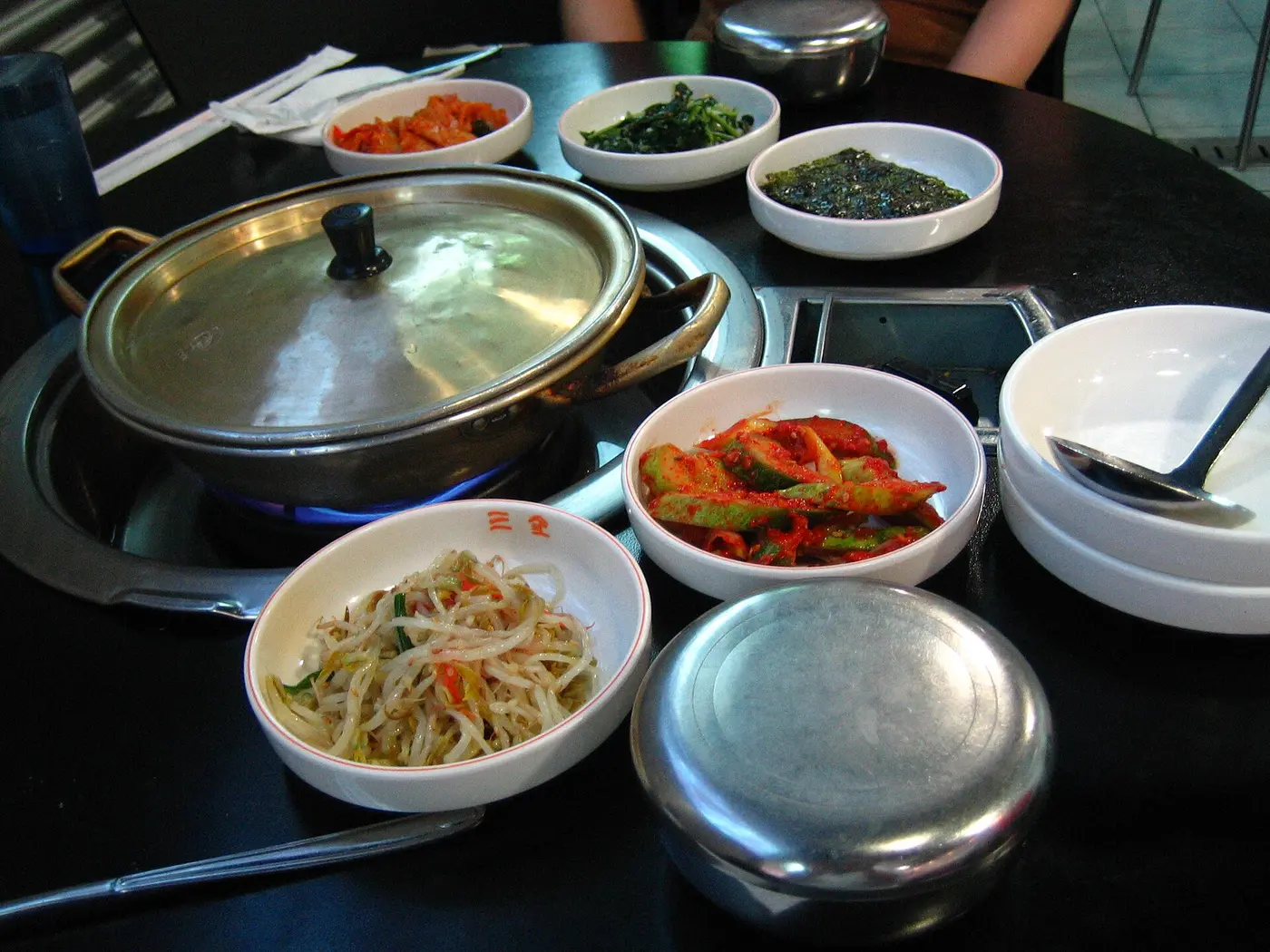
15 Korean Foods for First-Time Visitors
Korean cuisine is a vibrant mix of grilling, fermenting, simmering, frying, and cooling techniques that create a wide range of flavors and textures. For first- or second-time visitors, navigating this culinary landscape can be exciting but also a little daunting. This guide introduces 15 essential Korean dishes, explaining what they are, how to order them, and what to watch out for regarding dietary preferences, spiciness, and etiquette. Whether you’re dining solo or sharing with friends, this checklist will help you enjoy Korea’s food culture confidently and deliciously.
Tip #1: Don’t hesitate to press the call button on your table or say “jeogiyo” (저기요) to get the staff’s attention. It’s expected and normal in Korean restaurants.
Tip #2: Many Korean dishes are designed for sharing. Ordering a variety to share will give you a better taste experience.
Tip #3: Always ask about ingredients if you have dietary restrictions—kimchi, broths, and sauces often contain fish sauce, anchovies, or meat stock even if the dish looks vegetarian.
🔥 Korean Grill and Chicken: 1–4
1. Samgyeopsal (삼겹살)
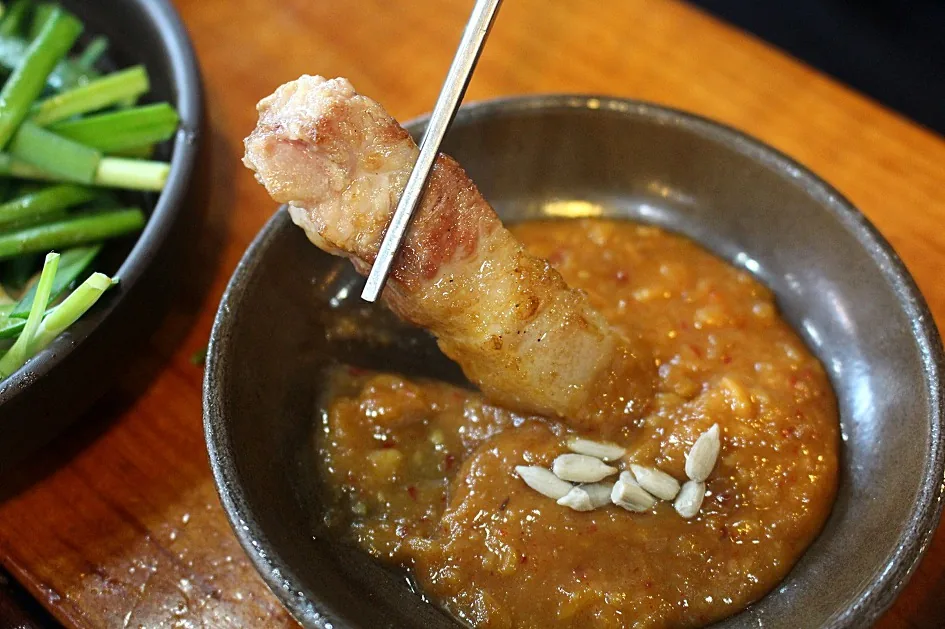
Photo: 대경라이프, Wikimedia Commons, CC BY-SA 4.0; resized and converted to WebP.

Samgyeopsal is thick slices of pork belly grilled right at your table. Unlike marinated meats, samgyeopsal’s charm lies in its simple, rich flavor and the fun of cooking it yourself. Once grilled to crispy edges and juicy fat, wrap a piece in fresh lettuce or perilla leaves with a dab of ssamjang (a savory chili paste) and raw garlic. Eating it in one bite is the classic way to enjoy this social meal. Usually, restaurants require ordering at least two servings, so it’s perfect for sharing. If you prefer leaner meat, ask for moksal (pork shoulder). Pair samgyeopsal with rice or a soybean paste stew to round out the meal.
2. Bulgogi (불고기)
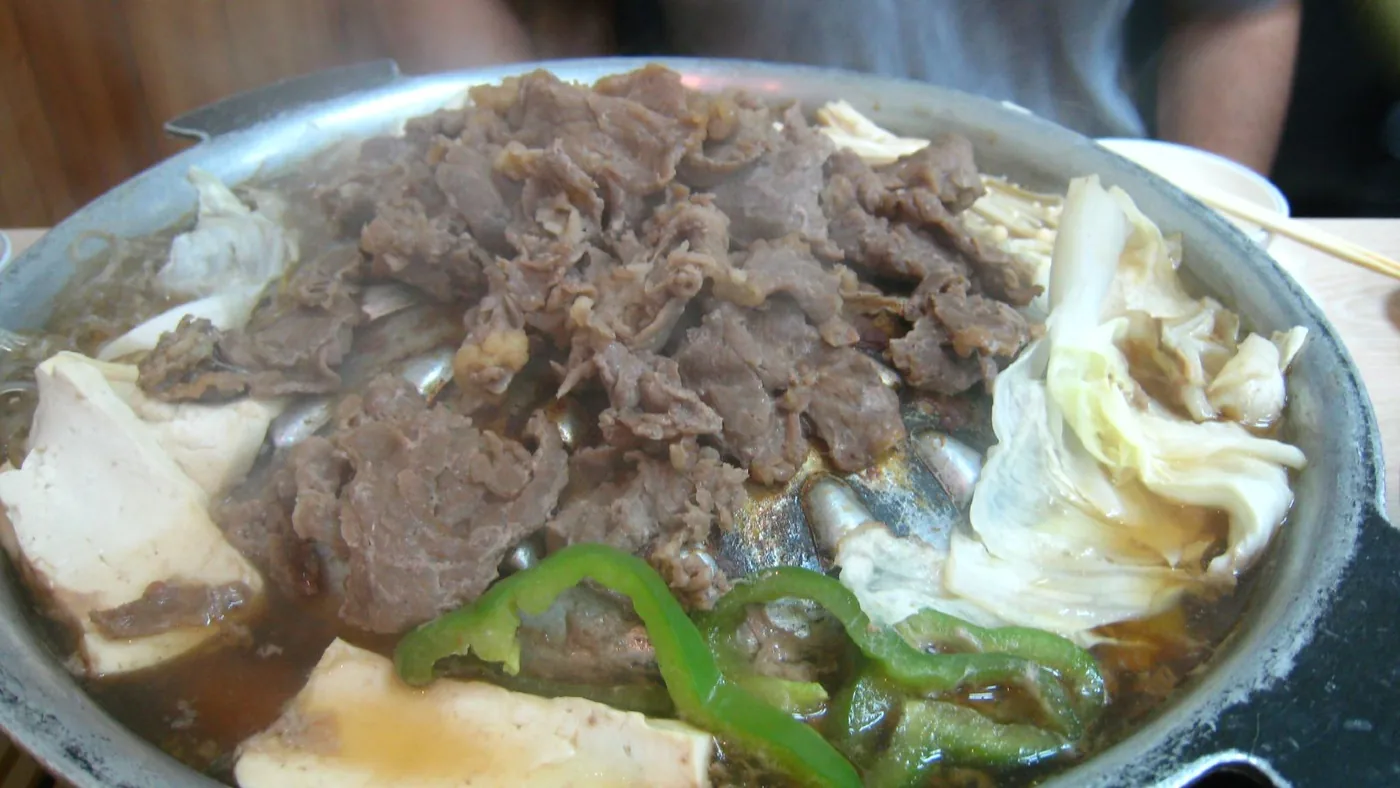
Photo: by miyagawa, Wikimedia Commons, CC BY-SA 2.0; resized and converted to WebP.

Bulgogi features thinly sliced beef marinated in a sweet and savory mix of soy sauce, sugar or pear, garlic, and sesame oil. It’s tender and mildly flavored, often served grilled, sizzling on a hot plate, or simmered with mushrooms and noodles. Bulgogi is a great introduction to Korean flavors for those wary of spice or strong seasonings. You can eat it with rice and side dishes or wrap it in lettuce like Korean BBQ. Its sweetness is intentional and authentic, so don’t mistake it for a tourist-friendly version. It’s also kid-friendly and generally mild.
3. Galbi (갈비)
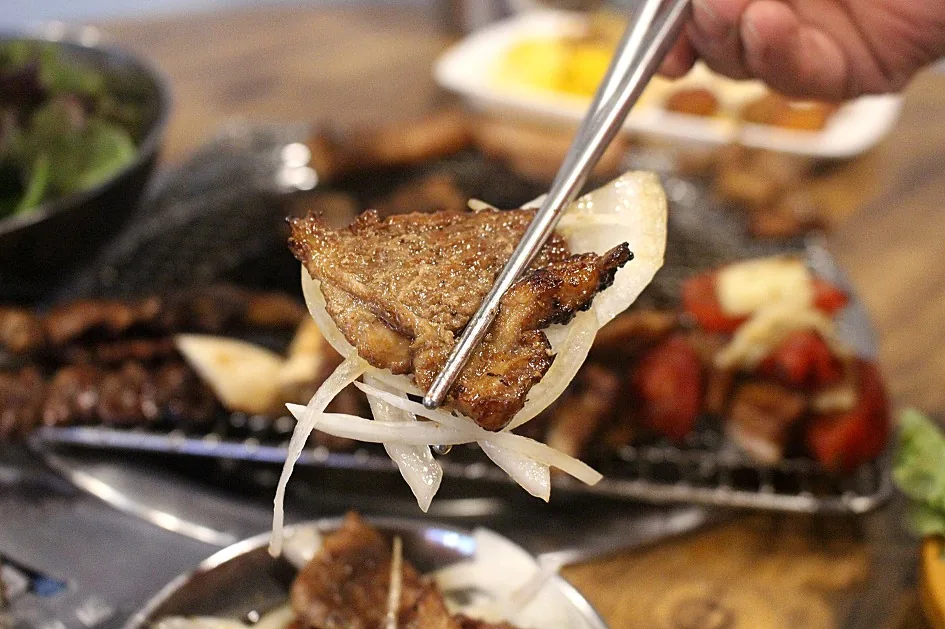
Photo: 대경라이프, Wikimedia Commons, CC BY-SA 4.0; resized and converted to WebP.

Galbi means ribs and usually refers to beef or pork ribs marinated in a garlicky, sweet-savory sauce. Beef galbi is pricier and more premium, while pork galbi is more affordable and often more heavily marinated. Cooked over a tabletop grill, the meat is tender and flavorful. The ribs may come cut across the bone or as long strips that you cut yourself with scissors. Galbi is often a special shared dish rather than a solo meal. When wrapping galbi, use a light touch with ssamjang to avoid overpowering the marinade. Always check if the galbi is beef or pork before ordering.
4. Korean fried chicken (치킨)
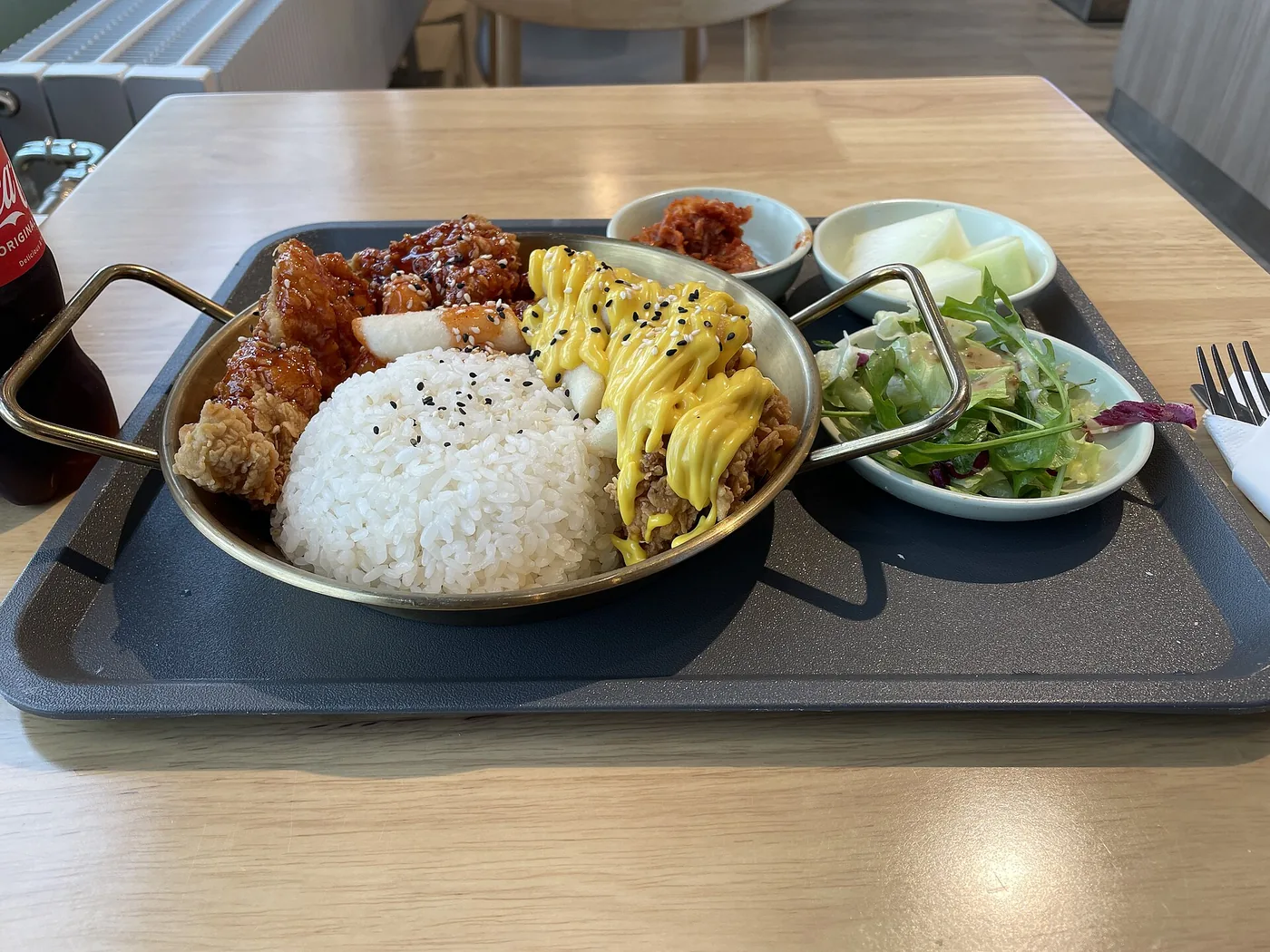
Photo: Ypsilon from Finland, Wikimedia Commons, CC0; resized and converted to WebP.

Korean fried chicken is famous for its ultra-crispy skin and juicy interior. The two main styles are huraideu (plain fried) and yangnyeom (coated in a sweet-spicy glaze). Many restaurants offer banban, a half-and-half option that lets you enjoy both. Bone-in chicken is juicier, while boneless is convenient for casual or on-the-go eating. Chicken and beer (chimaek) is a beloved pairing, especially in outdoor settings. Portions are designed for sharing, so one order can be too much for one person. Be cautious if you have allergies, as sauces may contain soy, sesame, or nuts.
🍚 Rice and Noodles: 5–8
5. Bibimbap (비빔밥)
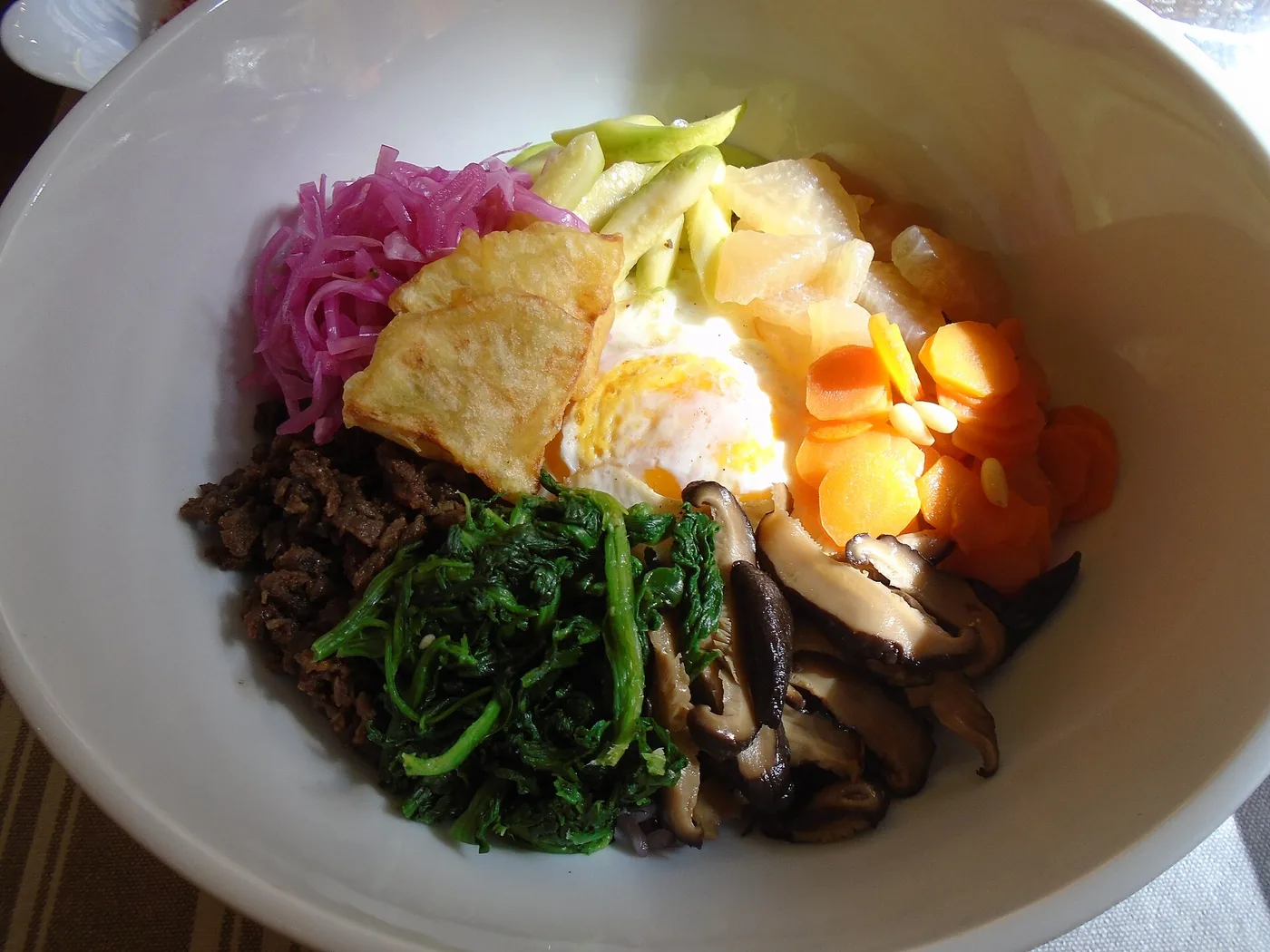
Photo: Guilhem Vellut from Paris, France, Wikimedia Commons, CC BY 2.0; resized and converted to WebP.

Bibimbap is a colorful bowl of rice topped with assorted seasoned vegetables, a fried or raw egg, and often beef. The name means “mixed rice,” and the key is to stir everything together with gochujang (red chili paste) before eating. This creates a harmonious blend of textures and flavors. Dolsot bibimbap comes in a hot stone bowl, producing a crispy rice crust at the bottom—let it sit a moment before mixing to enjoy this feature. Vegetarian versions exist but always ask about meat toppings and whether vegetable seasonings use meat-based broth. Bibimbap suits all palates and is a balanced, filling meal.
6. Gimbap (김밥)
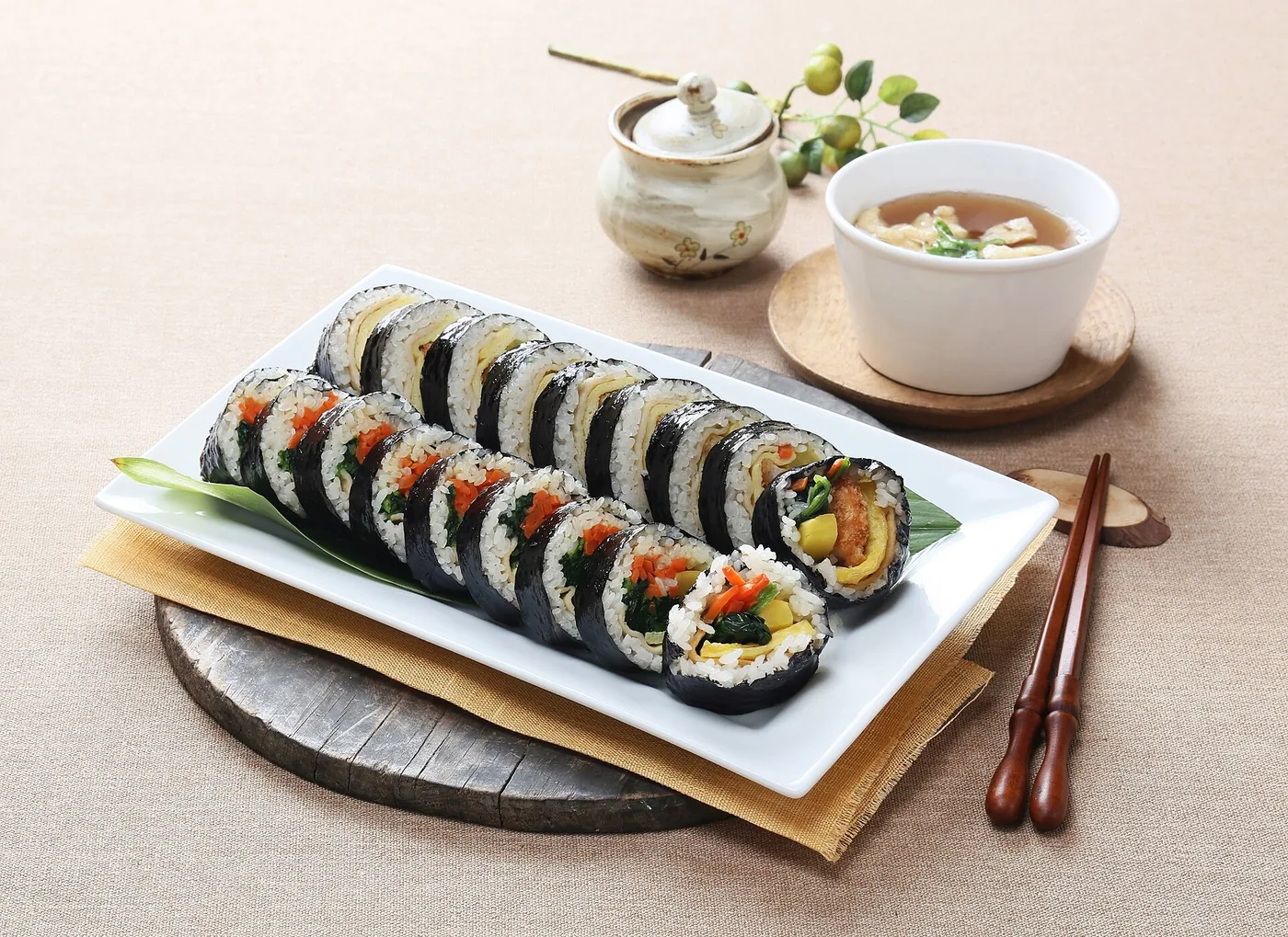
Photo: changupn, Wikimedia Commons, CC0; resized and converted to WebP.
.jpg)
Gimbap resembles sushi rolls but is distinctively Korean. It consists of rice and various fillings like egg, pickled radish, carrot, spinach, and ham, all rolled in seaweed and brushed with sesame oil. Tuna, bulgogi, and cheese versions are common too. It’s a convenient, portable snack or light meal, perfect for picnics or train rides. Eat each slice whole to keep fillings intact. Vegetarians should be cautious: many rolls that look vegetable-based contain ham, fish cake, or imitation crab. Ask specifically for yachae gimbap (vegetable gimbap) and confirm ingredients.
7. Japchae (잡채)
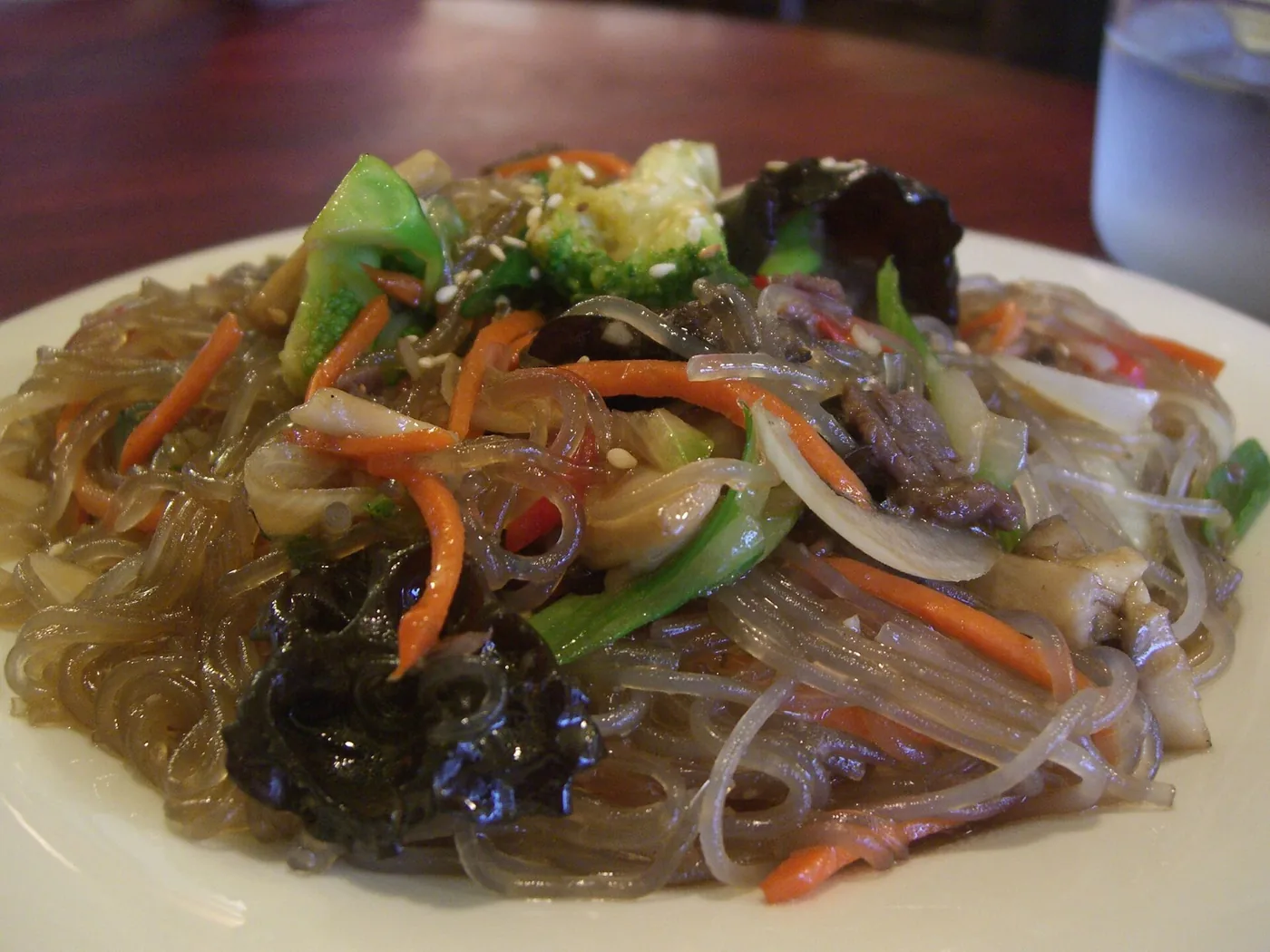
Photo: Alpha, Wikimedia Commons, CC BY-SA 2.0; resized and converted to WebP.

Japchae is a dish of translucent sweet potato starch noodles stir-fried with vegetables, mushrooms, and often beef. The noodles are springy and coated in a lightly sweet soy and sesame sauce. It’s mild and non-spicy, making it a good choice to balance out spicier dishes. Japchae is commonly served at celebrations but also as a shared side or appetizer. Although it looks vegetarian, beef is frequently included, and the sauce may contain animal-based seasonings. It’s best enjoyed shared with chopsticks.
8. Naengmyeon (냉면)
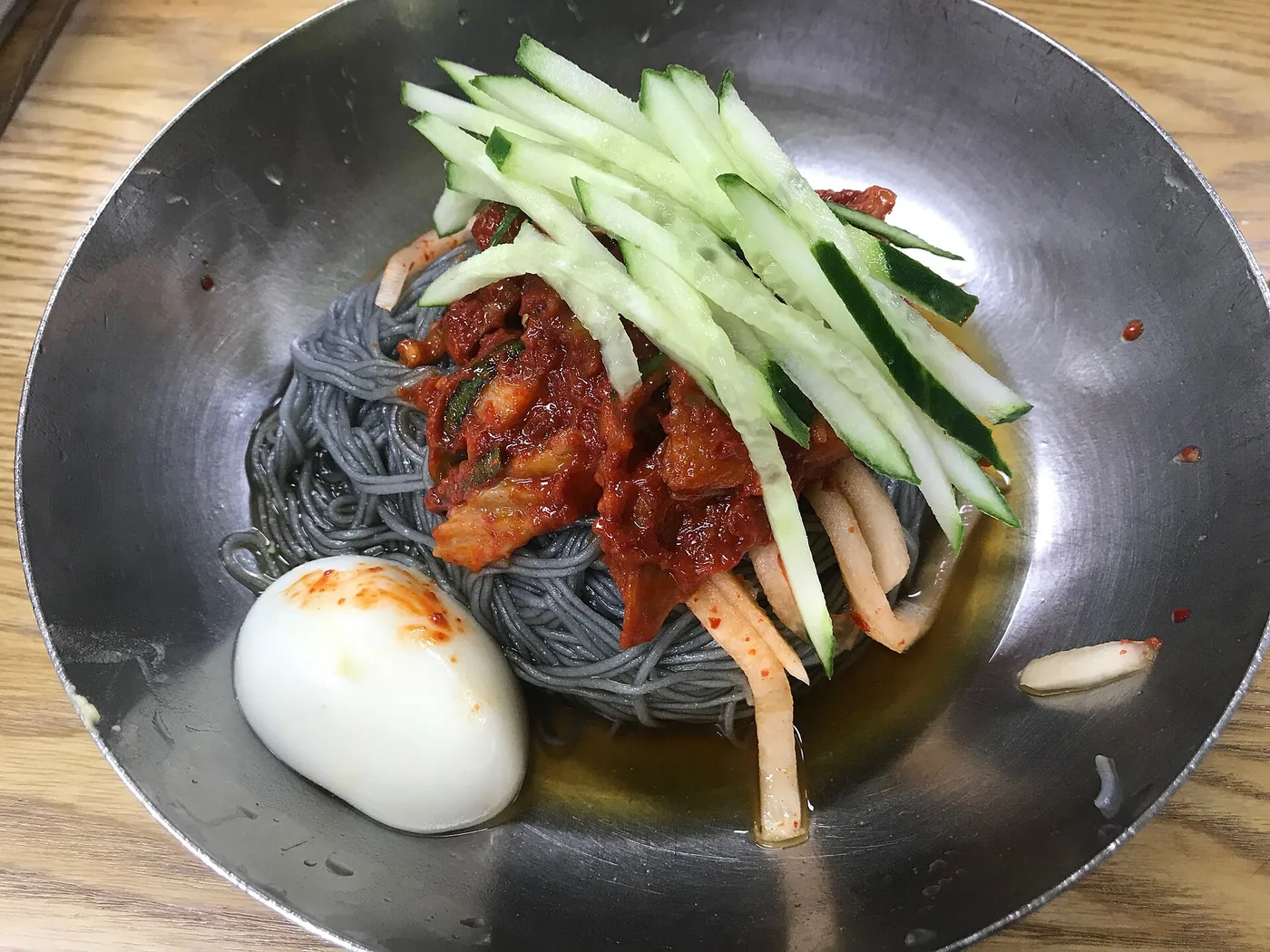
Photo: lazy fri13th, Wikimedia Commons, CC BY 2.0; resized and converted to WebP.

Naengmyeon features long, chewy buckwheat noodles served cold, perfect for hot weather. Mul naengmyeon comes in a tangy, icy broth, while bibim naengmyeon swaps the broth for a spicy red sauce. Mustard and vinegar are provided to adjust the flavor to your liking. The noodles are elastic and sometimes served with scissors to cut them, but many prefer them long. The broth is subtle; taste before adding condiments. This dish is a refreshing finish after grilled meat and is not spicy unless you add the sauce.
🥣 Fermentation and Restorative Soups: 9–13
9. Kimchi (김치)
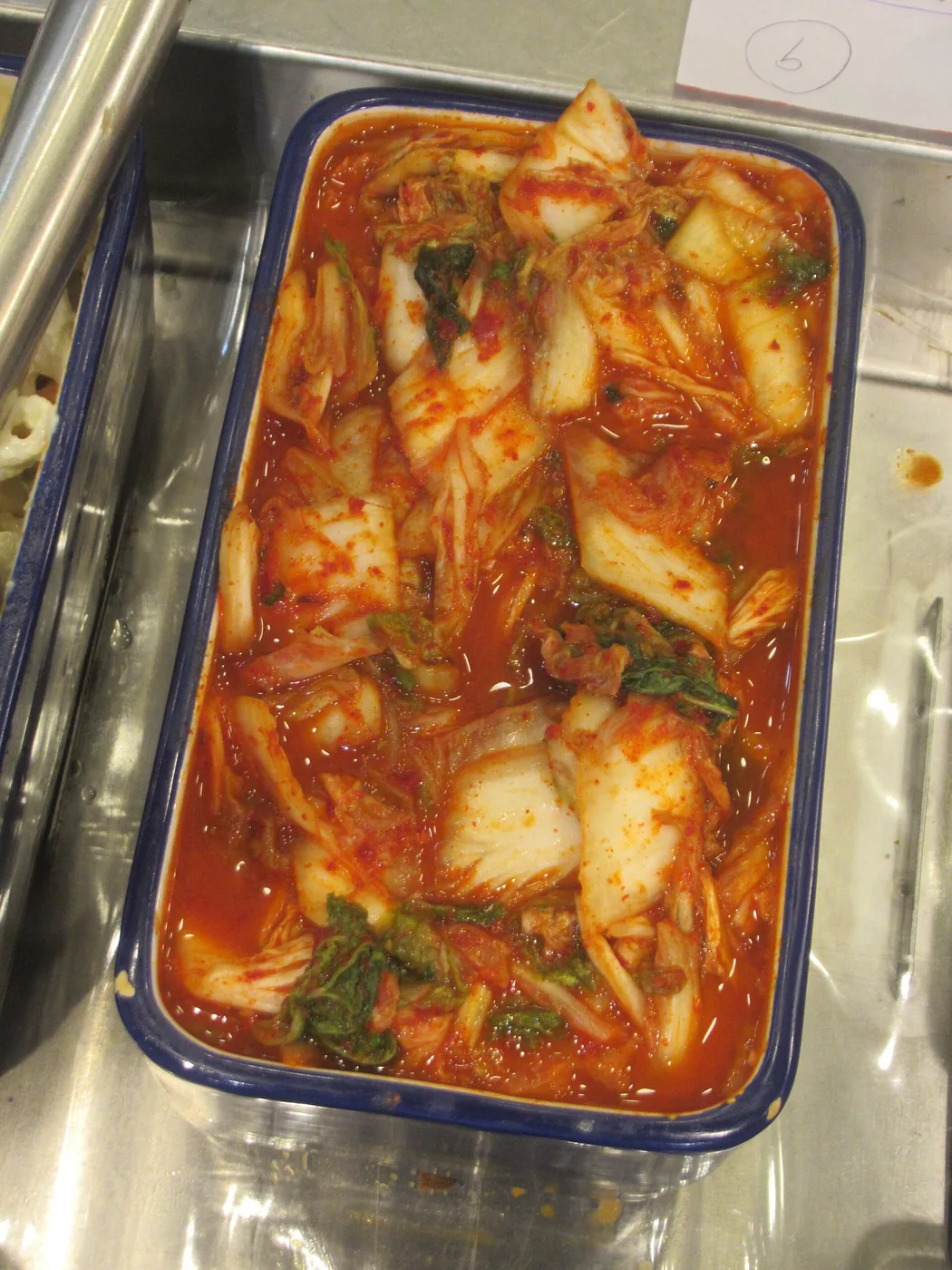
Photo: Wikimedia Commons contributor, Wikimedia Commons, CC BY-SA 4.0; resized and converted to WebP.

Kimchi is Korea’s iconic fermented vegetable side dish, most commonly made from napa cabbage but also from radish, cucumber, or other vegetables. Its flavor ranges from fresh and crunchy to deeply sour and pungent depending on fermentation time. Kimchi usually contains fish sauce or salted seafood, so it’s not automatically vegetarian. It’s served as a complimentary side (banchan) and often refilled. Try it on its own or with rice and grilled meats—aged kimchi grilled alongside pork belly is especially delicious.
10. Kimchi jjigae (김치찌개)
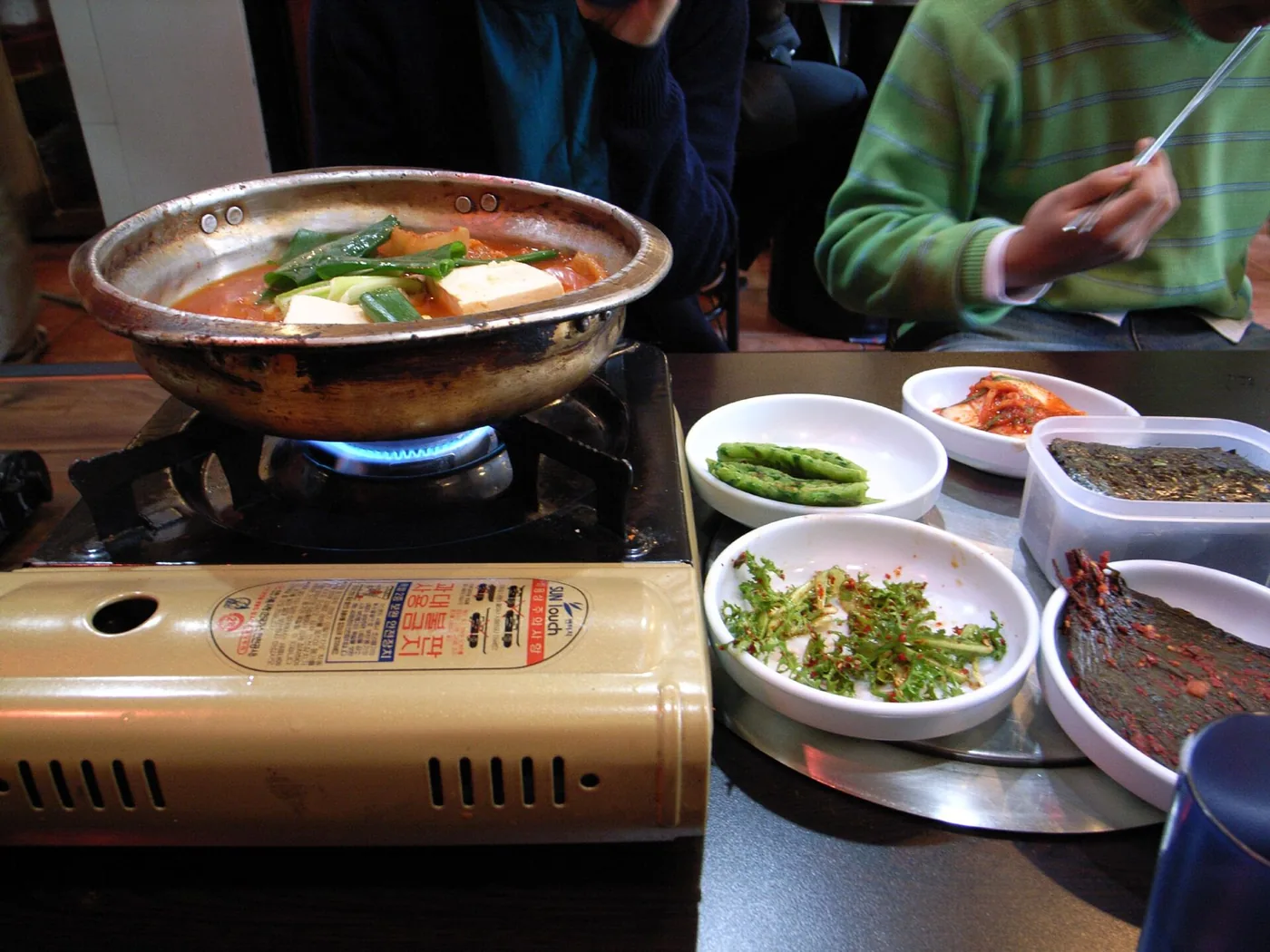
Photo: by cocoAbaen, Wikimedia Commons, CC BY-SA 2.0; resized and converted to WebP.

Kimchi jjigae is a hearty stew made from well-fermented kimchi, often cooked with pork, tofu, and vegetables. The broth is tangy and rich, with pork adding depth. It arrives piping hot in a stone or metal pot and continues cooking at the table. Spoon the stew over rice rather than drinking the broth alone. Spice levels vary, but the broth often contains pork or seafood stock, so it’s not guaranteed vegetarian even if tofu is prominent. It’s a comforting dish, especially on cold or rainy days.
11. Samgyetang (삼계탕)
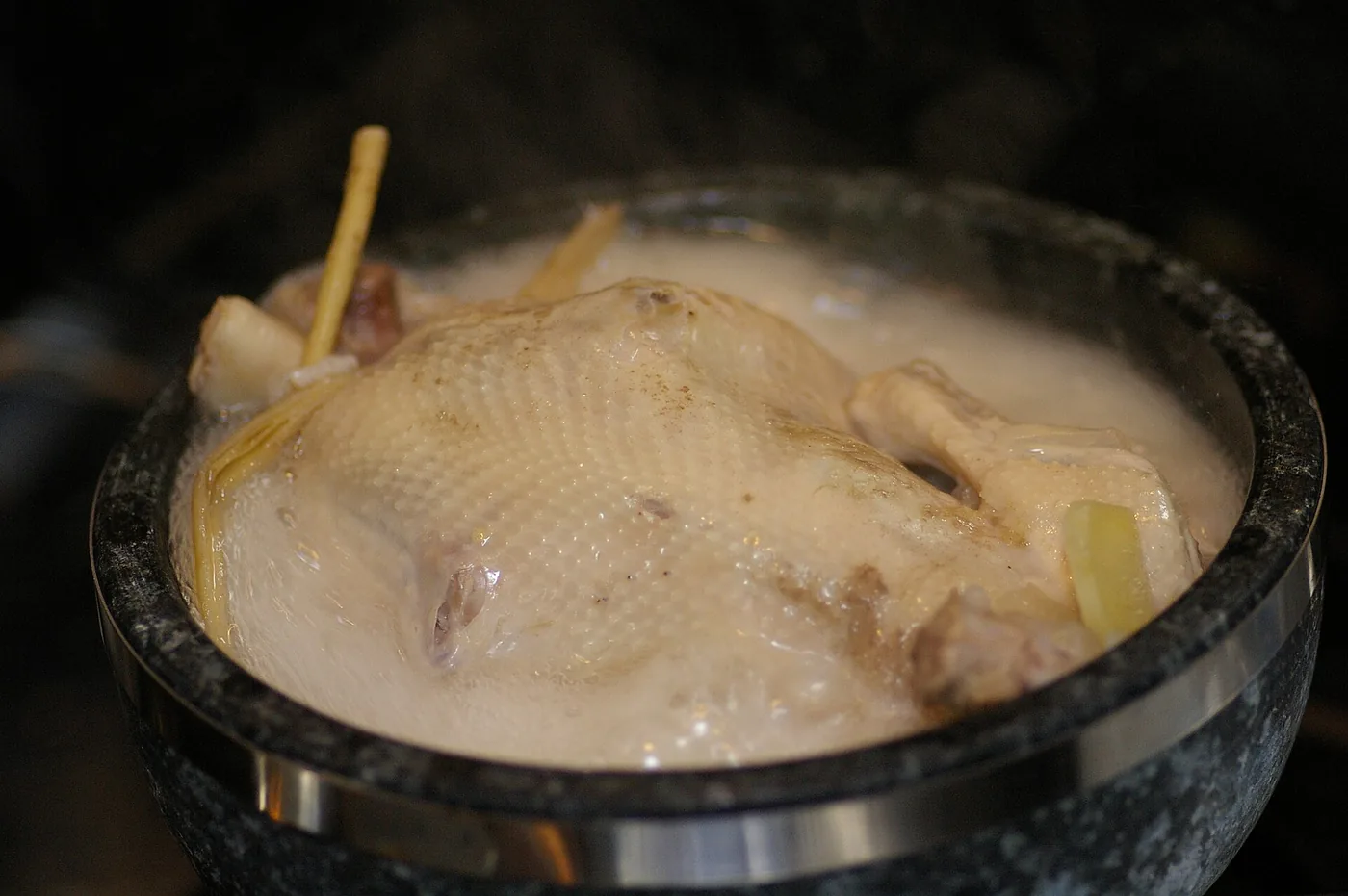
Photo: Nagarazoku, Wikimedia Commons, CC BY-SA 2.0; resized and converted to WebP.

Samgyetang is a whole young chicken stuffed with glutinous rice, garlic, jujube, and sometimes ginseng, simmered until tender. The broth is mild and clean, with salt and pepper served on the side so you can season each bite. Traditionally eaten during Korea’s hottest summer days to restore energy, it’s available year-round. One whole chicken is a single serving. Carefully pull the meat from the bones and finish the flavorful rice inside the bird. This dish is gentle and nourishing but not spicy.
12. Tteokbokki (떡볶이)
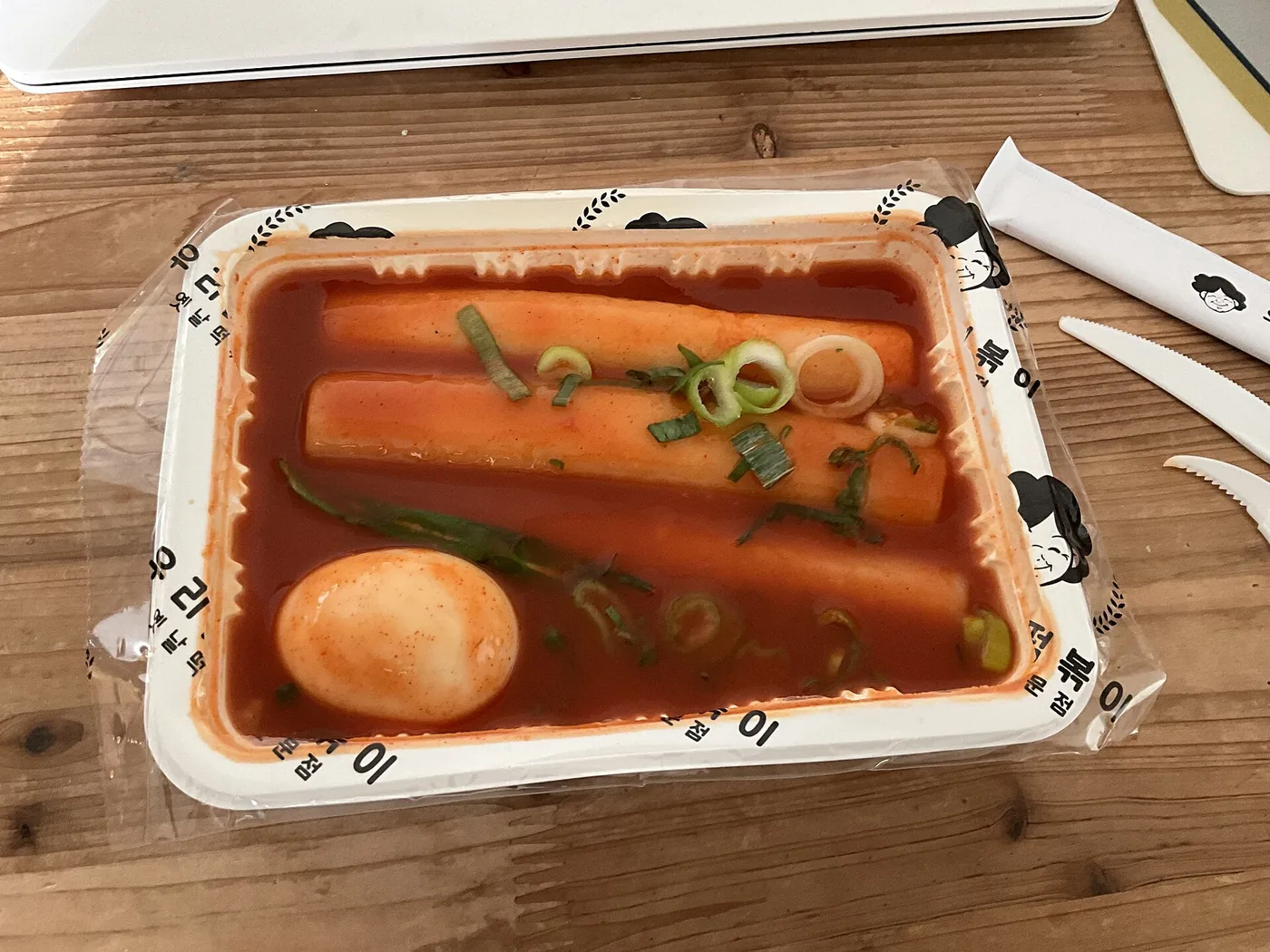
Photo: Kimseoeun2023079825, Wikimedia Commons, CC0; resized and converted to WebP.

Tteokbokki consists of chewy cylindrical rice cakes simmered in a glossy, spicy-sweet gochujang sauce. Fish cakes, cabbage, and boiled eggs often accompany the rice cakes. It’s a popular street food and market snack. Modern variations may add cheese or extra heat. If you’re sensitive to spice, ask for a milder version or share a small portion first. Tteokbokki pairs well with eomuk (fish cake skewers) and fried snacks, which are commonly dipped into the sauce.
13. Eomuk (어묵)
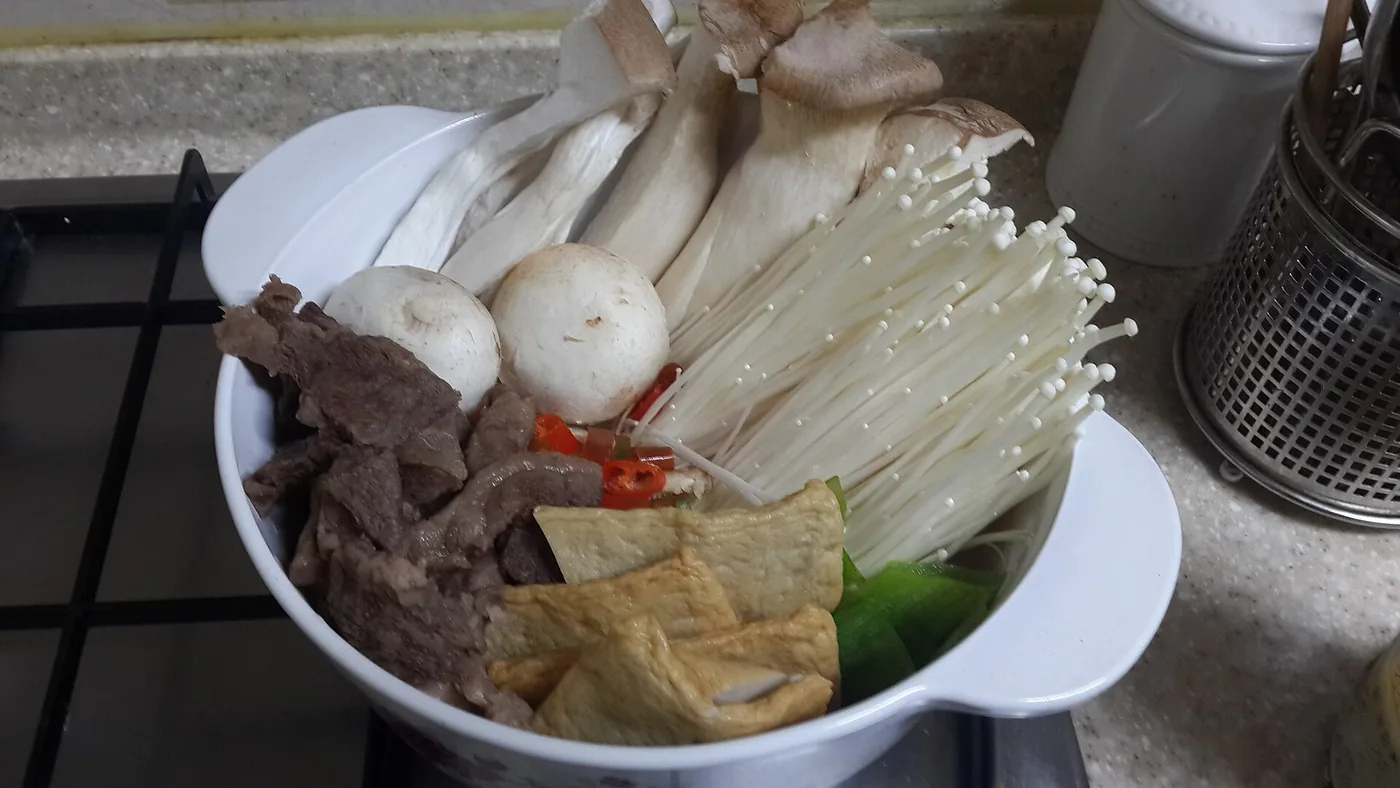
Photo: Mar del Este, Wikimedia Commons, CC BY-SA 4.0; resized and converted to WebP.
.jpg)
Eomuk is seasoned fish paste shaped into flat sheets or cakes, folded onto skewers, and warmed in a light broth. It’s salty and comforting but much milder than spicy tteokbokki. Eomuk is especially popular in Busan and is best enjoyed in cold weather. At street stalls, you eat the skewers standing up and sip the broth from a paper cup. Be aware that eomuk contains fish and often wheat and soy, so it’s not vegetarian or gluten-free. Vendors usually count empty skewers to calculate your bill.
🥟 Dumplings and Dessert: 14–15
14. Mandu (만두)
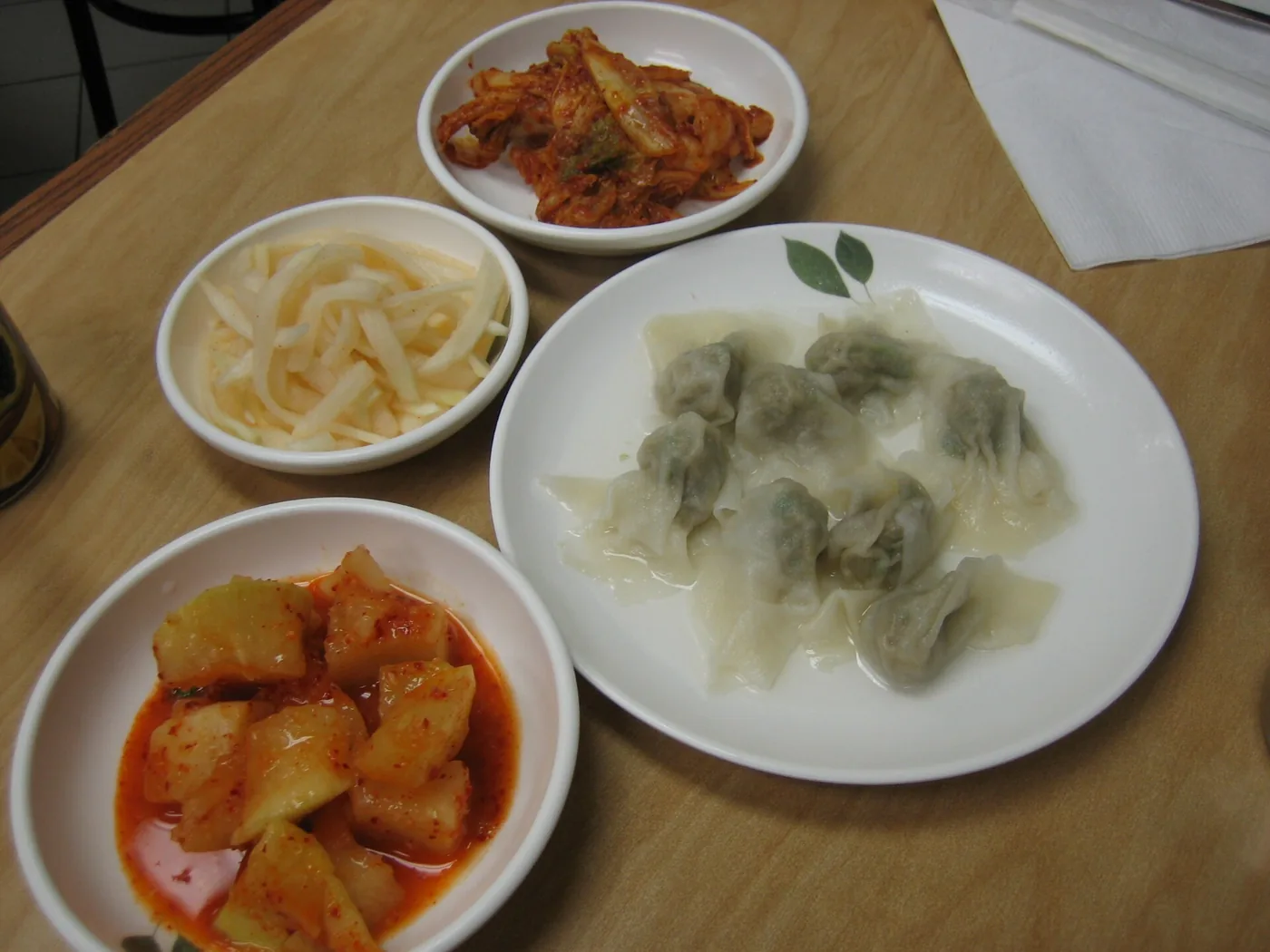
Photo: Norris Wong, Wikimedia Commons, CC BY 2.0; resized and converted to WebP.

Mandu are Korean dumplings filled with combinations of pork, tofu, vegetables, kimchi, and glass noodles. They can be steamed (jjin mandu), pan-fried (gun mandu), or served in soup (mandu-guk). Kimchi mandu tend to be spicier and sharper, while meat mandu are milder and juicier. A mixed plate lets you sample different fillings and cooking styles. Dip sparingly in soy-vinegar sauce. Vegetable mandu exist but may not be vegan, and wrappers usually contain wheat. Soup versions often use beef or anchovy broth, so confirm if you have dietary restrictions.
15. Bingsu (빙수)
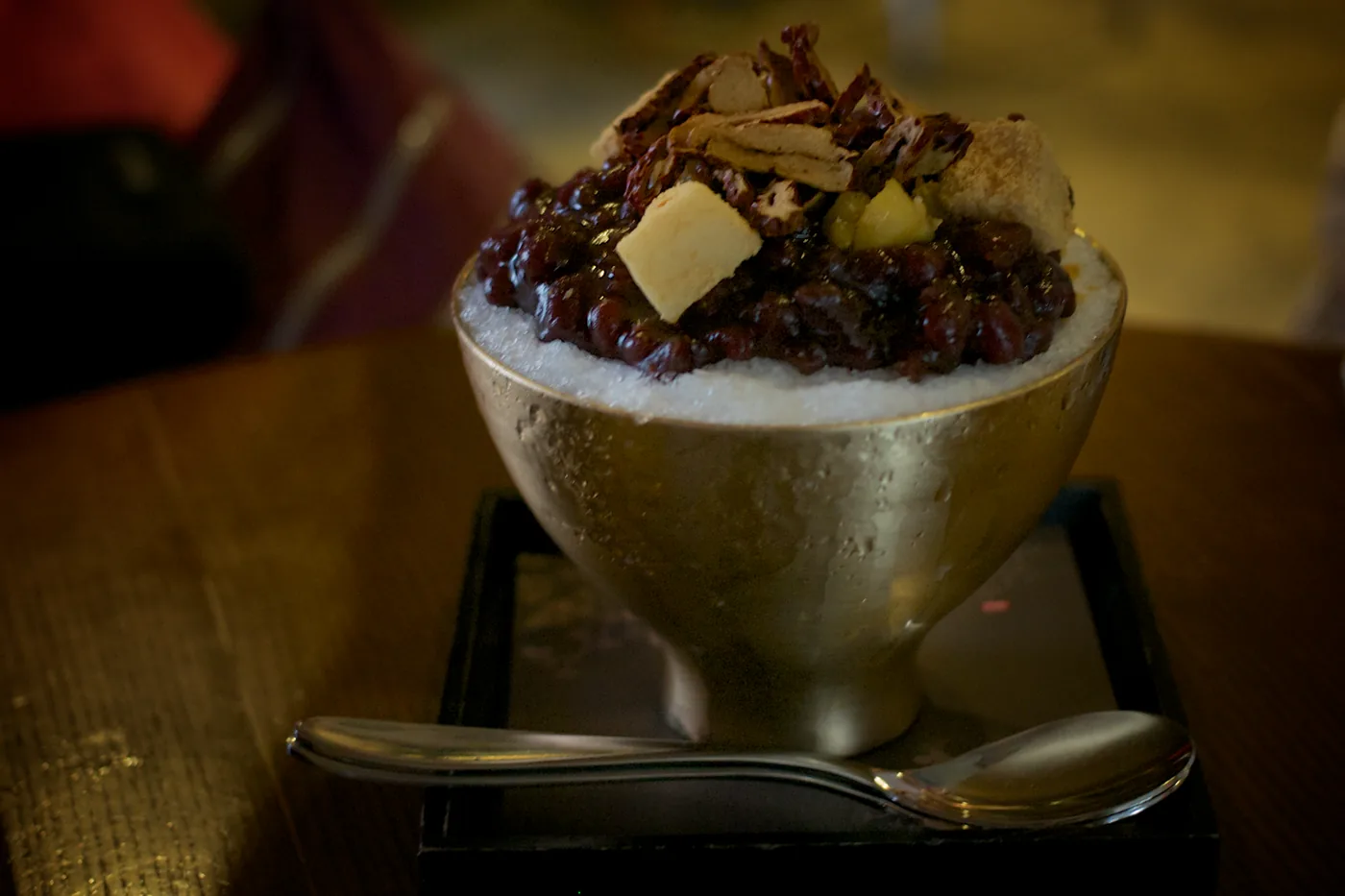
Photo: ecodallaluna, Wikimedia Commons, CC BY-SA 2.0; resized and converted to WebP.

Bingsu is a refreshing dessert of finely shaved ice, traditionally topped with sweet red beans and chewy rice cakes (patbingsu). Modern versions add fruits like mango or strawberries, condensed milk, chocolate, or green tea powder. The ice is so finely shaved it feels like fresh snow. Bingsu is served in large bowls meant for sharing, especially in summer. Mix lightly as you eat to keep the texture. Many toppings contain dairy, nuts, or soybean powder, so check ingredients if you have allergies.
How to Order, Pay, and Choose Your First Five Dishes
- Look for a call button on your table and press it to summon staff. If there’s no button, say “jeogiyo” (저기요) to get attention.
- Expect to share dishes, especially grilled meats, pancakes, fried chicken, and stews.
- Pay at the counter when leaving in many casual places; cards are widely accepted, but carry some cash for markets.
- Tipping is not customary in Korea.
- For a balanced introduction, try samgyeopsal (grill), bibimbap (rice), kimchi jjigae (stew), tteokbokki with eomuk (street food), and bingsu (dessert).
Ordering tip: Use the Korean names from this guide in map apps with your neighborhood (e.g., 삼겹살 홍대) for better local restaurant results than generic searches.
Spice, Dietary Notes, and What to Skip
Red sauces and broths often mean spice, but not always. Some brown or yellow dishes can have hidden heat from mustard, kimchi, or peppers. If you want mild food, start with bulgogi, gimbap, japchae, samgyetang, or seolleongtang. Vegetarians must ask about broths and seasonings since anchovy, fish sauce, and meat stocks are common even in vegetable-heavy dishes.
If you have allergies, carry a translated allergy card—sesame, soy, shellfish, wheat, and nuts frequently appear in sauces and garnishes. Market stalls may not prevent cross-contact.
What to skip? Avoid oversized “viral” snacks mainly famous for stretching cheese or unusual presentations. Classic dishes like stews with rice, simple gimbap, and crisp pancakes better represent Korean food culture.
Hero photo credit: Photo: ayustety, Wikimedia Commons, CC BY-SA 2.0; resized and converted to WebP. Source: https://commons.wikimedia.org/wiki/File:Korean_cuisine-Jjigae_and_bancahn.jpg

Everything above was checked on foot (and at the table) by Korea Tripbook editors, most recently August 2026.