The Complete Korean BBQ Guide for First-Time Visitors
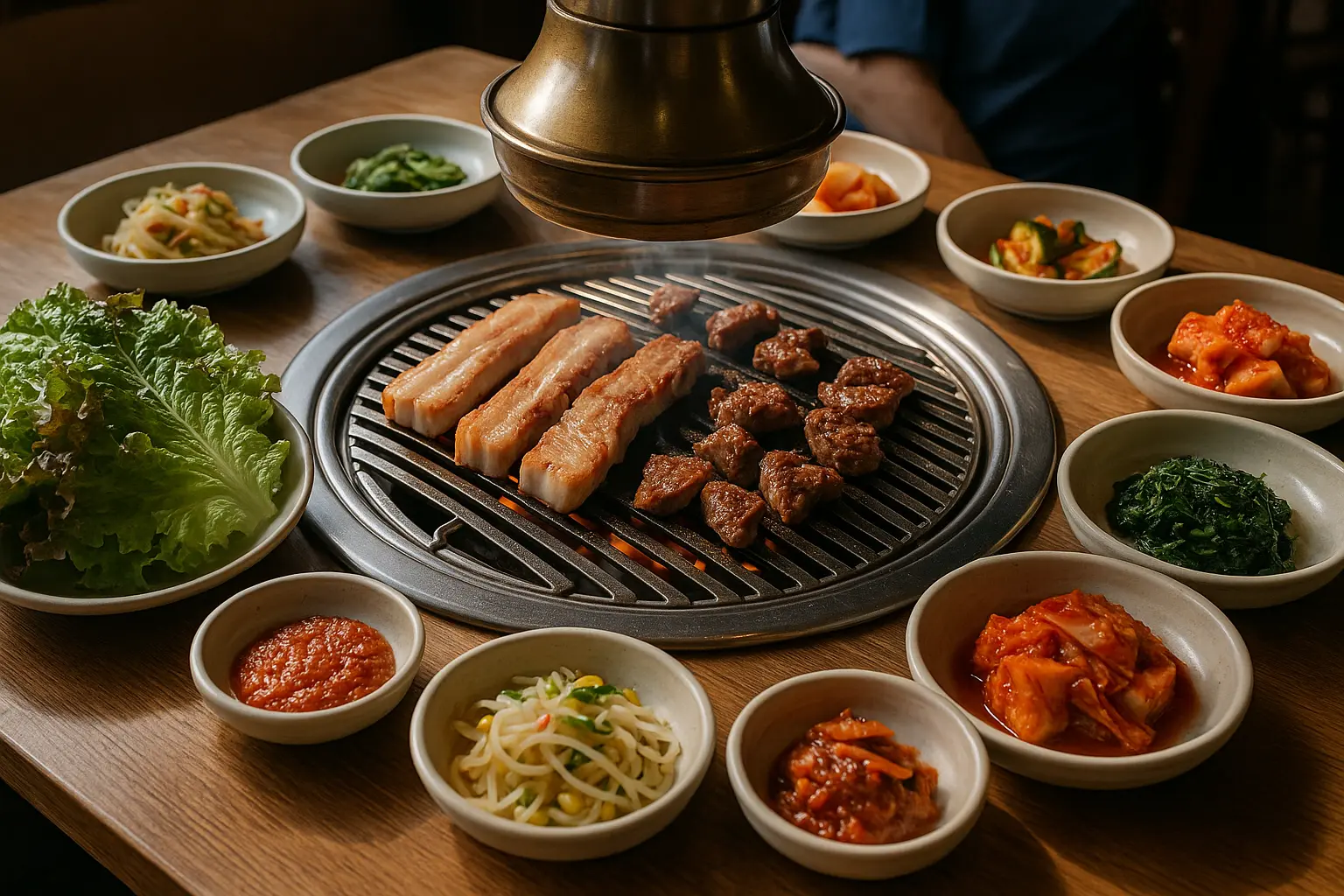
Korean BBQ is dinner and group activity at the same time. Raw meat arrives, the grill starts hissing, six side dishes occupy every spare centimeter, and suddenly everyone has a job. It is much easier than it looks once you understand who cooks, how much to order and what belongs inside a lettuce wrap.
This guide works for pork and beef restaurants across Seoul, Busan and Jeju. Individual houses specialize in different cuts, so treat the menu—not a universal rule—as the final authority.
- Choose the restaurant by meat type. Pork, beef and all-you-can-eat places are different experiences.
- Start with two portions for two adults. Add more after seeing the actual plate.
- Let staff lead the grill. If they begin cooking, do not compete for the tongs.
- Build one-bite ssam. Lettuce, meat, a little sauce and one or two accents.
- Order a finish. Stew, fried rice or cold noodles complete the meal.
1. Choose the right kind of BBQ restaurant
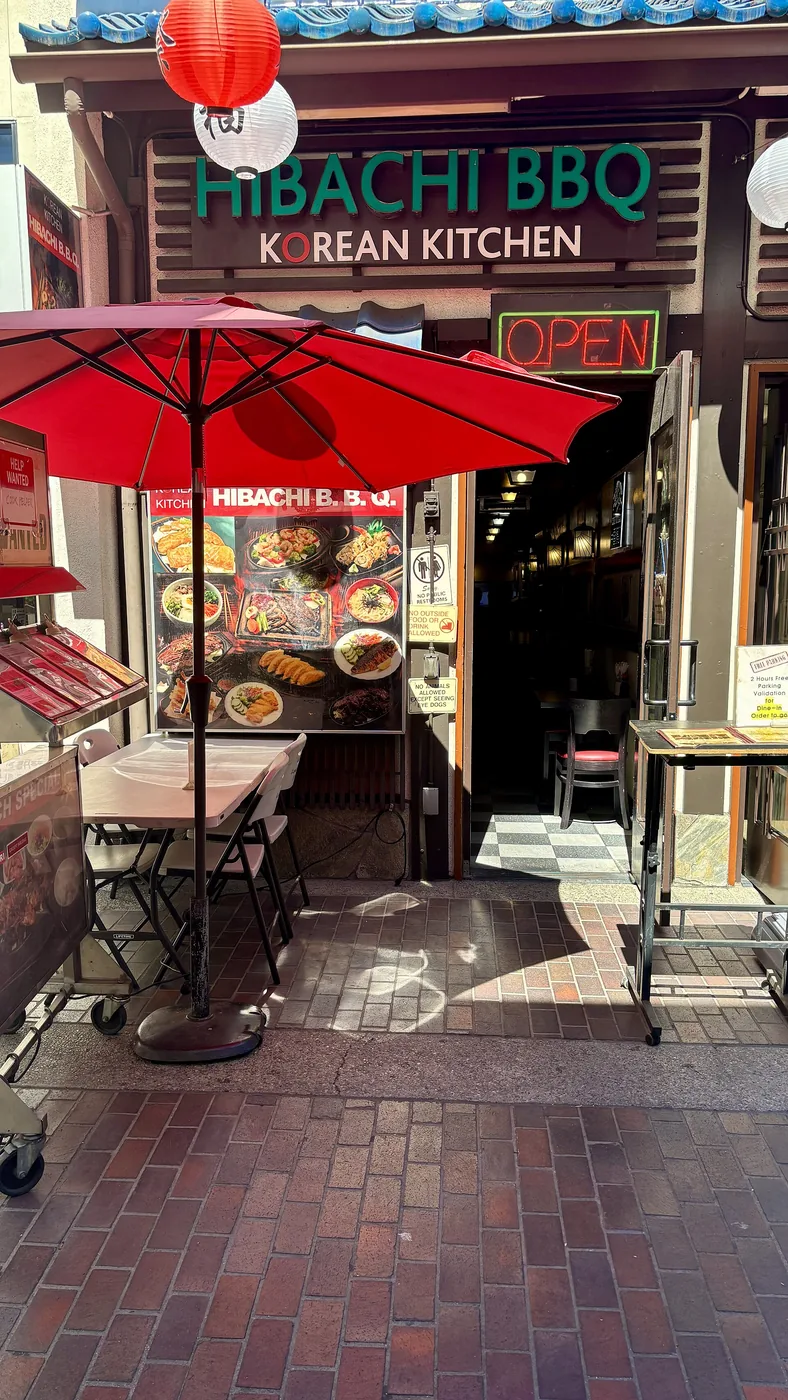
Korean BBQ is a category, not one menu. A samgyeopsal restaurant focuses on pork belly and related cuts; a sogalbi or hanwoo house centers on beef and costs more; dakgalbi is chicken cooked on a flat pan and follows different rules. All-you-can-eat restaurants emphasize quantity and are useful for groups, but they are not our first choice for understanding meat quality.
Recent map photos reveal more than an English description. Check whether tables have grills, whether the meat shown matches your budget and whether the branch appears to accept solo diners. A smoky room is normal; visibly neglected vents and sticky unattended tables are not part of the charm.
Local tip: Search the meat name in Hangul plus your neighborhood:
삼겹살for pork belly,소갈비for beef ribs or흑돼지for Jeju black pork. This works better than searching only “Korean BBQ.”
2. Know the cuts before ordering
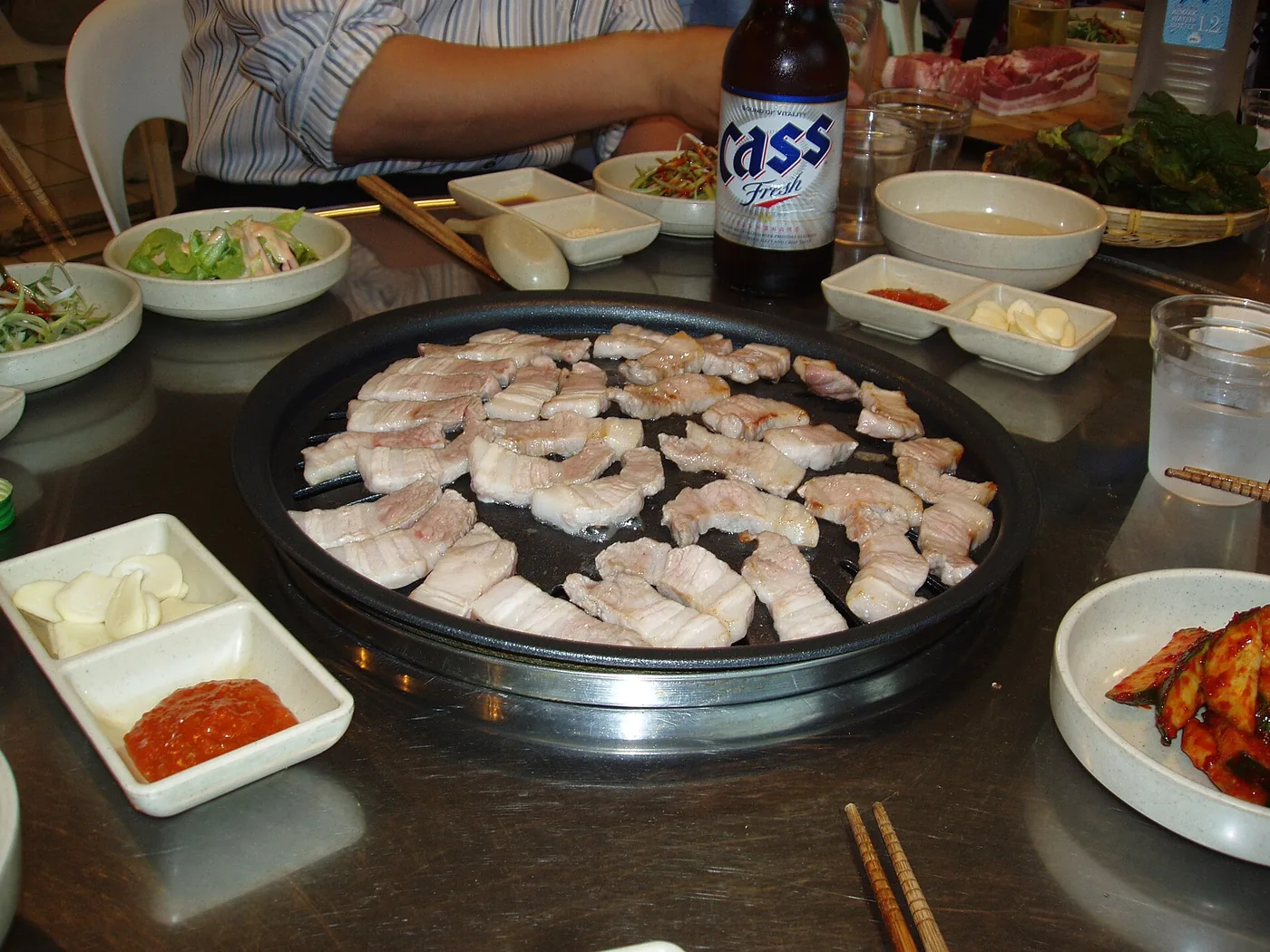
For pork, begin with samgyeopsal (삼겹살) if you like rich belly meat or moksal (목살) if you prefer a leaner, meatier bite. Ogyeopsal (오겹살) keeps the skin layer and is especially common in Jeju. For beef, thin chadolbaegi (차돌박이) cooks in seconds, while galbi (갈비) means ribs and may be marinated. Deungsim (등심) is sirloin; premium Korean hanwoo can turn dinner into a serious expense.
Unmarinated meat lets you judge the cut and works well with salt or ssamjang. Marinated galbi is sweeter, softer and easier for many first-timers. Mix only if the restaurant allows it and cook delicately flavored meat before heavily marinated pieces.
3. Order the right amount
Menus list meat by portion and often show weight in grams. Many restaurants require a minimum first order—commonly two portions—because firing a tabletop grill for one small plate makes little sense operationally. For two adults, two portions plus side dishes and a finishing meal is a reasonable start. Hungry groups can add meat once they understand the plate size.
Do not order every cut at once. The table becomes crowded, raw meat warms unnecessarily and the expensive plate may cook while you are still fighting with the first one. Rice is usually separate, as are stew and noodles.
Ordering tip: Point to the menu and say “igeo i-inbun juseyo” (이거 2인분 주세요)—“Two portions of this, please.” The displayed price is often per portion, not the total for the minimum order.
4. Follow the grill, not internet theater
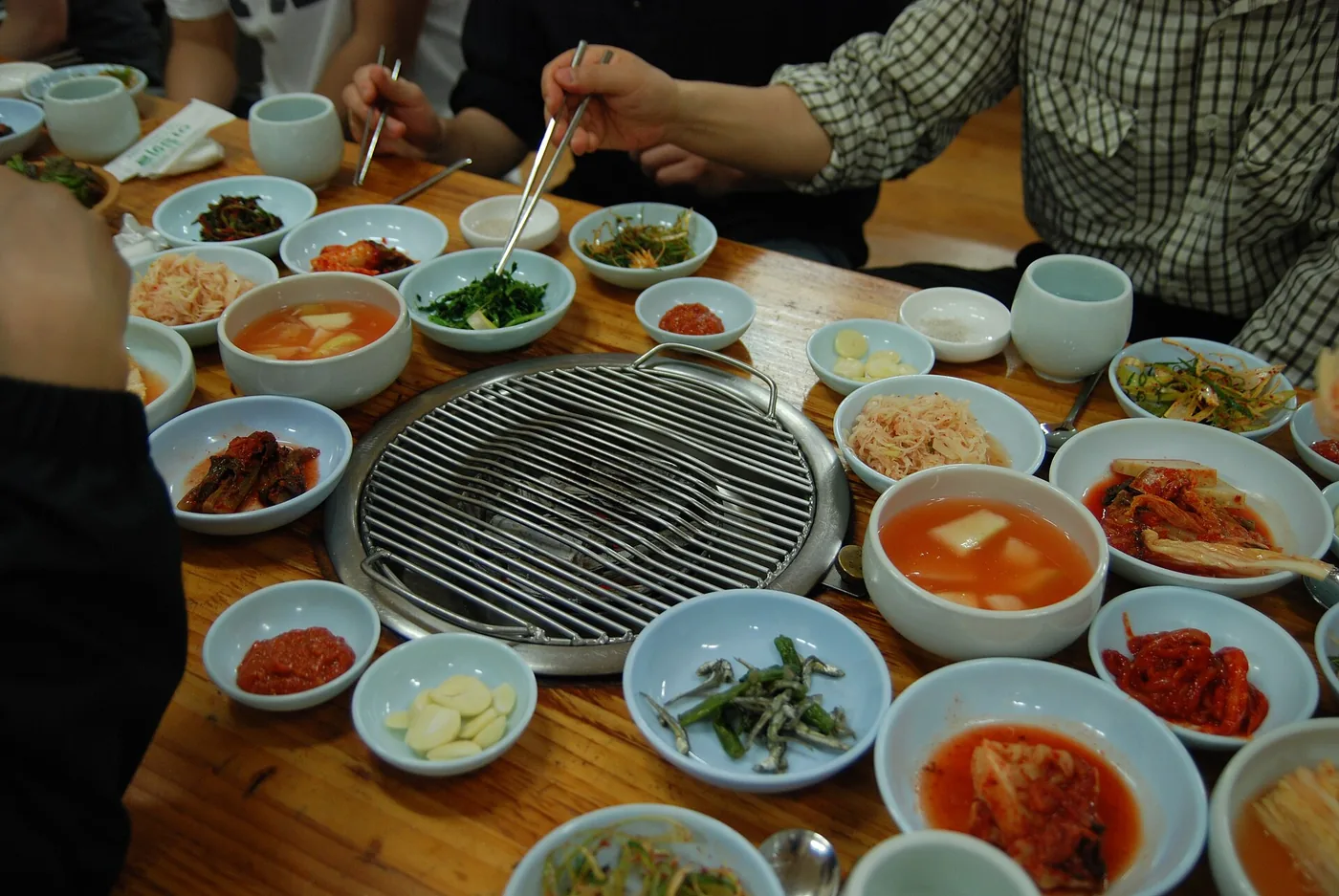
At some restaurants, staff cook every piece. At others, they place the meat and leave the table in charge. Watch the first minute. If staff return with tongs, let them work; if not, turn pork when the underside browns, then cut thick strips with scissors and finish the exposed sides. Thin brisket needs only moments.
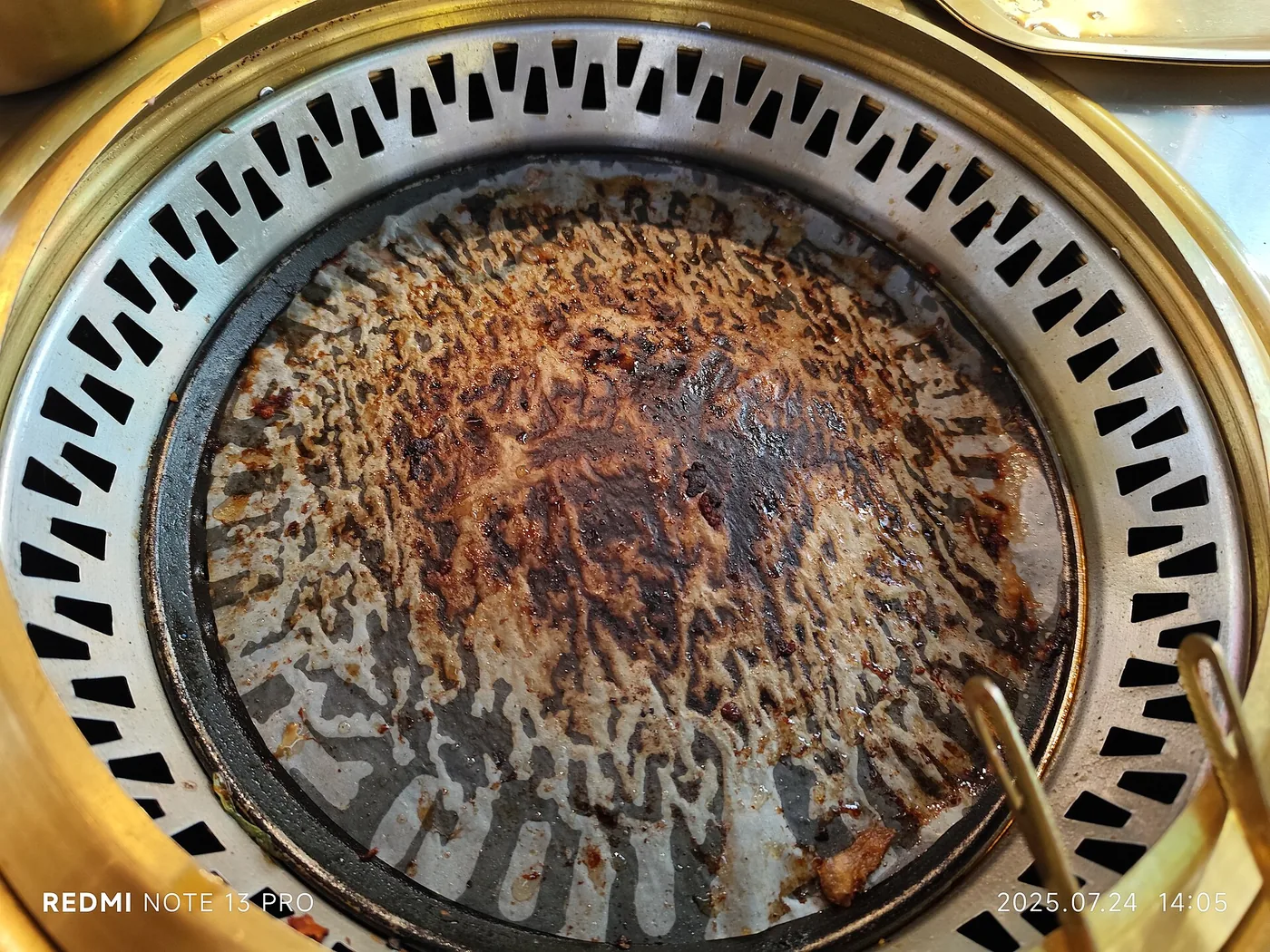
Keep raw-meat tongs away from cooked food when separate utensils are provided. Move cooked pieces to the cooler edge rather than letting them carbonize in the center. Grill kimchi, garlic or mushrooms only where the pan design and staff indicate—it is not universally appropriate to scatter side dishes over the grate.
Watch out: Never touch a built-in grill or charcoal tray to reposition it. Ask staff to change a scorched plate or adjust the heat; the call button is there for exactly this sort of request.
5. Build ssam and use banchan properly
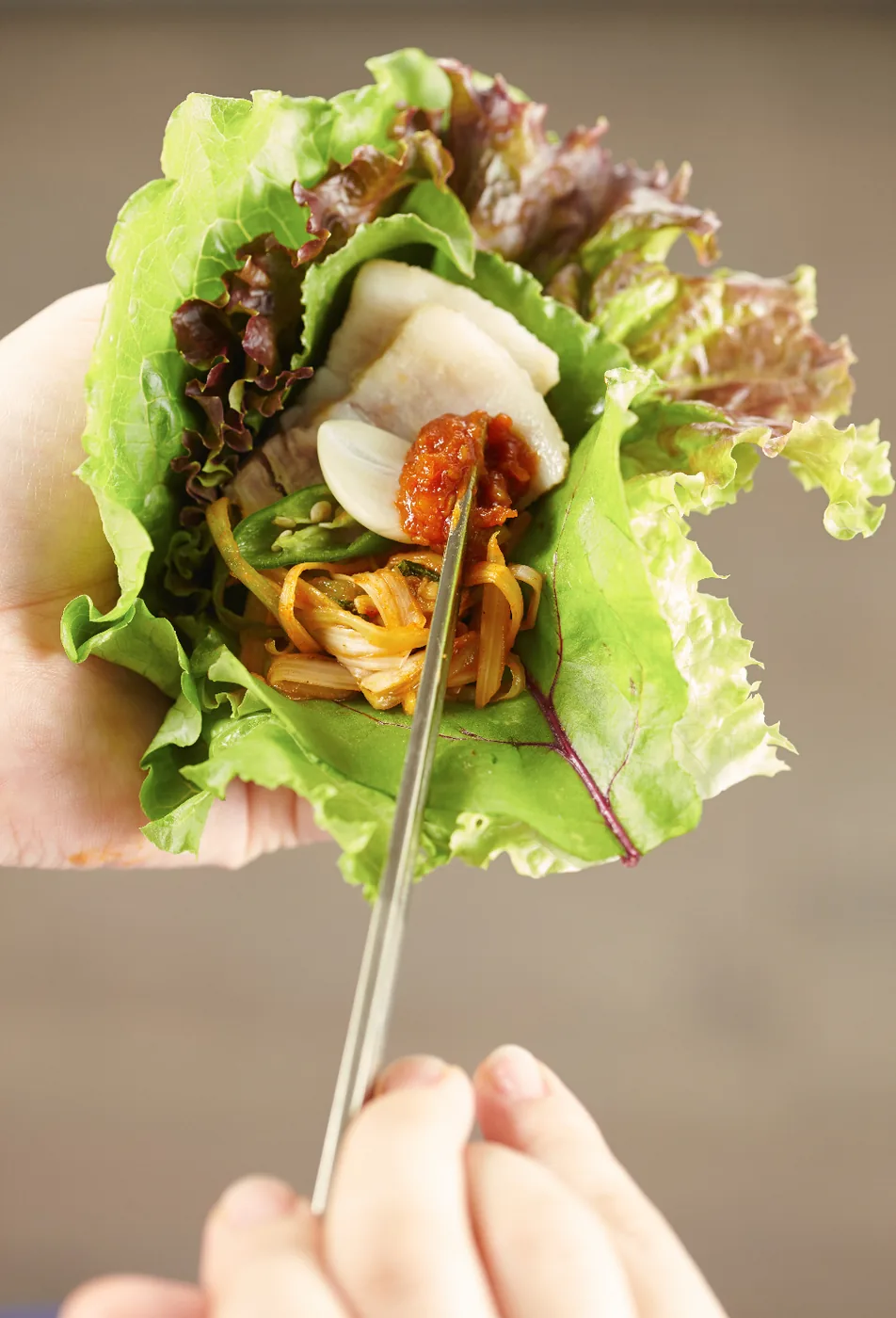
Ssam means a wrap. Put one piece of lettuce or perilla leaf in your palm, add one piece of meat, a small dab of ssamjang, and perhaps garlic, chili or rice. Fold it into a compact parcel and eat it in one bite. A wrap containing half the table is not more authentic; it is simply difficult to close.
Banchan are shared side dishes that balance the meat. Kimchi, seasoned scallions, pickles and salads are commonly refillable, but premium dishes or items ordered from the menu are not. Ask for more of what you will actually finish. Rice and soup are eaten with a spoon; metal chopsticks handle meat and side dishes.
Allergy check: Ssamjang contains soy and may include wheat; marinades often contain soy, sesame and fruit; kimchi can contain fish sauce. Show a Korean allergy card before ordering, not after the grill is full.
6. Finish with stew, rice or noodles
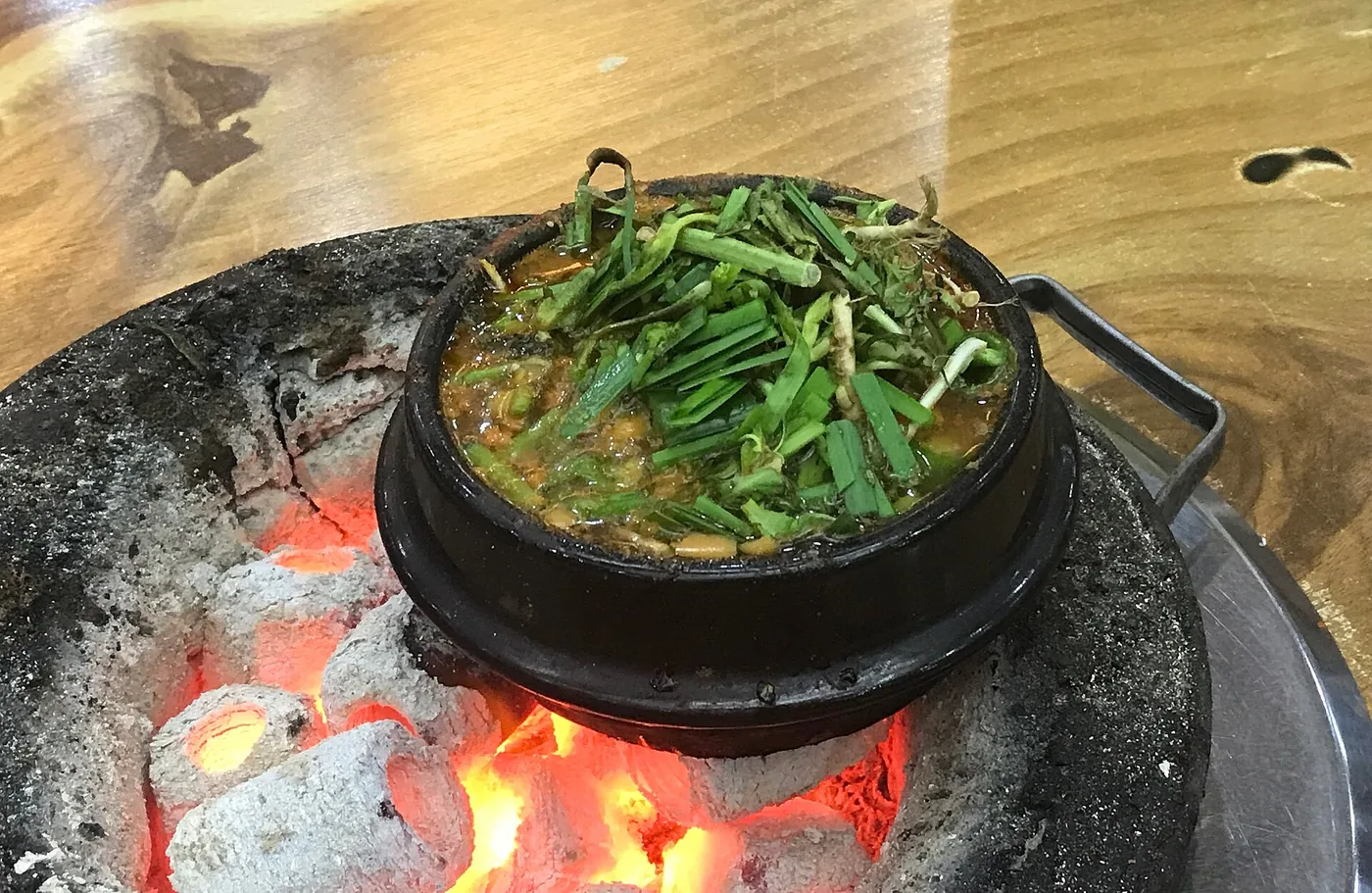
Koreans often treat carbohydrates as the finale rather than the opening act. Doenjang jjigae with rice is earthy and warming; kimchi jjigae is sharper and spicier. Naengmyeon gives cold, chewy relief after fatty meat. At flat-pan restaurants, staff may turn the remaining seasoning and browned bits into bokkeumbap, fried rice.
Choose one finish for a small table. Ordering stew, rice and noodles together can cost less than another meat plate but leave more food behind. Soju and beer are common, not compulsory. Water is normal, and no one needs to perform a drinking ritual to have a valid BBQ dinner.
7. Solo diners, children and vegetarians
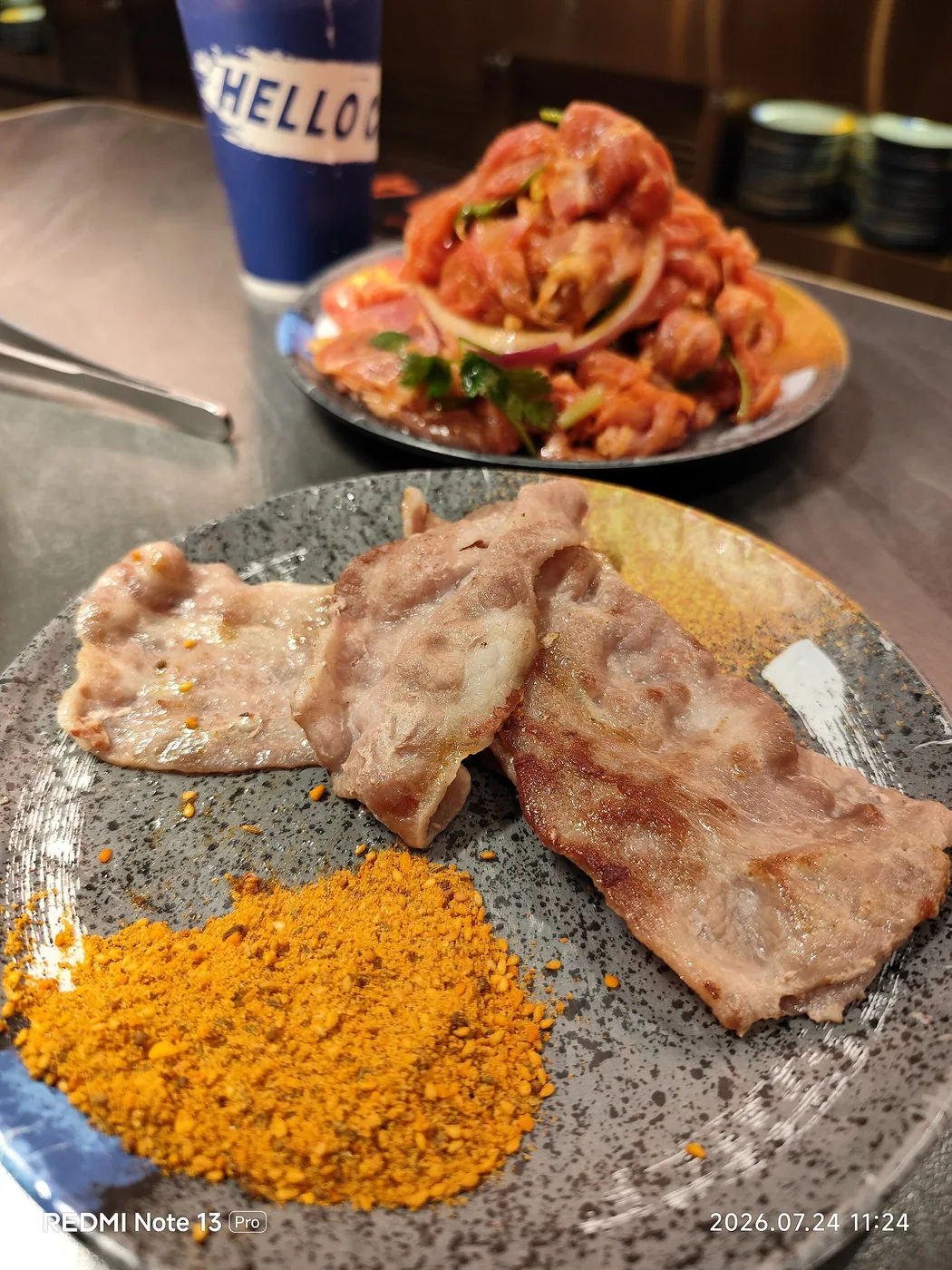
Solo BBQ is possible but branch-dependent. Lunch sets, counter grills and places that explicitly show one-person portions are easiest. A restaurant requiring two portions may still seat one diner if you order both; decide whether that amount and price suit you. Our solo Korean food guide offers easier alternatives.
With children, order unmarinated pork or mild bulgogi, keep them away from the hot grill and request sauce separately. Vegetarians should not expect a meat restaurant to sanitize the grill or provide plant-based broth. A mushroom plate cooked beside pork is not a vegetarian meal.
With kids: Seat children on the aisle side away from the grill and exhaust pipe. Adults should handle scissors and tongs even if the cooking looks entertaining.
8. Regional differences, payment and what to skip
Seoul offers the widest range, from office-worker pork alleys to high-end hanwoo. Busan is especially good for straightforward pork meals and lively late dinners. Jeju’s signature is thick black pork, often dipped in meljeot, a salty fermented anchovy sauce. The black-pork label raises the price, so confirm that the menu explicitly identifies the meat rather than assuming every Jeju grill serves it.
Pay at the counter unless staff bring a terminal. Cards are widely accepted, and tipping is not customary. We would skip a restaurant chosen only because every table has a dramatic cheese moat or oversized photo prop. Good ventilation, a focused meat menu and busy local tables matter more.
Skip this: Do not schedule premium BBQ immediately before a flight or formal event. The aroma follows jackets and hair with impressive loyalty; use the provided coat bag or locker when available.
For specific dishes beyond the grill, see our 20 must-eat foods in Korea and food guide for first-time visitors.
Photo credits
- 1. BBQ restaurant — Alexis Doine, Wikimedia Commons, CC0; resized and converted to WebP.
- 2. BBQ meat cuts — HOISAIWIM TUNGWAH, Wikimedia Commons, CC0; resized and converted to WebP.
- 3. BBQ order — by dstark, Wikimedia Commons, CC BY-SA 2.0; resized and converted to WebP.
- 4. Grill etiquette — suksim, Wikimedia Commons, CC BY 2.0; resized and converted to WebP.
- 5. Ssam and banchan — 국립국어원, Wikimedia Commons, CC BY-SA 2.0 kr; resized and converted to WebP.
- 6. BBQ finish — lazy fri13th, Wikimedia Commons, CC BY 2.0; resized and converted to WebP.
- 7. Solo BBQ — Gowh HOIWAM 668 WOOAMM, Wikimedia Commons, CC0; resized and converted to WebP.
- 8. Regional BBQ — Andy Li, Wikimedia Commons, CC0; resized and converted to WebP.


