12 Korean Foods That Are Easy to Eat Solo
12 Korean Foods That Are Easy to Eat Solo
Traveling solo in Korea offers a fantastic chance to explore its rich culinary landscape without the need for large group orders or complicated sharing. Korean cuisine is often communal, but many dishes work perfectly for one person, especially if you know what to look for. This guide highlights 12 Korean foods that are approachable, satisfying, and solo-friendly—ranging from hearty one-bowl meals and comforting stews to portable street snacks and quick noodles.
1. Bibimbap (비빔밥)
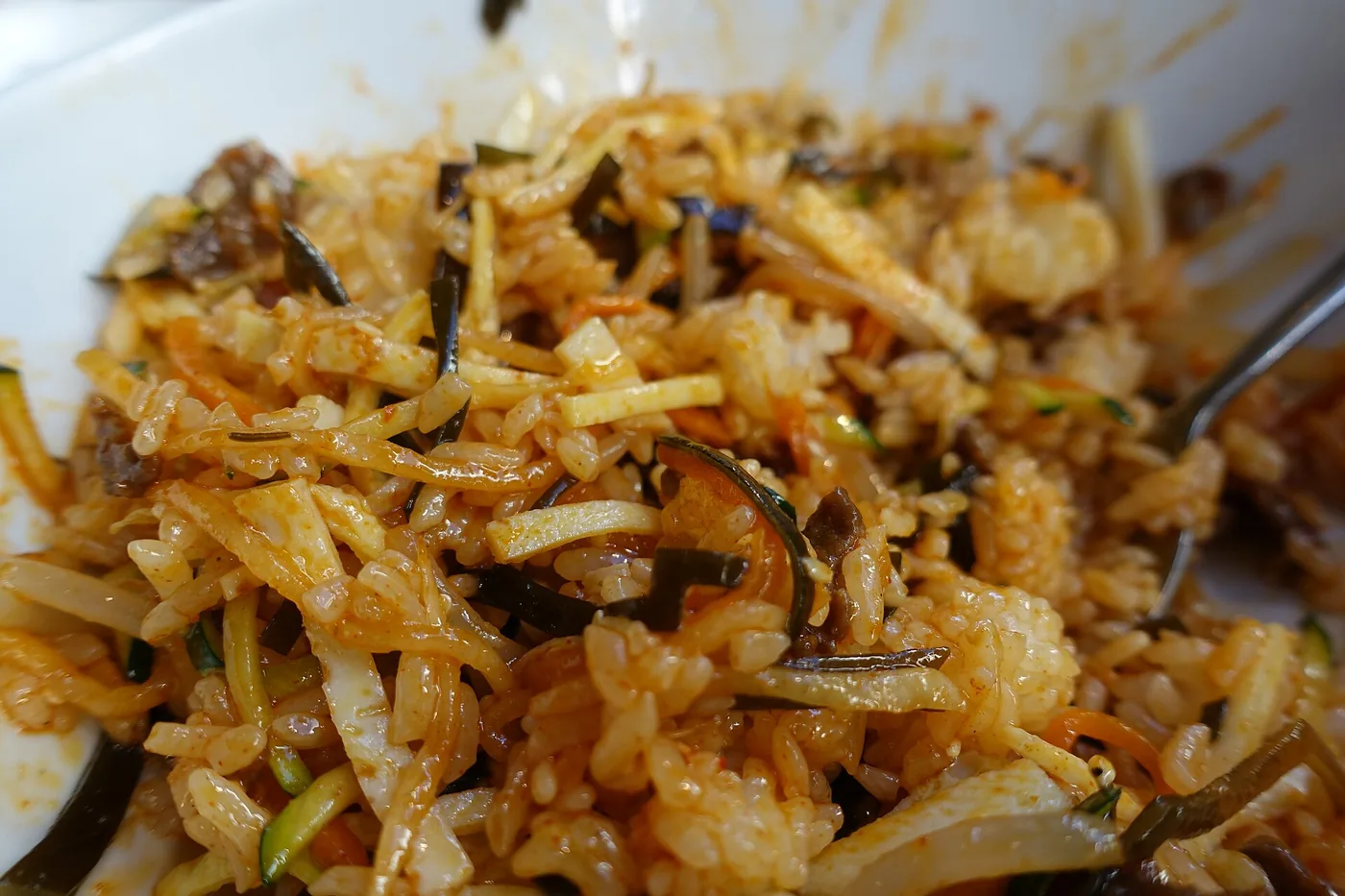
Photo: Guilhem Vellut from Paris, France, Wikimedia Commons, CC BY 2.0; resized and converted to WebP.

Bibimbap is a colorful and balanced rice bowl topped with an assortment of seasoned vegetables, a fried or raw egg, and often thinly sliced beef. The key to enjoying bibimbap is mixing everything together thoroughly with gochujang (Korean chili paste), which adds a spicy-sweet kick. For solo diners, bibimbap is ideal because it arrives as a complete meal in one bowl.
Vegetarian options exist but be cautious: some vegetable seasonings or broths may contain anchovy or meat extracts. If you want to avoid spice, ask for gochujang on the side or skip it altogether. Bibimbap suits anyone looking for a wholesome, nutritious meal that’s easy to eat alone without fuss.
2. Gimbap (김밥)
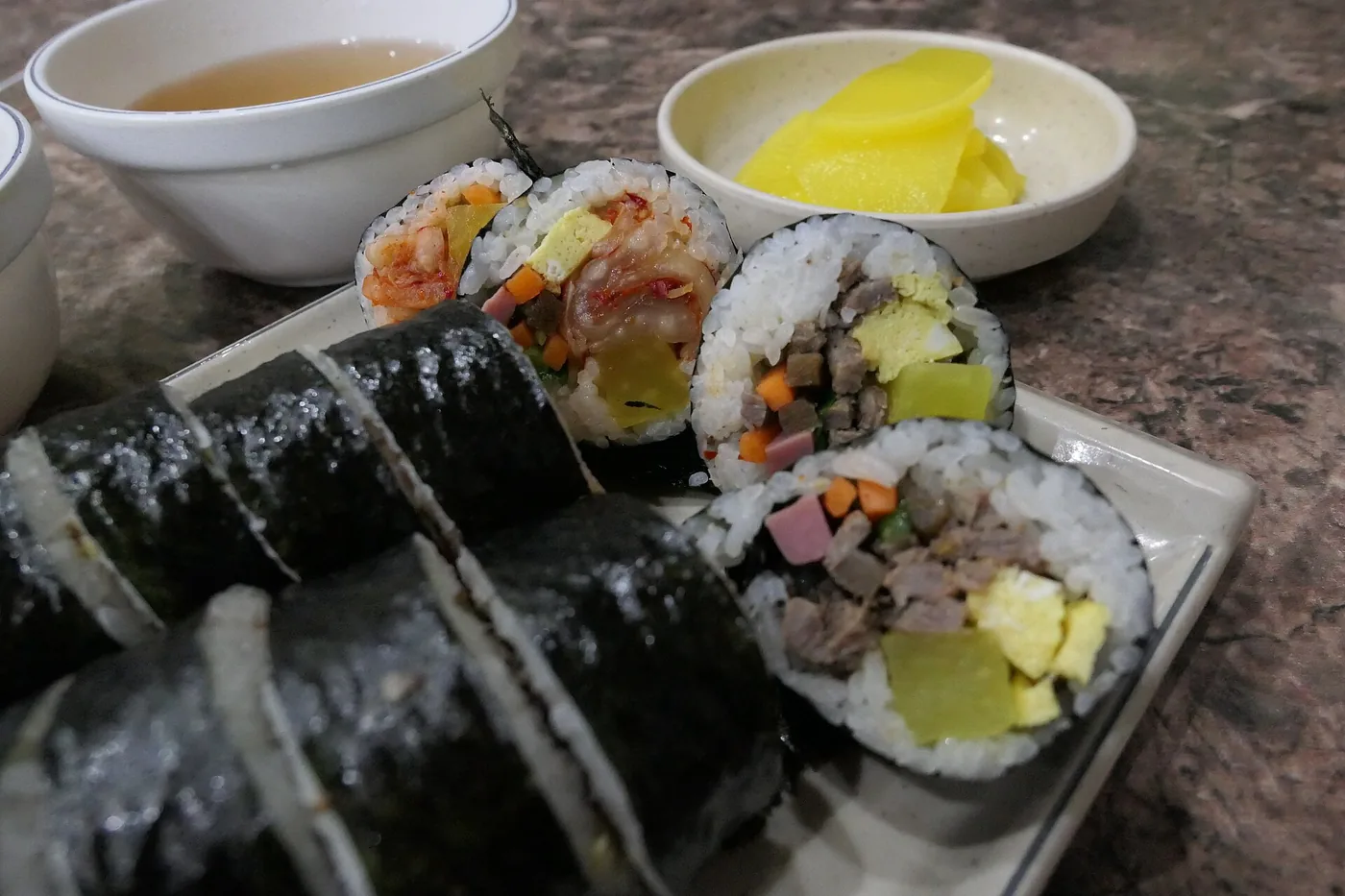
Photo: bryan… from Taipei, Taiwan, Wikimedia Commons, CC BY-SA 2.0; resized and converted to WebP.

Gimbap resembles sushi rolls but is uniquely Korean, featuring rice and various fillings like egg, pickled radish, spinach, and sometimes ham or fish cake, all rolled in seaweed. It’s a popular grab-and-go food, perfect for solo travelers exploring markets or parks.
Ordering gimbap is straightforward: pick your preferred filling, but beware that even vegetable-looking rolls may contain hidden meat or seafood. For vegetarians, ask specifically for yachae gimbap (vegetable gimbap) and confirm ingredients. Gimbap is not spicy but often served with pickled radish that has a mild tang. It’s a neat, portable snack or light meal that requires no utensils.
3. Japchae (잡채)
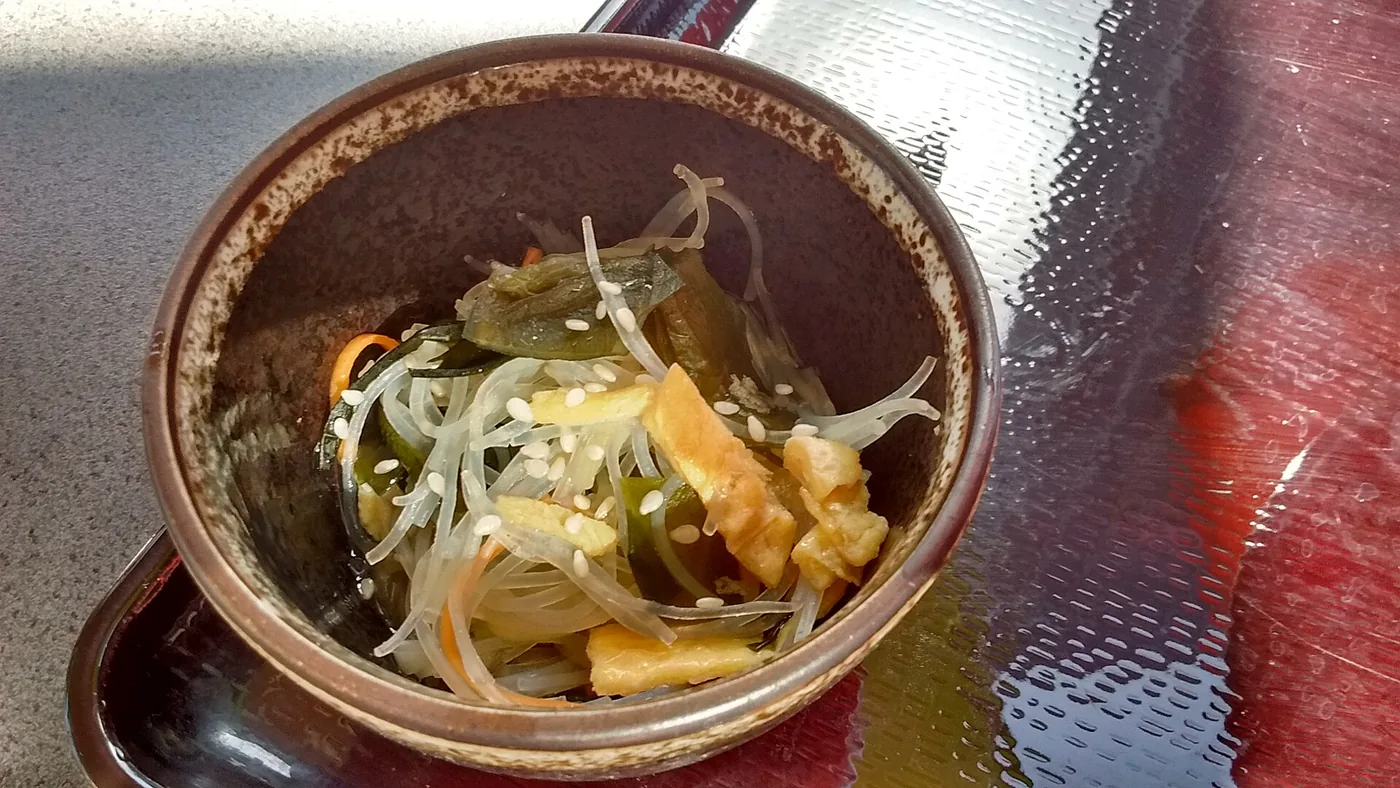
Photo: Guilhem Vellut from Paris, France, Wikimedia Commons, CC BY 2.0; resized and converted to WebP.

Japchae is a stir-fried dish of translucent sweet potato noodles mixed with vegetables, mushrooms, and usually beef. The noodles are pleasantly chewy and coated with a slightly sweet soy and sesame oil sauce. It’s typically mild and not spicy, making it a good choice if you want to avoid heat.
Japchae is often served as a side dish but can be ordered in a solo-sized portion as a main. Vegetarians should confirm the absence of beef and animal-based seasonings, as these are common. This dish is best enjoyed with chopsticks and is a great way to experience Korean flavors without overwhelming spice or complexity.
4. Naengmyeon (냉면)
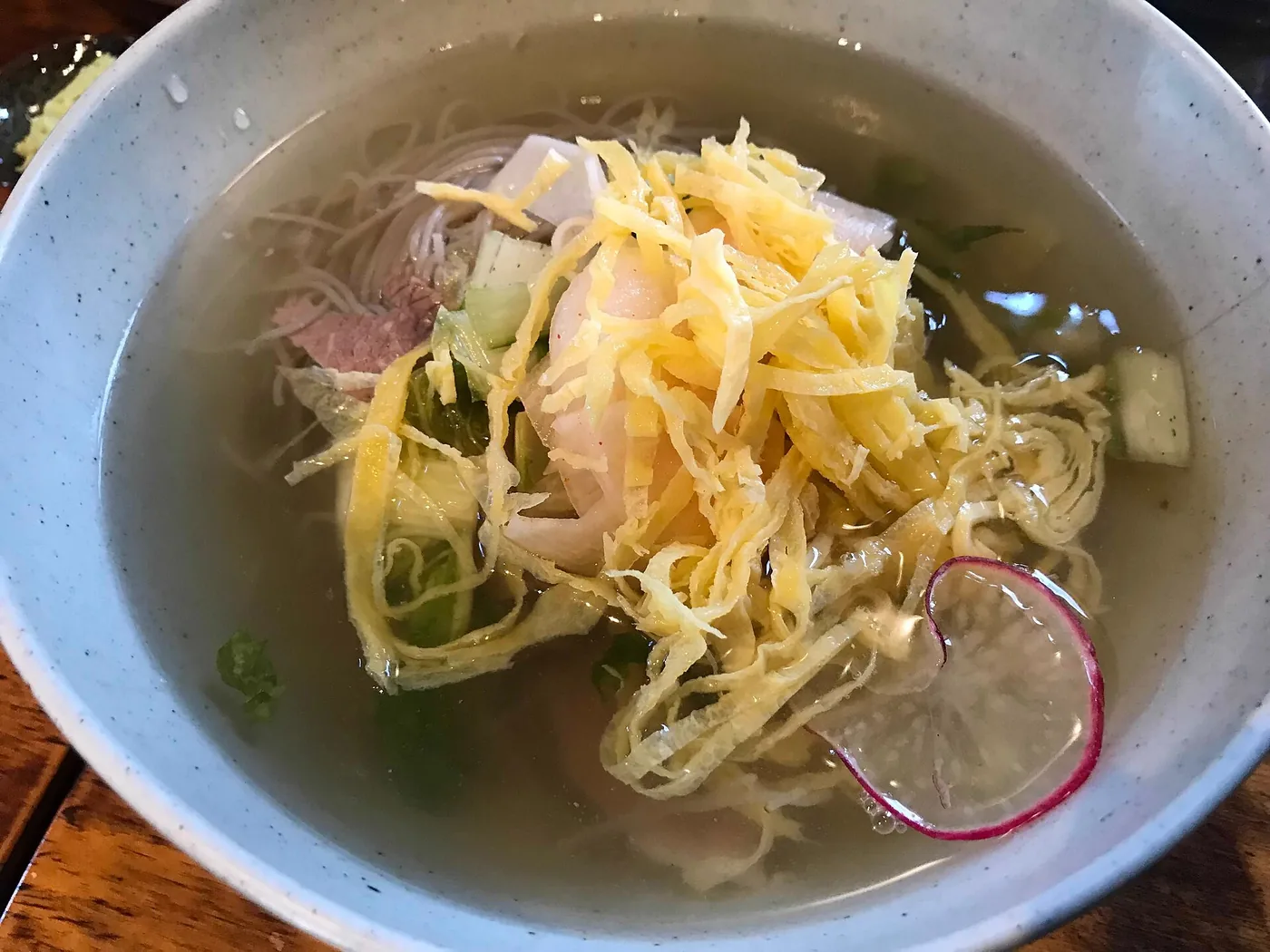
Photo: lazy fri13th, Wikimedia Commons, CC BY 2.0; resized and converted to WebP.

Naengmyeon is a refreshing cold noodle dish featuring long, chewy buckwheat noodles served in a chilled broth (mul naengmyeon) or mixed with a spicy red sauce (bibim naengmyeon). It’s a popular summer meal and a light, solo-friendly option.
The broth is tangy and icy, often enhanced with mustard and vinegar provided on the side so you can adjust the flavor. The noodles can be quite elastic, and some restaurants provide scissors to cut them. Naengmyeon is not spicy unless you choose the bibim version, but mustard and vinegar can add sharpness. It’s a clean, palate-cleansing dish that’s easy to eat alone.
5. Kimchi jjigae (김치찌개)
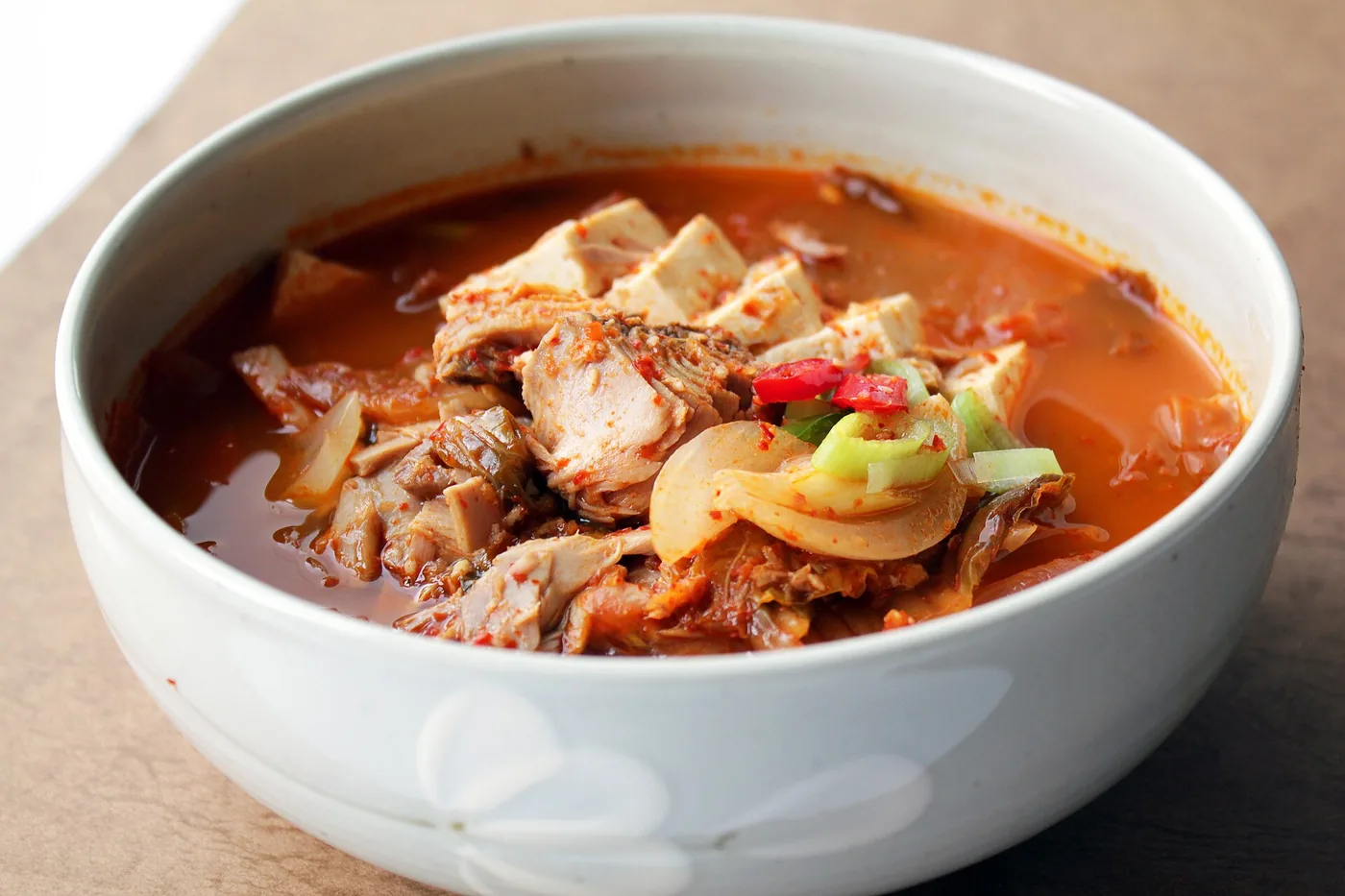
Photo: Chloe Lim, Wikimedia Commons, CC BY 2.0; resized and converted to WebP.

Kimchi jjigae is a hearty stew made from aged kimchi, tofu, pork, and vegetables simmered until richly flavored and tangy. It’s served boiling hot in a stone or metal pot, making it a warming solo meal especially on chilly days.
This stew is spicy and sour, with the heat level varying by restaurant. Since it contains pork and sometimes seafood broth, it’s not vegetarian. When ordering, ask for a smaller portion if available, as the stew is filling and usually shared. Eat it with rice, spooning the stew over it. It’s a comforting, straightforward dish that showcases Korea’s love of fermentation.
6. Doenjang jjigae (된장찌개)
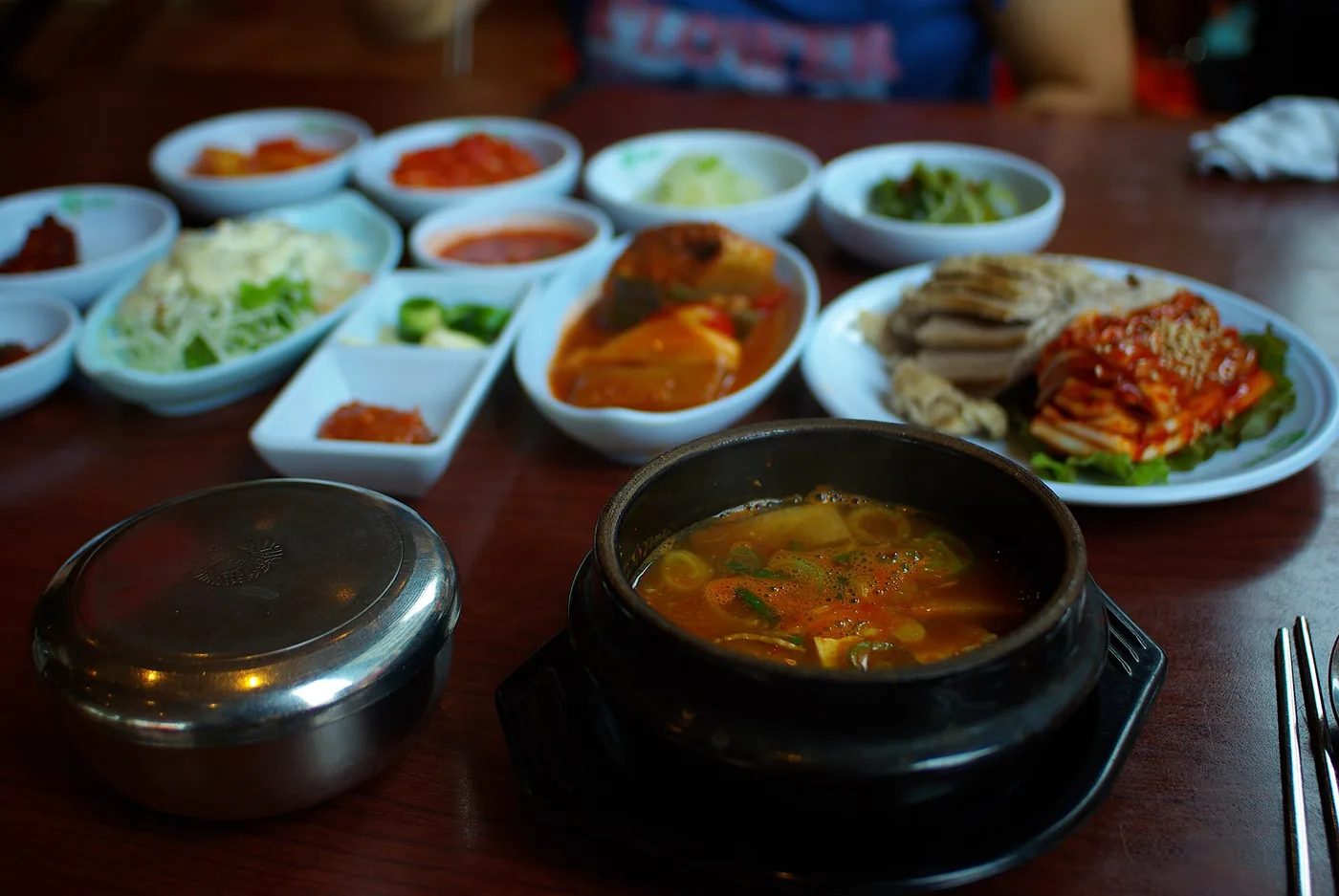
Photo: egg (Hong, Yun Seon), Wikimedia Commons, CC BY 2.0; resized and converted to WebP.

Doenjang jjigae is a traditional Korean stew made with fermented soybean paste, tofu, zucchini, mushrooms, and onions. It has a deep, earthy flavor and is less spicy than kimchi jjigae. This stew is often served in a small pot and is a common accompaniment at Korean BBQ meals.
Though doenjang is plant-based, the broth may be made with anchovy or meat stock, so vegetarians should confirm before ordering. It’s a great solo dish for those wanting a savory, umami-rich soup with familiar ingredients. Enjoy it with rice and side dishes for a balanced meal.
7. Samgyetang (삼계탕)
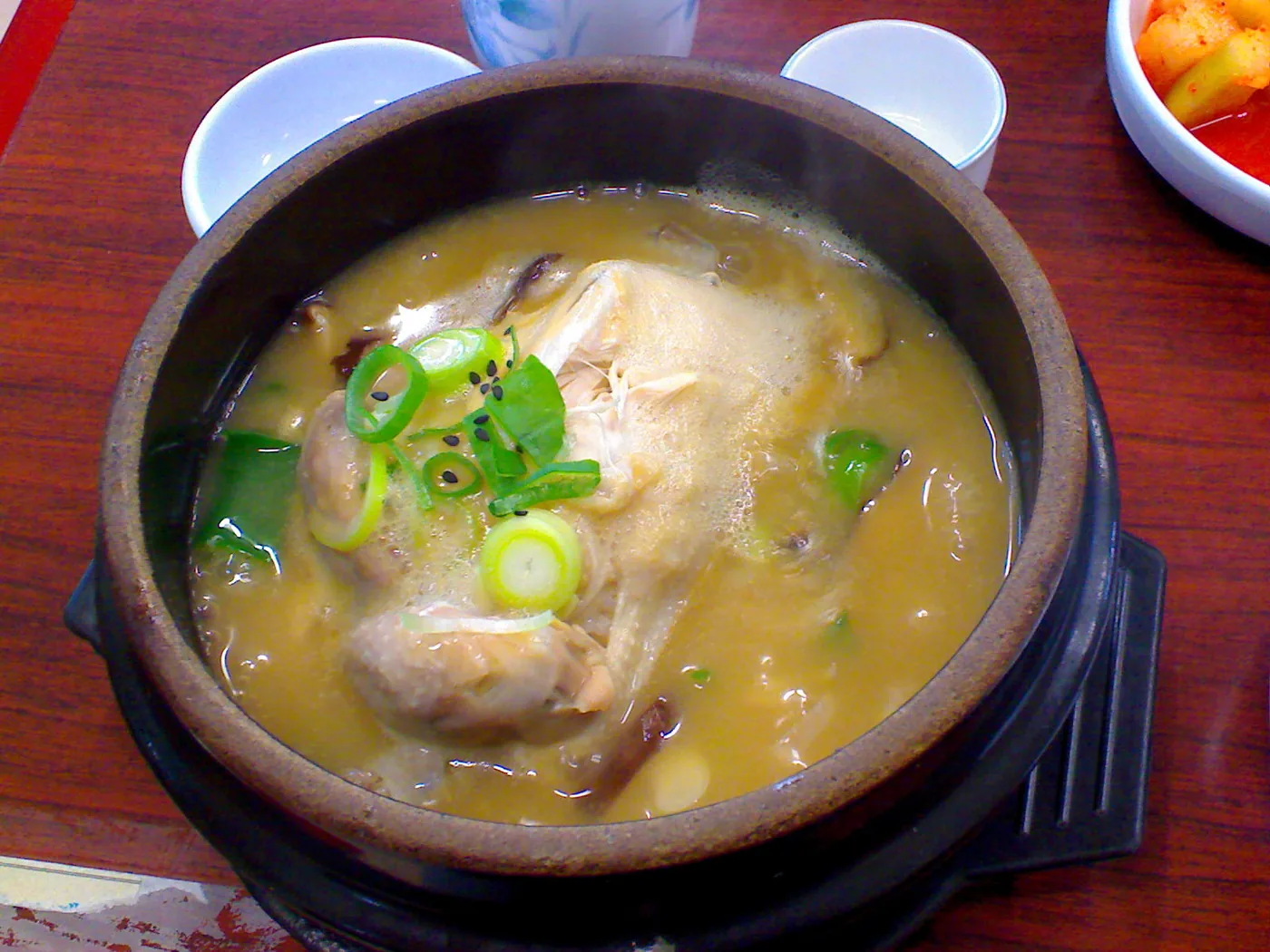
Photo: by karendotcom127, Wikimedia Commons, CC BY 2.0; resized and converted to WebP.

Samgyetang is a nourishing soup featuring a whole young chicken stuffed with glutinous rice, garlic, jujube, and ginseng, simmered until tender. The broth is mild and clean, served with salt and pepper on the side so you can season each bite to taste.
This dish is traditionally eaten in summer to restore energy but is available year-round. It’s a perfect solo meal since one whole chicken is a single portion. Be mindful of the bones when eating, and savor the soft rice inside the chicken, which absorbs the broth’s flavor. Samgyetang is not spicy and is suitable for those seeking a gentle, restorative meal.
8. Seolleongtang (설렁탕)
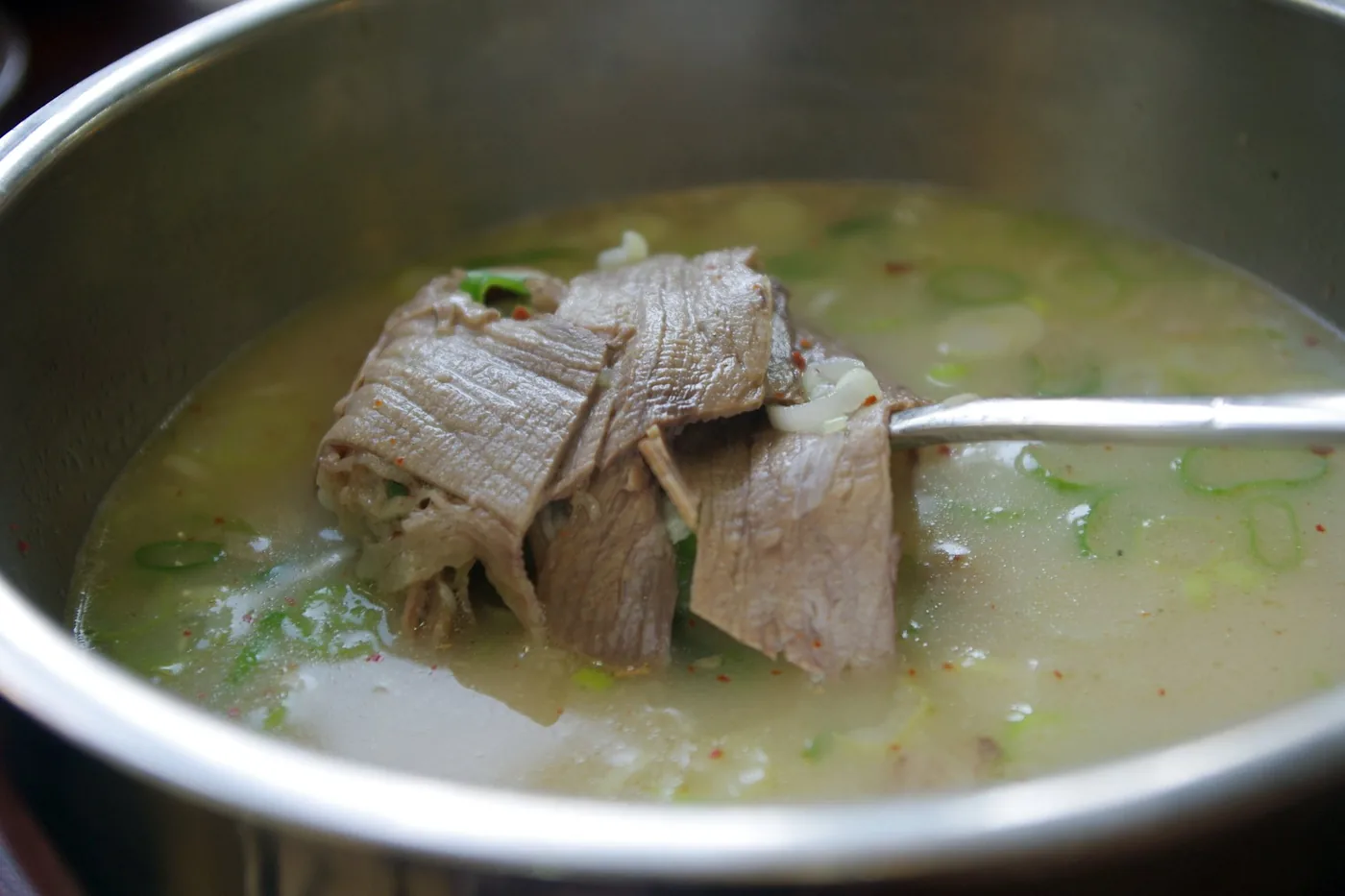
Photo: Matt @ PEK from Taipei, Taiwan, Wikimedia Commons, CC BY-SA 2.0; resized and converted to WebP.
.jpg)
Seolleongtang is a milky, slow-simmered ox bone soup with tender beef slices. It arrives unseasoned, allowing you to add salt, pepper, and chopped green onions according to your preference. Rice may be served separately or inside the soup.
This soup is mild and not spicy, making it a good choice for sensitive eaters. It’s a comforting solo dish, often eaten for breakfast or a light lunch. Note that it contains beef and is unsuitable for vegetarians. Pair it with kkakdugi (cubed radish kimchi) for a refreshing contrast.
9. Tteokbokki (떡볶이)
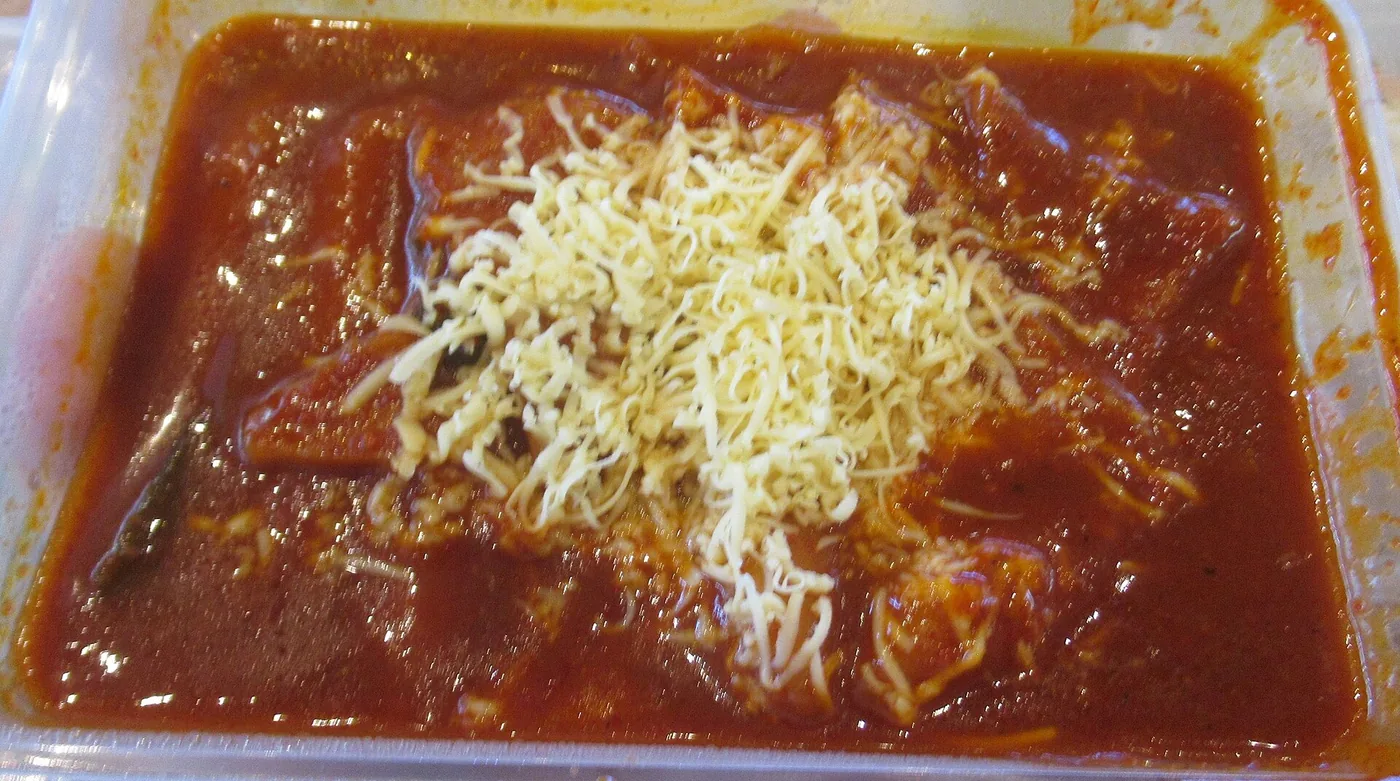
Photo: Wikimedia Commons contributor, Wikimedia Commons, CC BY-SA 4.0; resized and converted to WebP.

Tteokbokki is a popular street food of chewy rice cakes simmered in a glossy, spicy-sweet red chili paste sauce. It often includes fish cakes, boiled eggs, and cabbage. The heat can be intense, so solo travelers new to spice should ask for a milder version or share a small portion first.
Tteokbokki is ideal for a quick snack or light meal at markets or snack shops. It’s not vegetarian due to fish cakes and sauce ingredients. Eating it alone is easy with chopsticks, but be cautious of the spicy sauce and the chewy texture if you have dental sensitivities.
10. Eomuk (어묵)
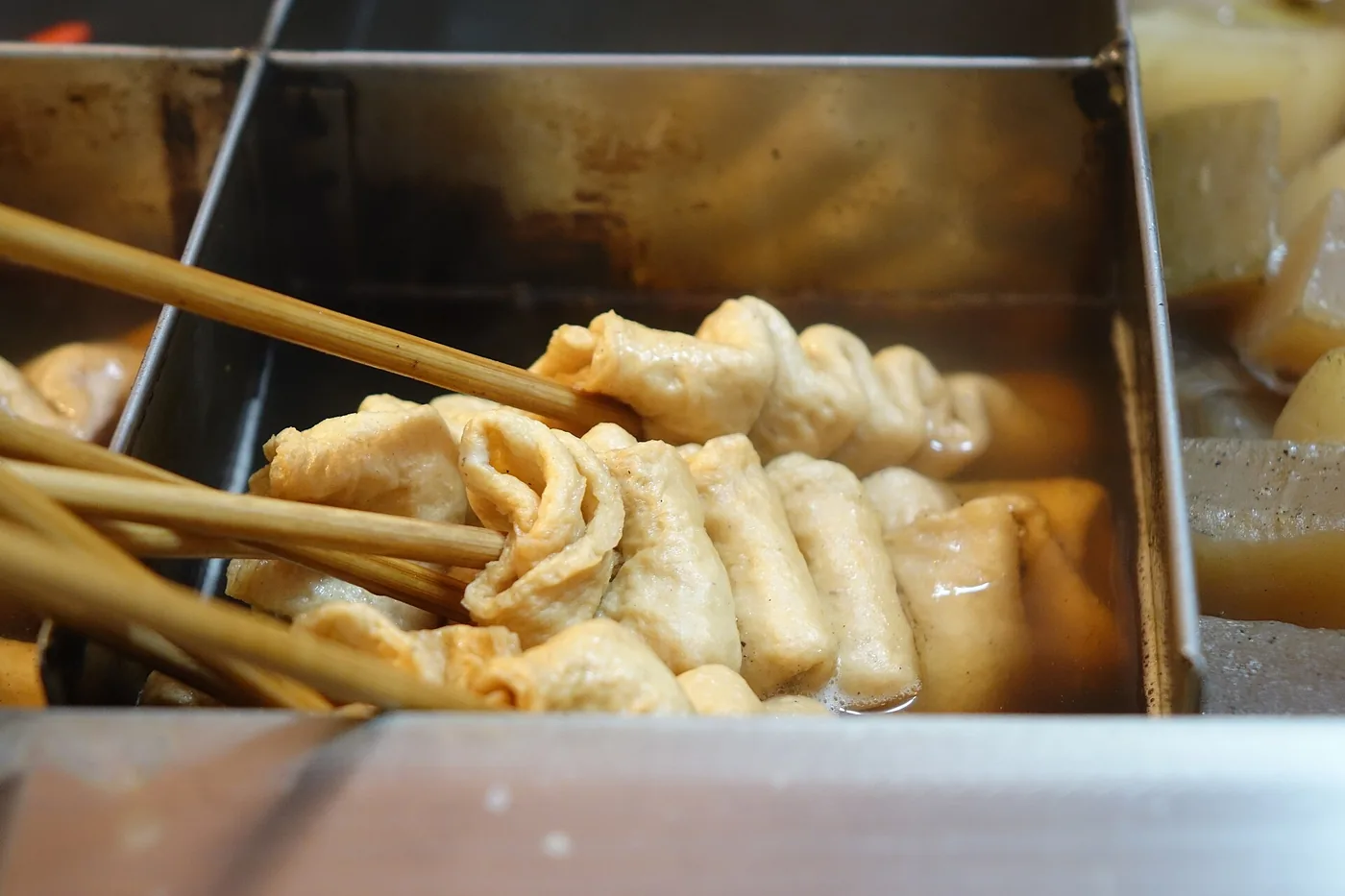
Photo: 최광모 (Choe Kwangmo), Wikimedia Commons, CC0; resized and converted to WebP.

Eomuk are seasoned fish cakes shaped into sheets or skewers and simmered in a light, savory broth. Sold at street stalls, they are eaten hot and often accompanied by sipping the broth from a paper cup.
Eomuk is mild and comforting, less spicy than tteokbokki, making it a good solo snack in colder weather. It contains fish and often wheat and soy, so it’s not vegetarian or gluten-free. Count your skewers when paying, as vendors usually charge by the number consumed.
11. Mandu (만두)
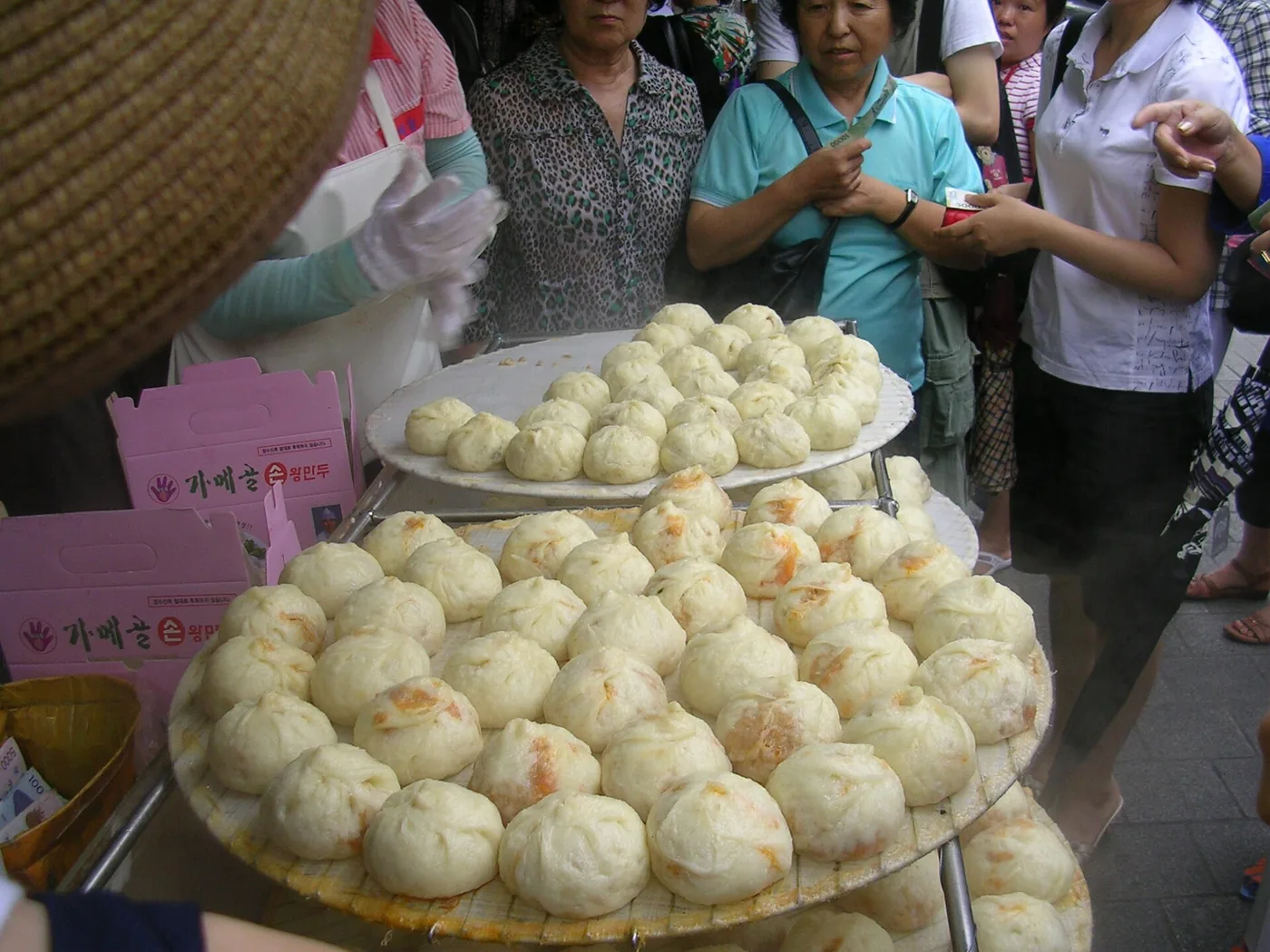
Photo: Clementina, Wikimedia Commons, CC BY-SA 3.0; resized and converted to WebP.
.JPG)
Mandu are Korean dumplings filled with various combinations of pork, tofu, vegetables, kimchi, and noodles. They come steamed (jjin mandu), pan-fried (gun mandu), or in soup (mandu-guk). The fillings and cooking style greatly affect taste and texture.
Ordering a mixed plate lets you sample different types. Dip lightly in soy-vinegar sauce, which is usually served separately. Vegetarian mandu exist but may still contain egg or animal-based broth, so confirm if needed. Dumpling wrappers contain wheat, so not suitable for gluten-free diets. Mandu are perfect for solo diners wanting a variety of flavors in manageable portions.
12. Jajangmyeon (짜장면)
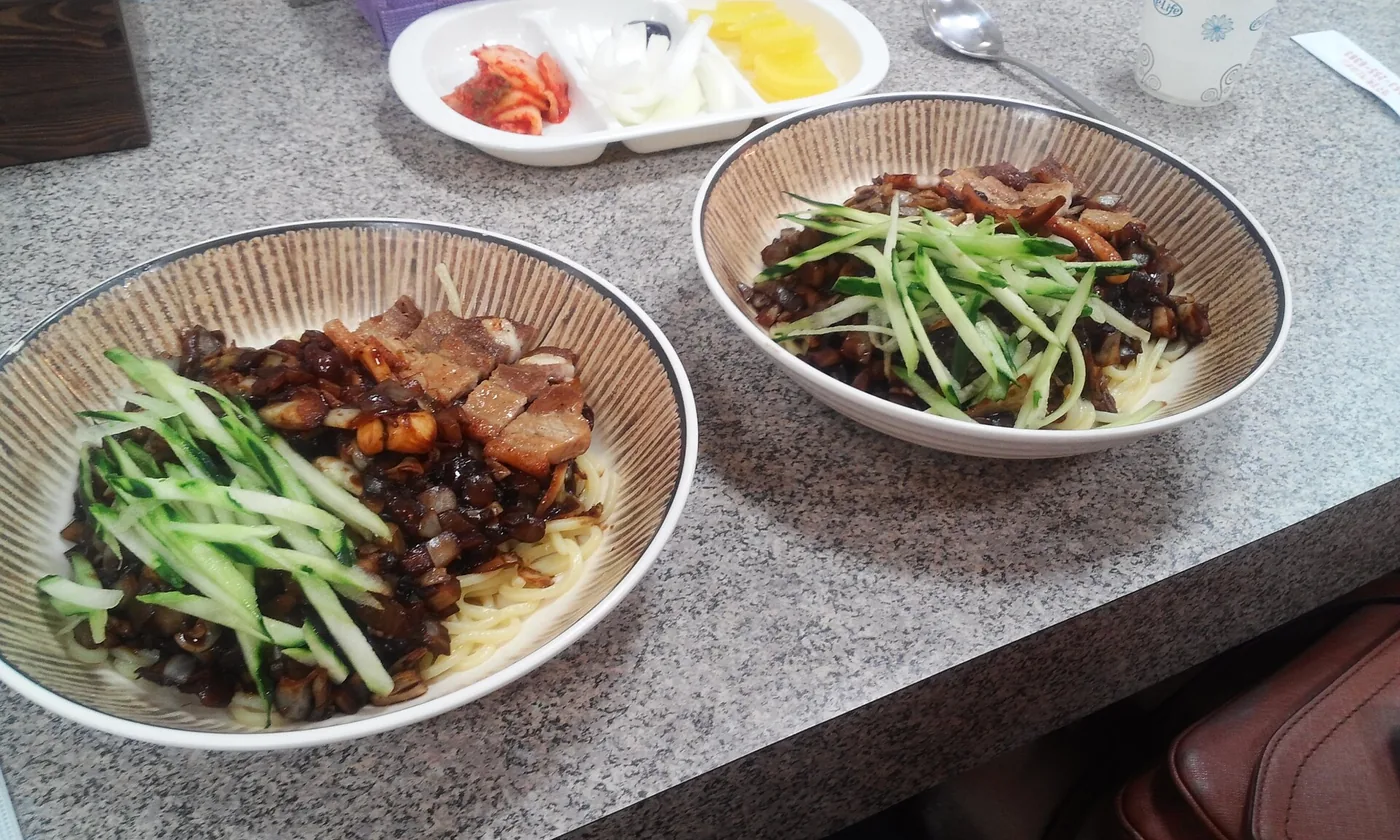
Photo: Choi2451, Wikimedia Commons, CC BY-SA 3.0; resized and converted to WebP.

Jajangmyeon is a comforting noodle dish featuring thick wheat noodles coated in a glossy black bean sauce with diced pork and vegetables. The sauce is savory and slightly sweet, not spicy, making it a popular choice for solo diners seeking a hearty, filling meal.
It’s traditionally eaten with yellow pickled radish, which adds a crisp, tangy contrast. The sauce stains easily, so avoid white clothing. Vegetarian versions exist but are not standard, so check if you avoid meat. Jajangmyeon is widely available for delivery and dine-in, ideal for a quick, satisfying solo meal.
How to Order and Pay When Eating Solo in Korea
- Call staff confidently: Use the table call button or say “jeogiyo” (저기요) to get attention.
- Ask for single portions: Many dishes can be ordered solo; clarify if portions are large.
- Request sauces on the side: This helps control spice and avoid surprises.
- Pay at the counter: Many casual places expect payment when you leave.
- Use cards but carry cash: Credit cards are widely accepted, but markets may prefer cash.
- No tipping: Tipping is not customary in Korea.
What to skip: Avoid oversized viral snacks designed for sharing or spectacle, like cheese-stretching tteokbokki. Stick to classic versions to better understand Korean food culture.
Solo travel in Korea doesn’t mean missing out on authentic, delicious meals. These 12 dishes offer a range of flavors, textures, and experiences that are easy to order, eat, and enjoy on your own. Whether you want a quick snack, a hearty stew, or a refreshing noodle bowl, Korean cuisine has you covered.
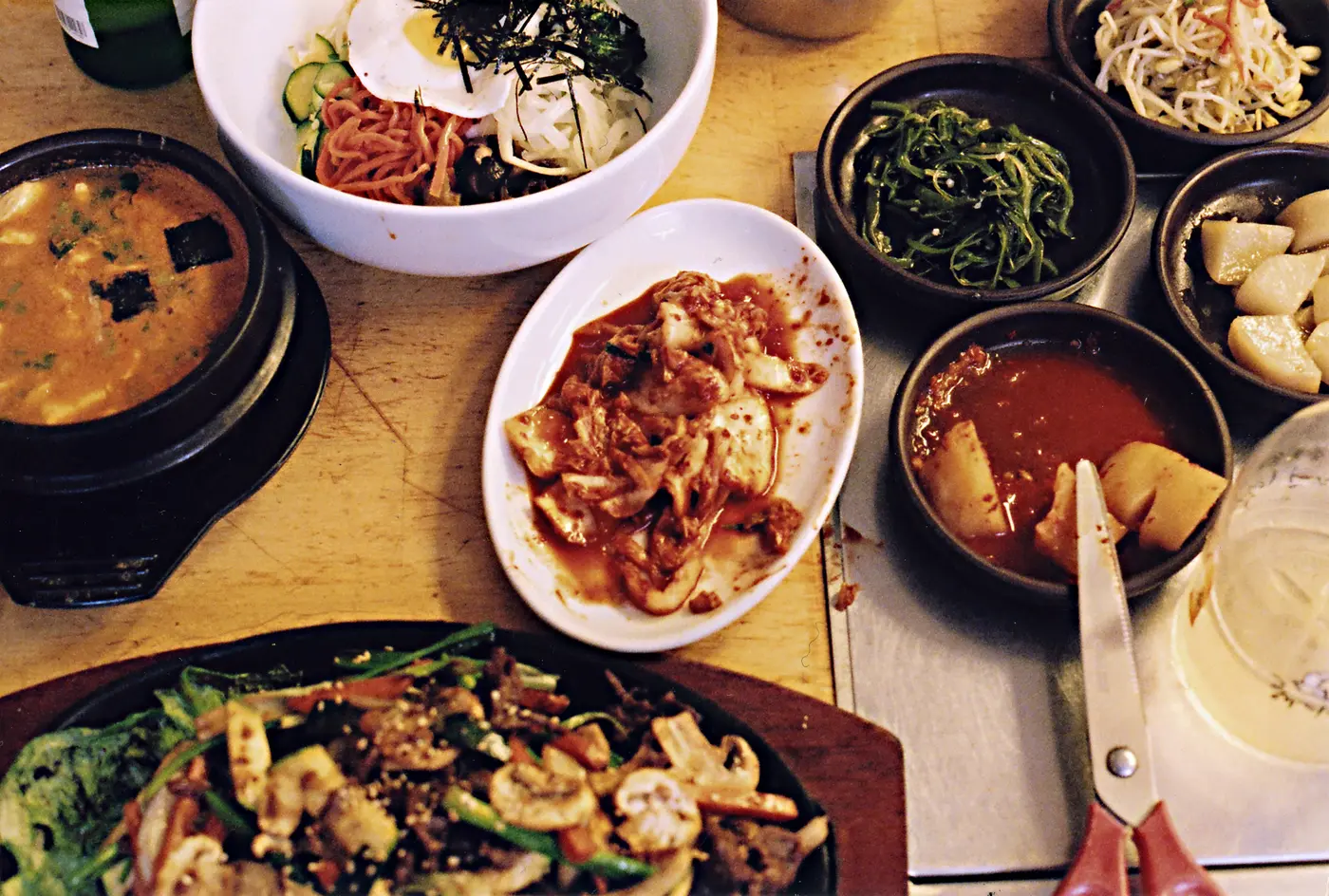
Hero photo credit: Photo: kk+, Wikimedia Commons, CC BY 2.0; resized and converted to WebP. Source: https://commons.wikimedia.org/wiki/File:Korean.food-Bibimbap.Kimchi.Jjigae.Banchan.jpg

Everything above was checked on foot (and at the table) by Korea Tripbook editors, most recently August 2026.