10 Vegetarian-Friendly Korean Foods—and What to Ask
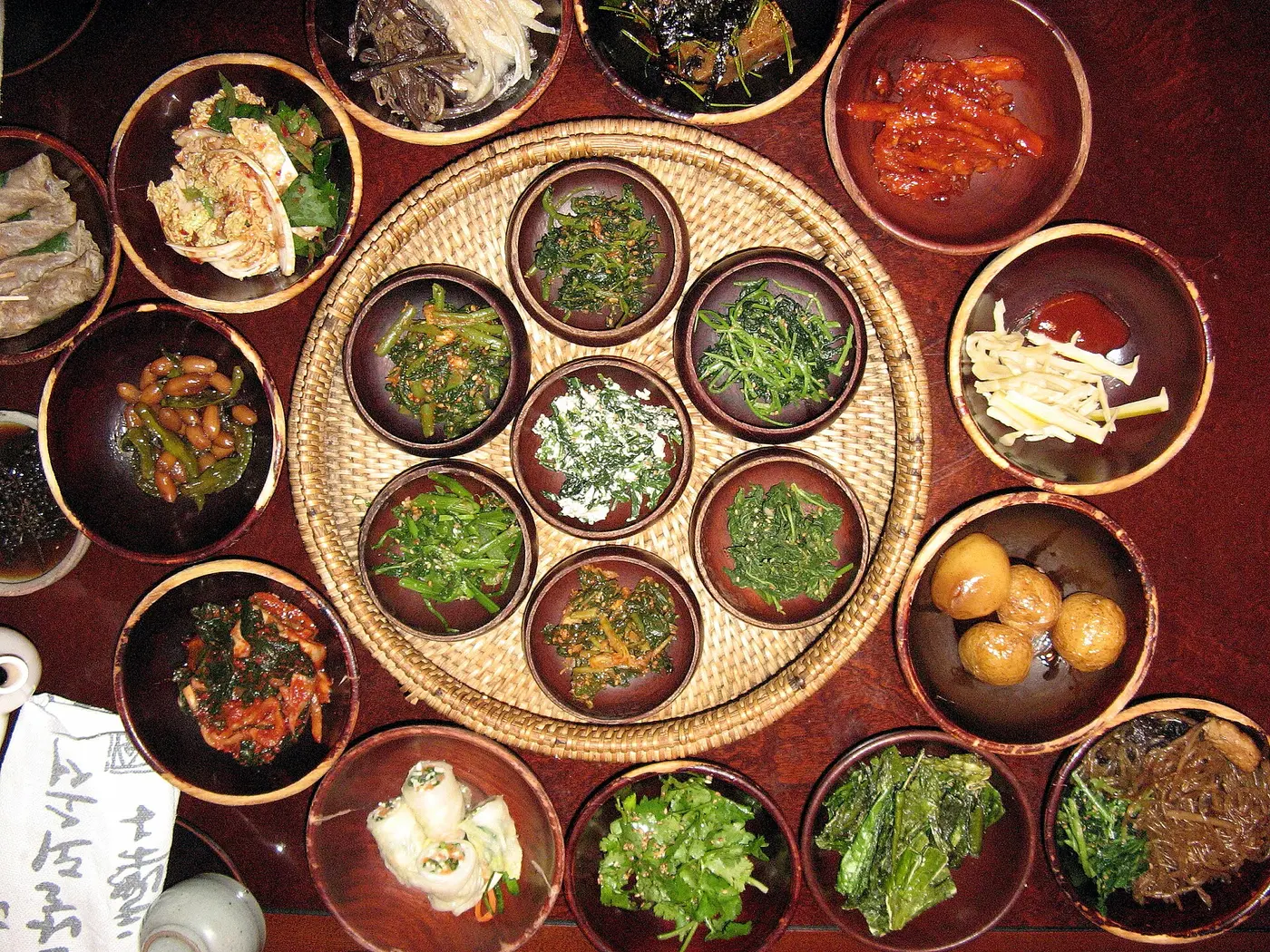
Exploring Vegetarian-Friendly Korean Foods: What to Know Before You Order
Korean cuisine is vibrant and diverse, but navigating vegetarian options can be tricky for first- or second-time visitors. Many dishes that look vegetable-heavy may include hidden animal ingredients like fish sauce, anchovies, meat broths, or egg. This guide highlights ten Korean dishes that can work for vegetarian travelers, along with essential questions to ask and tips for ordering. Whether you’re avoiding meat, dairy, or just seeking plant-based meals, understanding the nuances of Korean food will help you enjoy your trip without surprises.
Tip: Always ask about broth and seasoning ingredients. Phrases like “meat broth?” (육수 있어요?) or “fish sauce?” (액젓 들어가요?) can clarify hidden animal products.
Tip: Kimchi is often fermented with fish sauce or salted seafood, so it’s not automatically vegetarian. Confirm before assuming.
Tip: For non-spicy options, note that “not red” does not always mean “not spicy.” Mustard, kimchi, and sauces can still add heat.
1. Bibimbap (비빔밥)
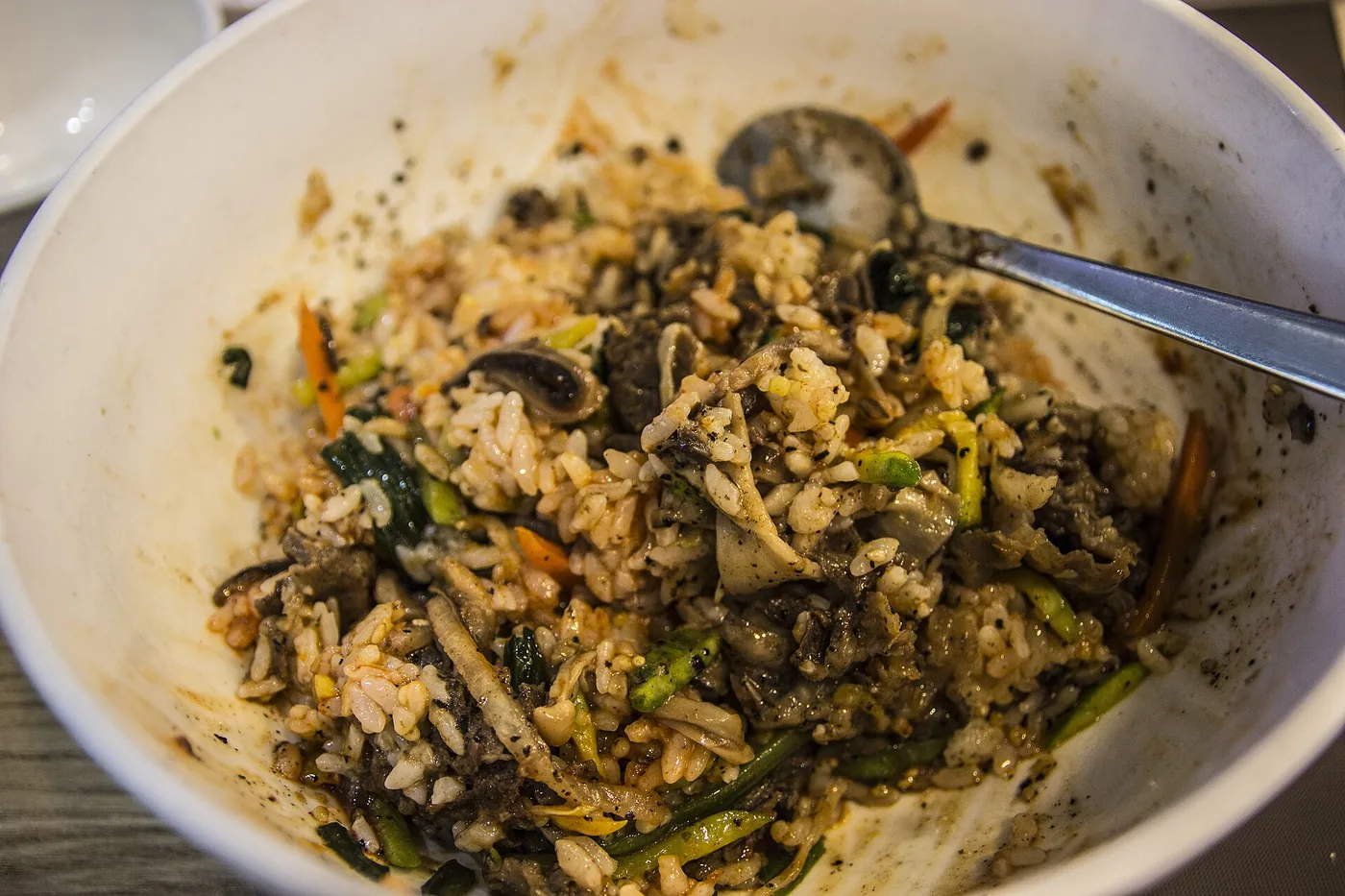
Photo: Shene81, Wikimedia Commons, CC BY 3.0; resized and converted to WebP.

Bibimbap is a colorful bowl of rice topped with a variety of seasoned vegetables, sometimes egg, and often meat. The name means “mixed rice,” and the traditional way to eat it is to stir all the ingredients together with a spicy red chili paste called gochujang. For vegetarians, bibimbap can be a great choice if you specify no meat or egg. However, be aware that some vegetable toppings may be cooked in meat broth or seasoned with fish sauce. Also, the gochujang itself can sometimes contain anchovy extract, so ask if a vegetarian version is available. The stone pot version (dolsot bibimbap) adds a crispy rice crust, which is a delicious bonus but can be very hot to the touch. Bibimbap suits travelers who want a balanced meal with rice and vegetables, and who enjoy mixing flavors and textures.
2. Gimbap (김밥)

Photo: Jens Ohlig, Wikimedia Commons, CC BY-SA 2.0; resized and converted to WebP.

Gimbap resembles sushi rolls but is seasoned differently and rarely contains raw fish. It’s made by rolling rice and various fillings in seaweed, then slicing into bite-sized pieces. Vegetarian gimbap, often called yachae gimbap, typically includes pickled radish, spinach, carrots, and egg. However, many gimbap varieties include ham, fish cake, or crab sticks, so it’s important to specify vegetarian and confirm ingredients. The rice is usually seasoned with sesame oil and salt, making it flavorful without added animal products. Gimbap is perfect for a quick snack, picnic, or light meal. When eating, try to consume each piece whole to prevent fillings from falling out. This dish suits travelers looking for portable, mild, and familiar flavors.
3. Japchae (잡채)
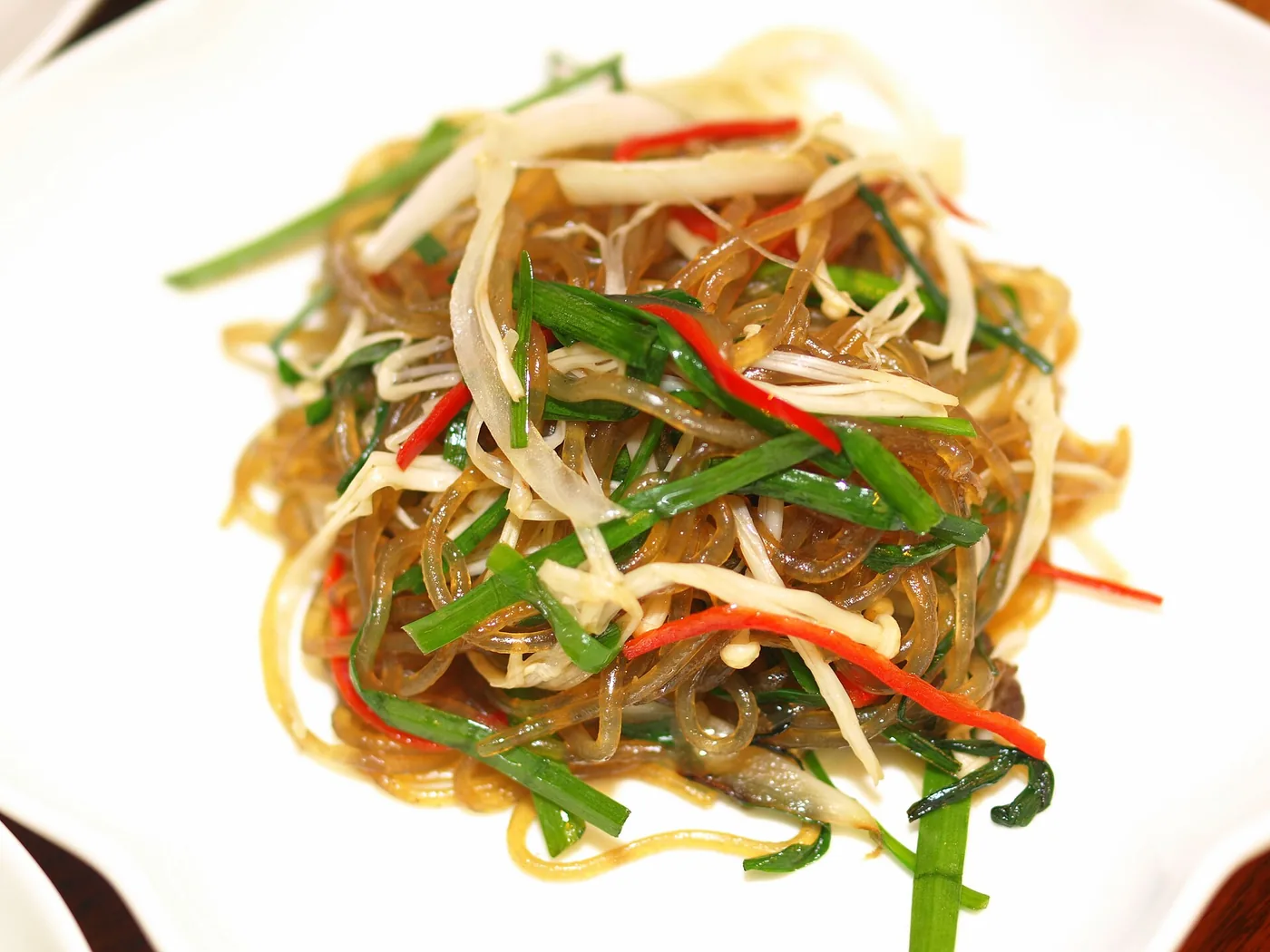
Photo: Alan Chan, Wikimedia Commons, CC BY-SA 2.0; resized and converted to WebP.

Japchae features translucent sweet potato noodles stir-fried with a mix of vegetables like spinach, carrots, onions, and mushrooms. It often includes beef, but vegetarian versions are available upon request. The dish is seasoned with soy sauce and sesame oil, giving it a slightly sweet and nutty flavor. The noodles have a pleasant springy texture, making japchae a comforting and mild choice, especially for those sensitive to spice. However, the sauce may sometimes be made with meat broth or fish sauce, so it’s wise to double-check. Japchae is often served as a side dish or shared plate, so it’s ideal for travelers who want to sample multiple dishes or enjoy a lighter meal with familiar textures.
4. Naengmyeon (냉면)
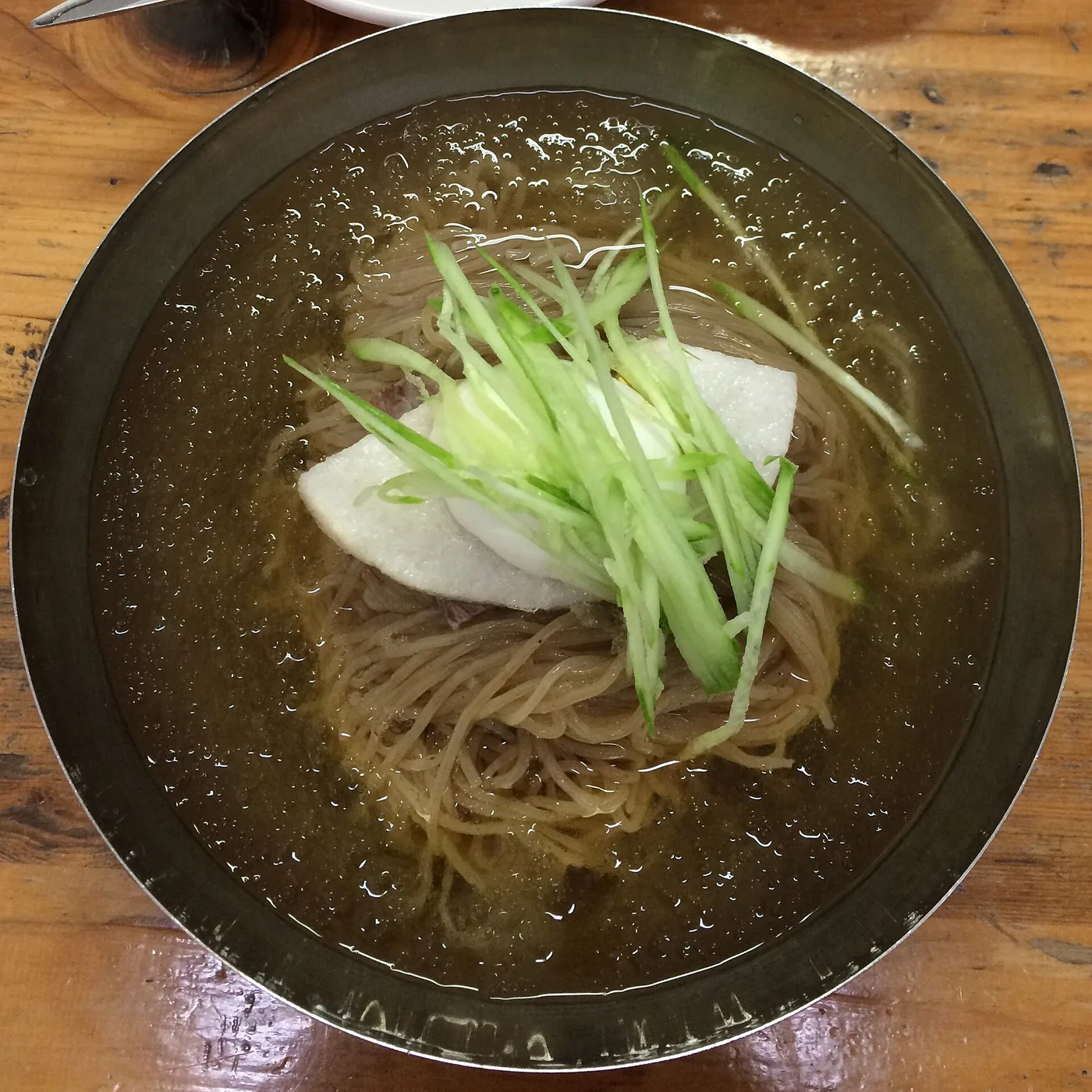
Photo: chomjong, Wikimedia Commons, CC BY 2.0; resized and converted to WebP.

Naengmyeon is a refreshing cold noodle dish made from chewy buckwheat or sweet potato starch noodles. It comes in two main styles: mul naengmyeon, served in a tangy, icy broth, and bibim naengmyeon, mixed with a spicy red sauce. While the broth is often beef-based, some places offer vegetarian-friendly versions. Mustard and vinegar are provided on the side to adjust flavor and heat. The noodles are long and elastic, and many restaurants provide scissors to cut them for easier eating. Naengmyeon is a great choice for hot weather or as a palate cleanser after rich meals. It suits travelers who enjoy cold, tangy dishes and want to avoid heavy or spicy foods, but always confirm the broth ingredients.
5. Kimchi (김치)
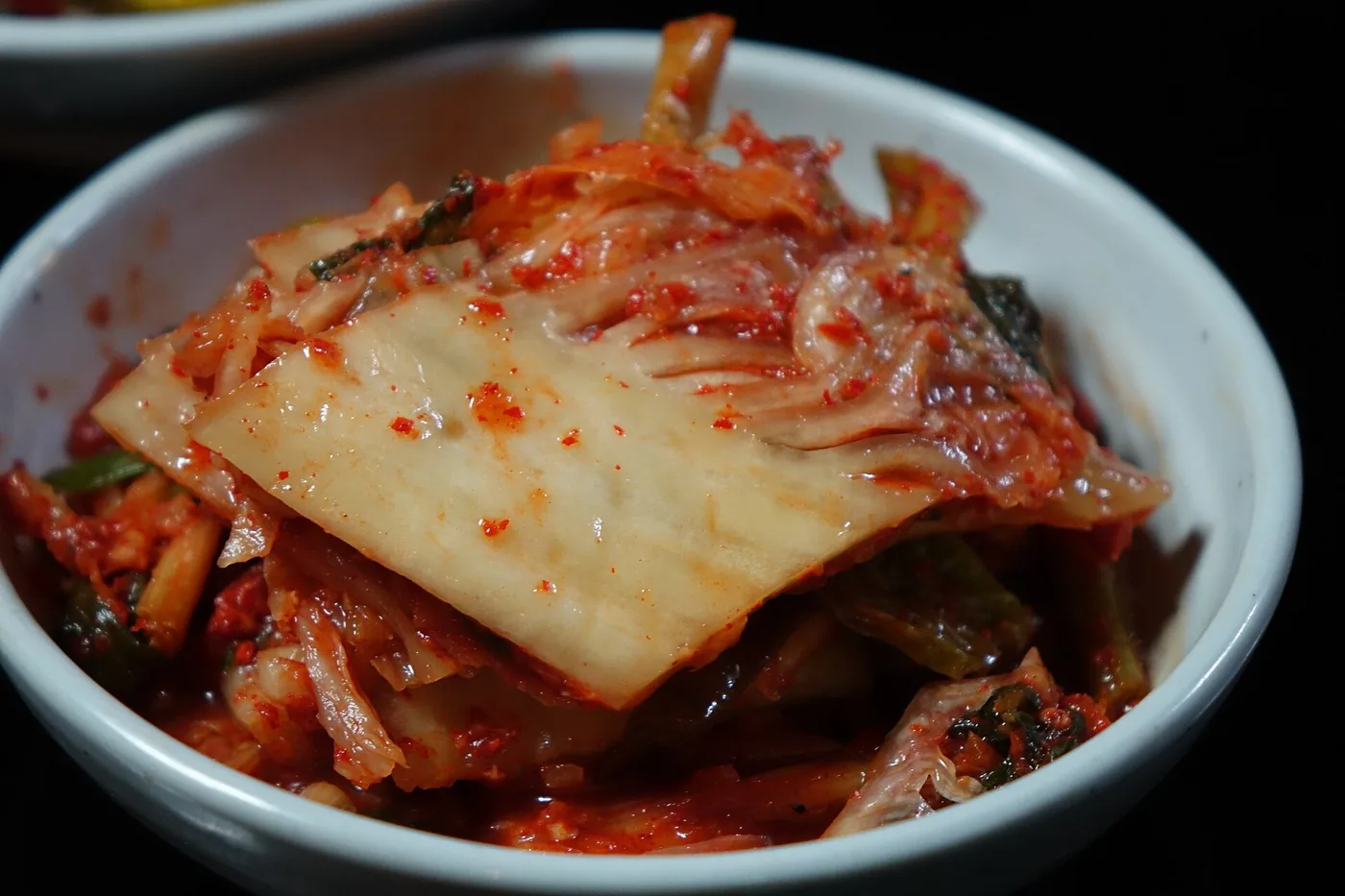
Photo: 최광모, Wikimedia Commons, CC BY-SA 4.0; resized and converted to WebP.

Kimchi is Korea’s iconic fermented vegetable dish, most commonly made from napa cabbage. It ranges in flavor from fresh and crunchy to deeply sour and pungent, depending on fermentation time. Despite its vegetable base, traditional kimchi usually contains fish sauce or salted seafood, making it unsuitable for strict vegetarians or vegans. Some restaurants and specialty shops offer vegan kimchi, but you should ask specifically. Kimchi is served as a complimentary side dish (banchan) at most meals and is a great way to experience Korean fermentation culture. It pairs well with rice and other dishes but can be spicy and salty, so try a small amount first. Kimchi suits adventurous eaters who want to explore authentic Korean flavors with awareness of hidden animal ingredients.
6. Doenjang jjigae (된장찌개)
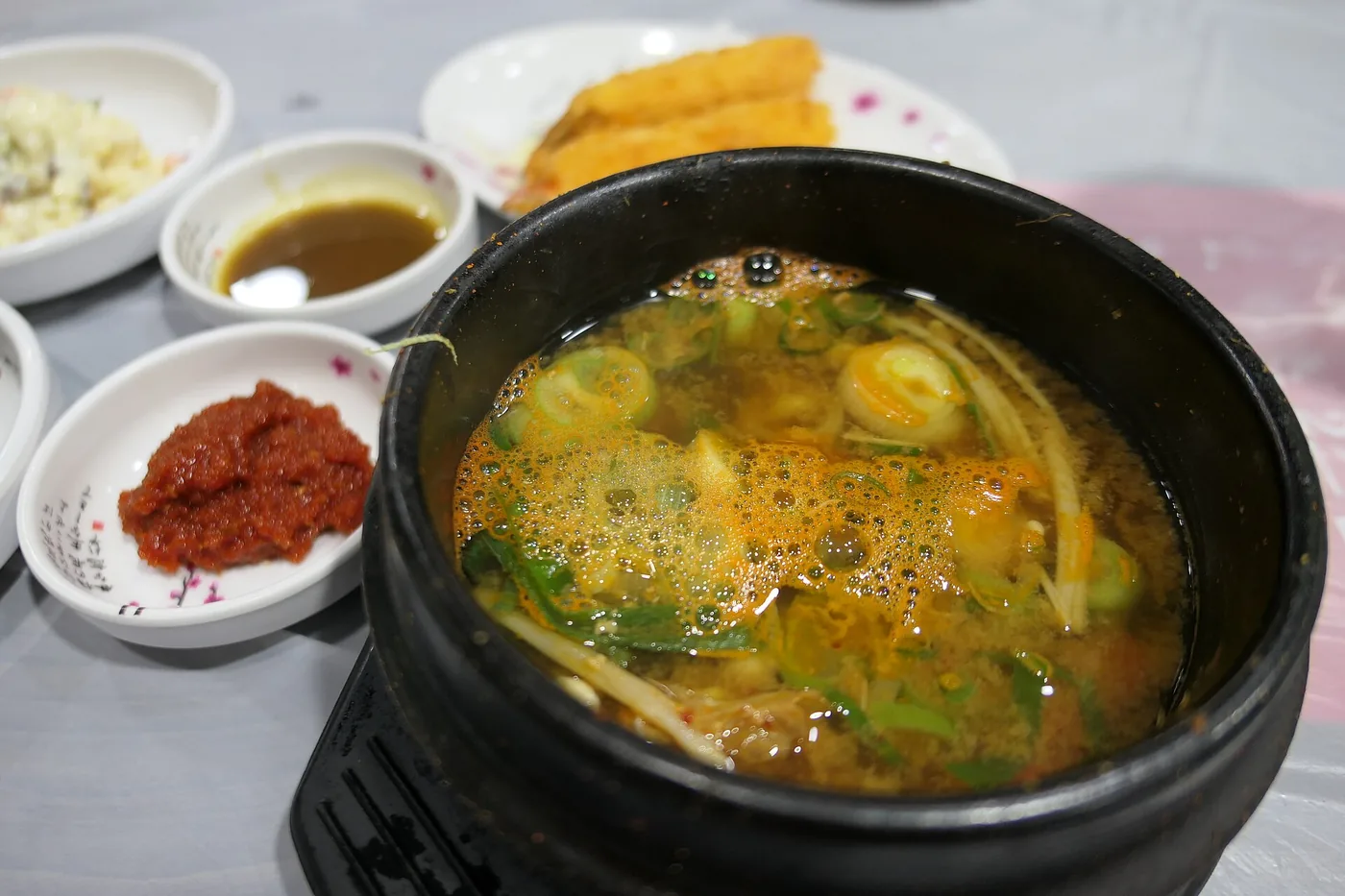
Photo: bryan… from Taipei, Taiwan, Wikimedia Commons, CC BY-SA 2.0; resized and converted to WebP.
.jpg)
Doenjang jjigae is a hearty stew made from fermented soybean paste, tofu, and vegetables like zucchini, mushrooms, and onion. Its flavor is earthy, salty, and deeply savory, reflecting a traditional Korean home-cooked meal. While doenjang itself is plant-based, the broth is often made with anchovy or meat stock, so vegetarians should confirm the broth before ordering. This stew is typically served bubbling hot alongside rice and banchan, and it’s common to eat the stew with rice to balance its intensity. Doenjang jjigae suits travelers seeking a comforting, protein-rich dish with complex flavors and who enjoy trying authentic Korean stews.
7. Tteokbokki (떡볶이)
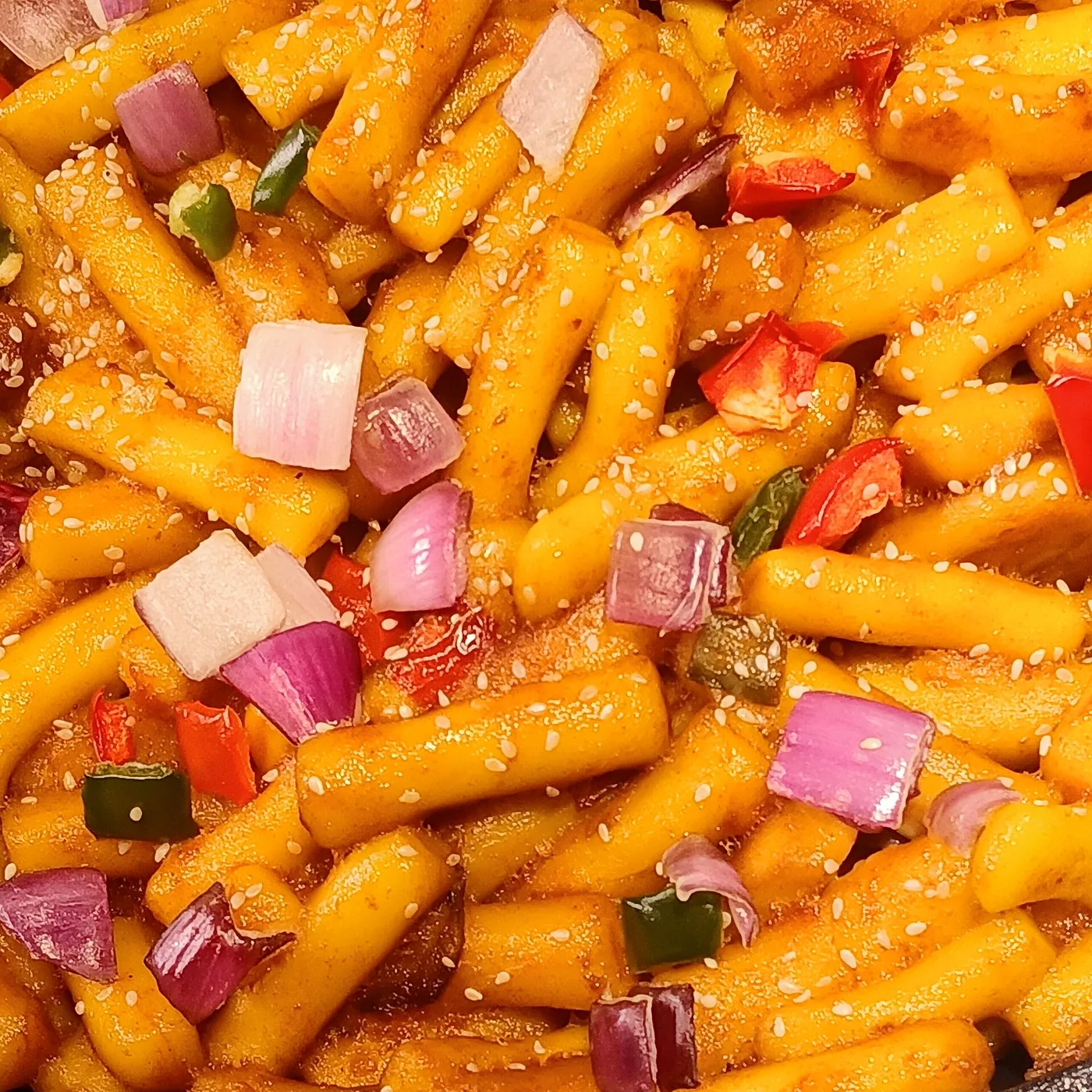
Photo: Fumikas Sagisavas, Wikimedia Commons, CC0; resized and converted to WebP.
.jpg)
Tteokbokki is a popular street food consisting of chewy cylindrical rice cakes simmered in a glossy, spicy-sweet red chili paste sauce called gochujang. It often includes fish cakes, boiled eggs, and cabbage. For vegetarians, the fish cake is a common pitfall, so ask for a version without it or confirm the ingredients. The sauce itself can be spicy, so if you prefer mild food, request a less spicy option or share a small portion first. Tteokbokki is a fun, casual snack best enjoyed at markets or street stalls and suits travelers who want to try Korean street food with a chewy texture and bold flavors.
8. Bindaetteok (빈대떡)
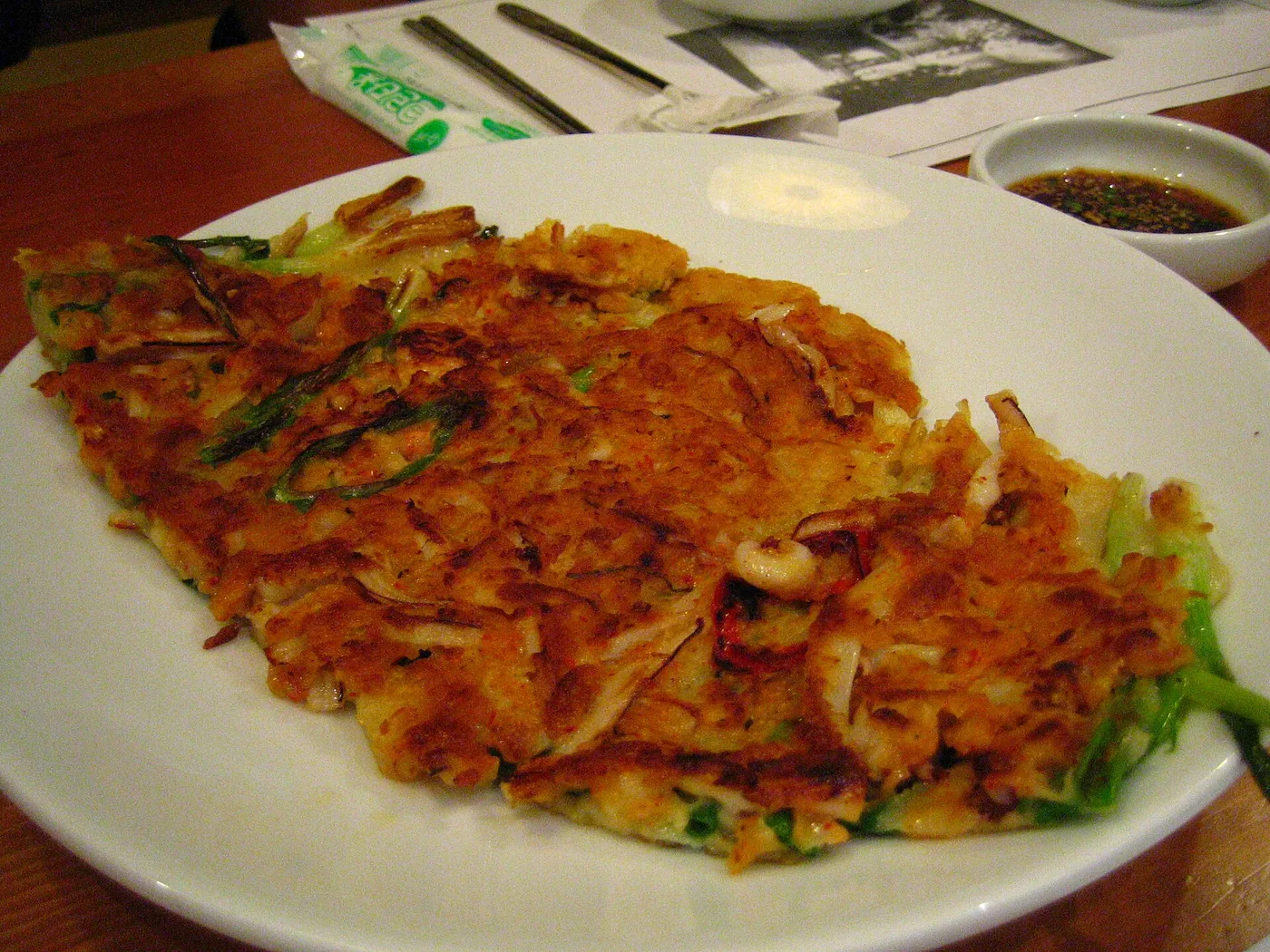
Photo: by ayustety, Wikimedia Commons, CC BY-SA 2.0; resized and converted to WebP.

Bindaetteok is a thick, savory pancake made from ground mung beans mixed with vegetables like bean sprouts and sometimes kimchi or pork. It’s pan-fried until crispy on the outside and dense inside. This dish is often shared and dipped in soy sauce with chopped onions. For vegetarians, it’s important to ask whether pork or kimchi containing fish sauce is included. Bindaetteok is hearty and filling, making it a great snack or appetizer. It pairs traditionally with makgeolli, a Korean rice wine, but non-drinkers can enjoy it on its own. This dish suits travelers who enjoy crispy textures and want a taste of Korean market cuisine.
9. Hotteok (호떡)
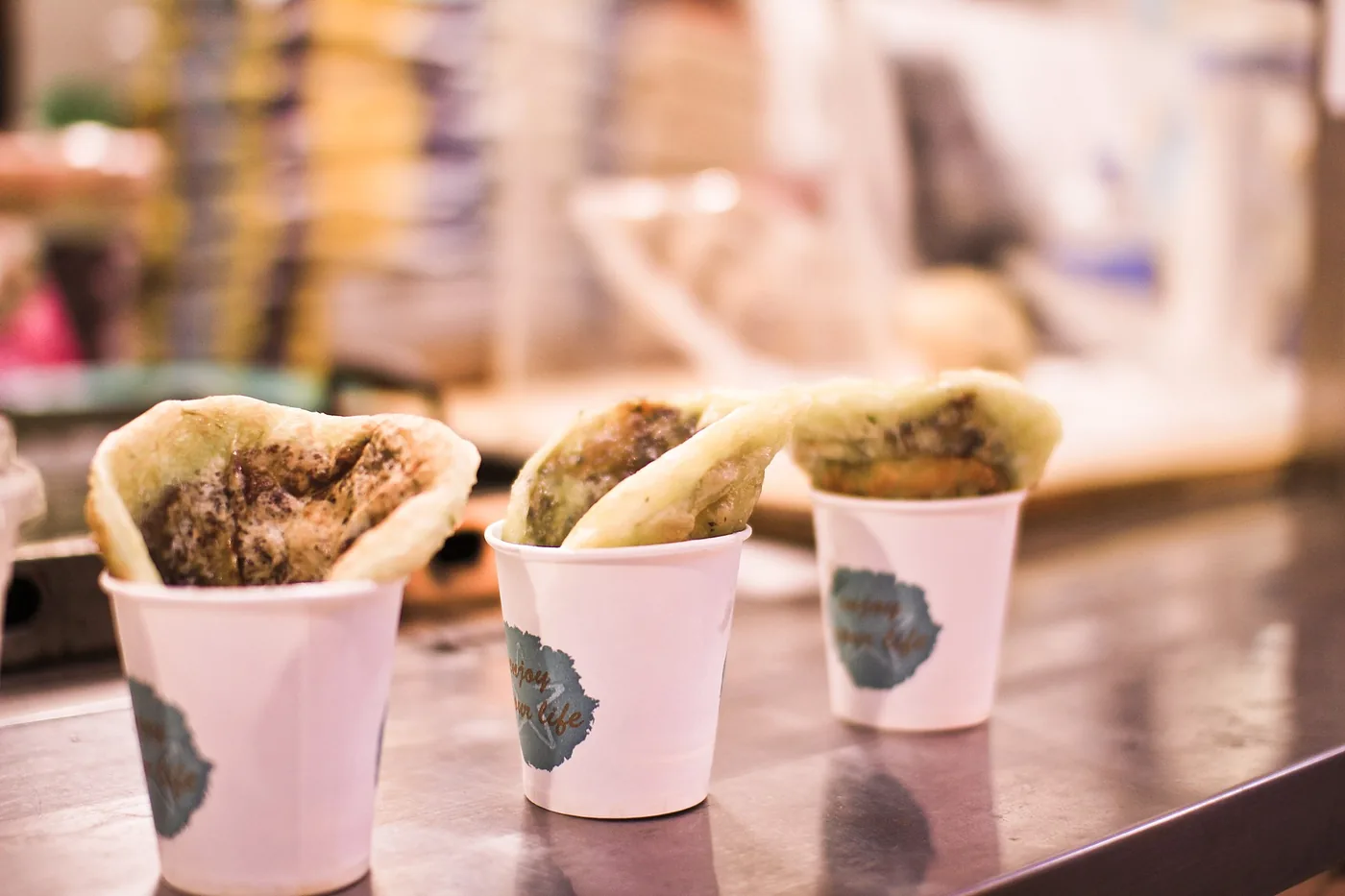
Photo: maya jasmin, Wikimedia Commons, CC BY 2.0; resized and converted to WebP.

Hotteok is a sweet, yeasted pancake filled with a molten mixture of brown sugar, cinnamon, and seeds or nuts. It’s cooked on a griddle until the outside is crisp and the inside melts into syrup. This popular street snack is especially comforting in cold weather. For those with nut or seed allergies, caution is advised as fillings vary. Some hotteok doughs may also contain milk, so vegans should inquire before ordering. Hotteok is easy to eat on the go, usually served in a paper cup to catch drips. This snack suits travelers looking for a warm, sweet treat with a chewy texture and a hint of spice from cinnamon.
10. Mandu (만두)
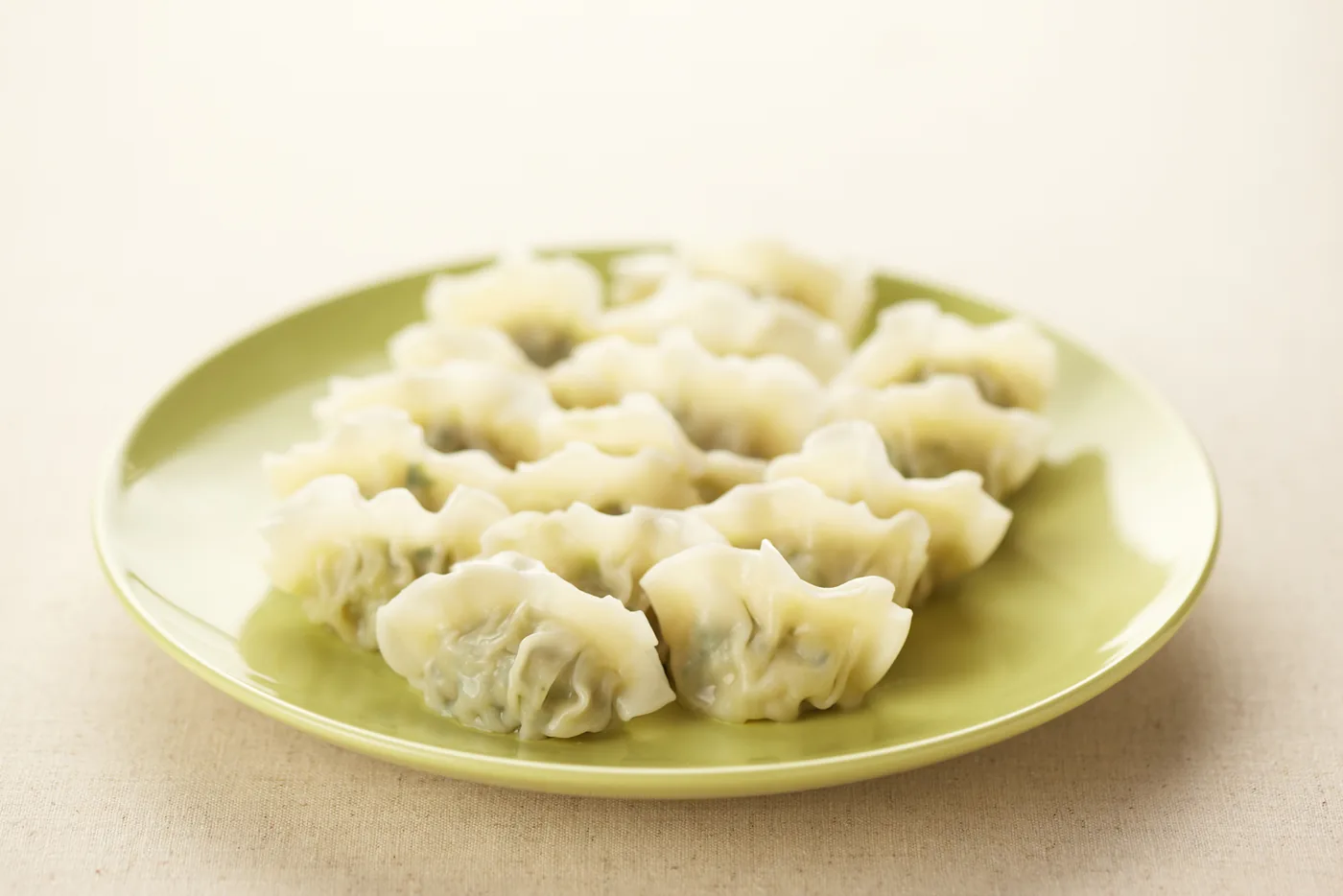
Photo: 국립국어원, Wikimedia Commons, CC BY-SA 2.0 kr; resized and converted to WebP.
.jpg)
Mandu are Korean dumplings that come steamed, pan-fried, or served in soup. Fillings vary widely, including pork, kimchi, vegetables, and tofu. Vegetable mandu may appear vegetarian but often include egg or meat broth in the wrapper or filling, so ask carefully if you want a vegetarian or vegan option. Dumpling wrappers usually contain wheat, which is important for those with gluten sensitivities. Mandu are typically eaten with a soy-vinegar dipping sauce served on the side, allowing control over saltiness and heat. This dish suits travelers who enjoy dumplings and want to try Korean variations, especially as a shared appetizer or light meal.
How to Order, Pay, and Navigate Korean Vegetarian Food
- Use the call button at your table to get staff attention, or say “jeogiyo” (저기요) if there isn’t one.
- Specify your dietary needs clearly. Use phrases like “I don’t eat meat” (고기 안 먹어요), “No fish sauce” (액젓 빼 주세요), or “Vegetarian?” (채식주의자예요).
- Ask about broths and sauces. Many vegetable dishes use meat or fish-based broths.
- Share dishes. Korean meals are often communal, so ordering several dishes to share is common.
- Pay at the counter in casual places; cards are widely accepted but carry some cash for markets.
- No tipping is expected in Korea.
Ordering tip: When unsure, ask for “yachae” (야채) meaning “vegetable” to request vegetarian versions, but always confirm hidden ingredients.
What to Skip or Approach with Caution
Some Korean dishes are visually deceptive for vegetarians. Avoid or carefully question dishes like kimchi jjigae (often made with pork broth), fish cake (eomuk), and many street snacks that include seafood or meat in sauces. Also, be cautious with sauces and broths, as they frequently contain anchovy or meat extracts. For those sensitive to spice, remember that “not red” dishes may still have heat from mustard or fermented peppers. Finally, avoid trendy “viral” snacks that prioritize spectacle over authentic flavor; classic dishes usually offer a more genuine Korean experience.
Hero photo credit: Photo: Richy!, Wikimedia Commons, CC BY-SA 2.0; resized and converted to WebP. Source: https://commons.wikimedia.org/wiki/File:Korean_temple_cuisine-Sanchon-01.jpg

Everything above was checked on foot (and at the table) by Korea Tripbook editors, most recently August 2026.