7 Best Mudflat Trips Near Seoul: Clam Digging, Islands & Sunsets
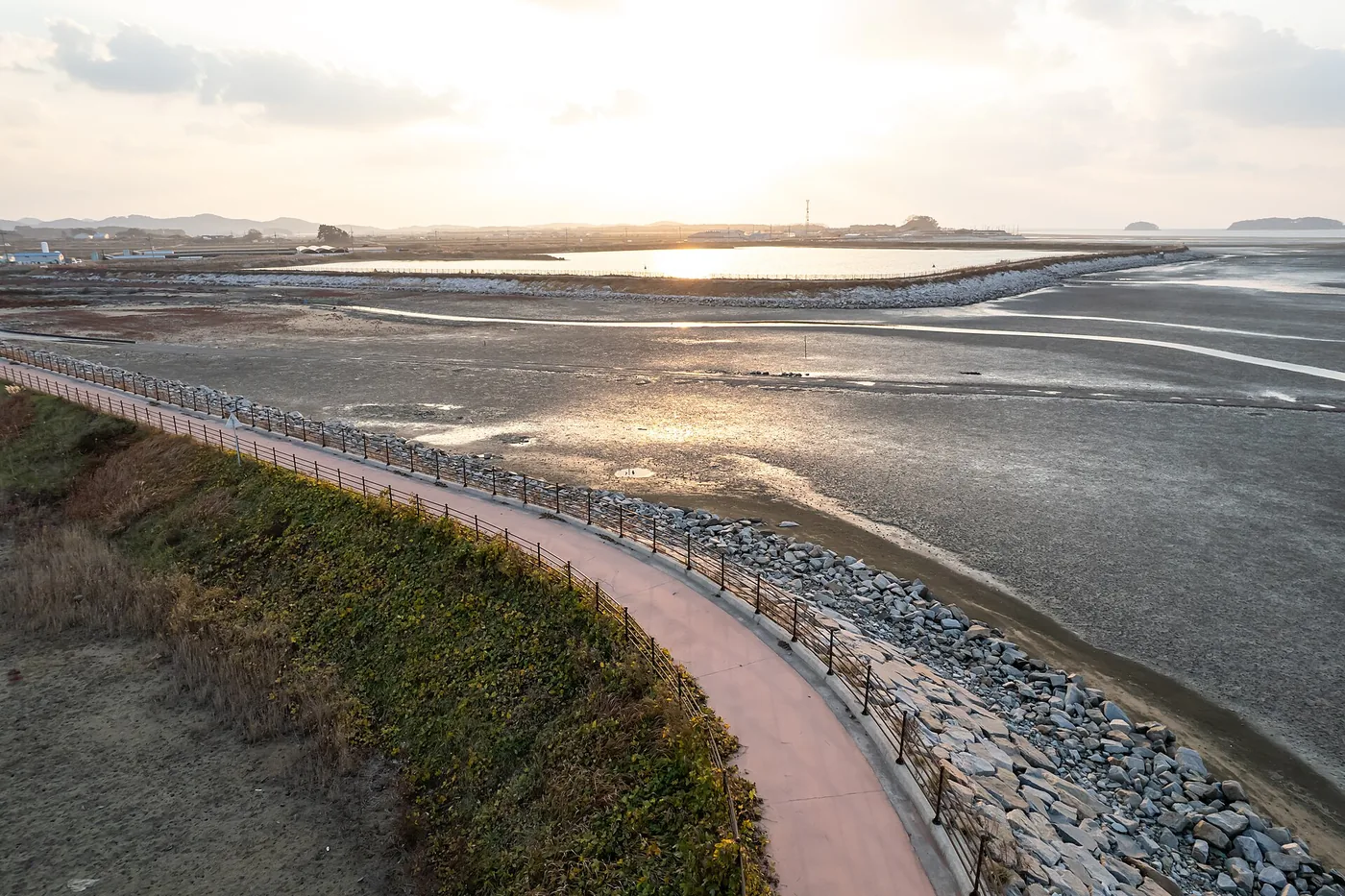
Seoul is only a short drive from one of Korea’s most unusual landscapes: the vast Yellow Sea mudflats. At low tide, the sea withdraws far enough to reveal shellfish beds, tidal channels, and walkable paths to small islands. At the right village, visitors can rent boots and a hand rake and dig for clams with local guides. At the wrong time—or at a scenic wetland rather than an experience village—you may simply find water and a locked booth.
This guide includes seven verified fishing-village experiences, not just photogenic beaches. Programs are controlled by tides, weather, conservation periods, and local harvest conditions, so the first step is always to confirm the session directly.
Before You Choose: The Quick Comparison
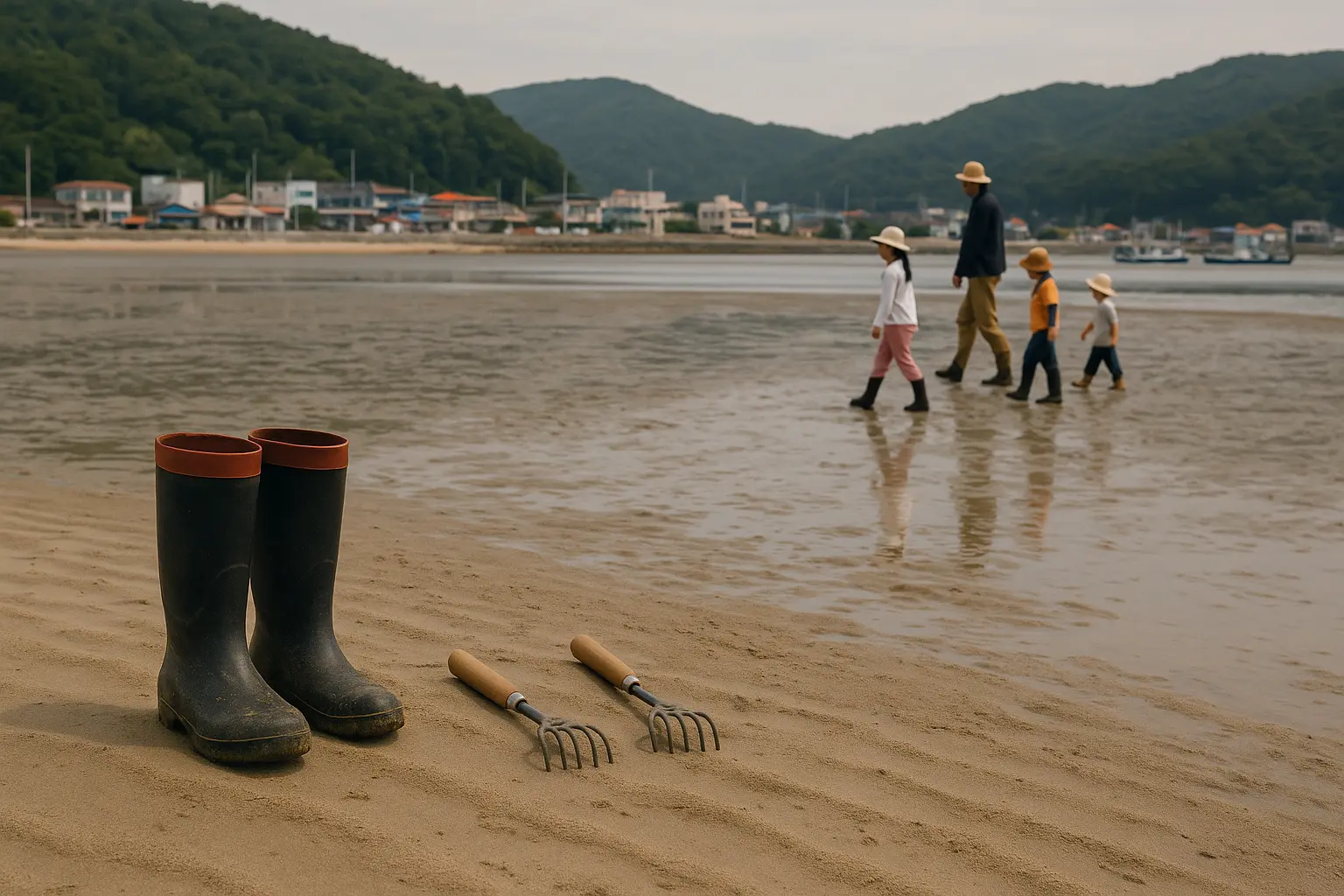
- Masian: Best for an easy airport-area trip. Allow roughly 1–1.5 hours by car from central Seoul. Hands-on digging is available when sessions operate.
- Seonjae: Best for broad sandy flats and island scenery. Allow roughly 1.5–2 hours. Hands-on digging is available.
- Ponae, Muuido: Best for a quieter island outing. Allow roughly 1.5–2 hours. Confirm the digging program before traveling.
- Yeongam, Yeongheungdo: Best for a fishing-village atmosphere. Allow roughly 2 hours. Confirm the digging program first.
- Dongmak, Ganghwado: Best for combining a mudflat with a classic beach stop. Allow roughly 1.5–2 hours. Digging is available only through scheduled programs.
- Jonghyeon, Daebudo: Best for family activities plus sunset. Allow roughly 1.5–2 hours. Hands-on digging is available.
- Jebu Fishing Village: Best for combining clams, the sea road, and the cable car. Allow roughly 1.5–2 hours. Hands-on digging is available.
*Driving times are rough, traffic-free planning ranges—not promises. Weekend traffic around island bridges and the west coast can add an hour or more.
Tide-first rule: Do not build your day around the words “low tide” on a general weather app. Ask the experience village for its actual check-in time; the safe activity window may start well before the published lowest tide.
The 7 Best Mudflat Experiences Near Seoul
1. Masian Mudflat Experience Center — Best for a Short, Easy Trip
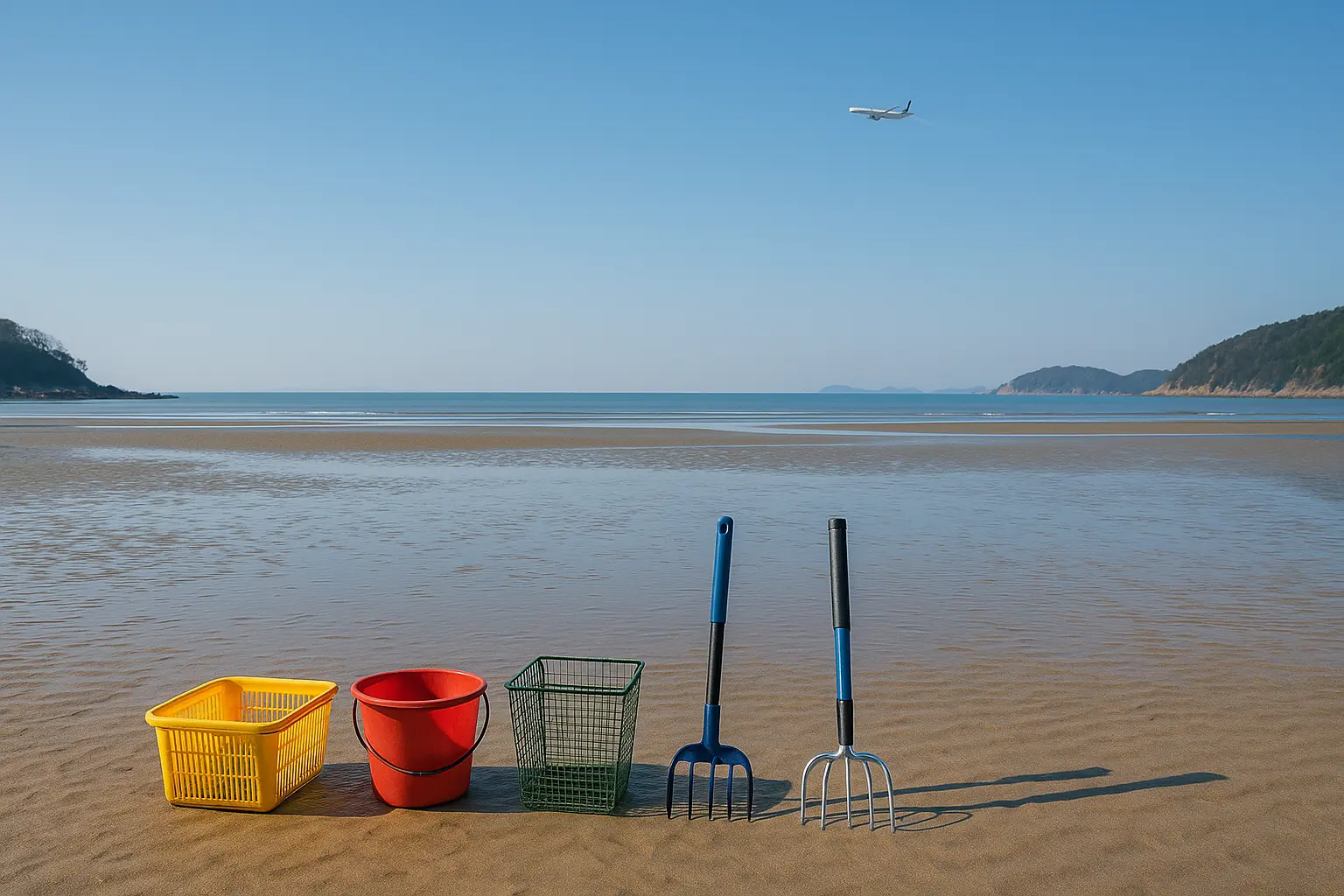
Masian is the most convenient first choice if you are staying near Incheon Airport or want to minimize island driving. Incheon’s official tourism guide describes a managed center where admission includes basic tools and a collection bag. The sandy mudflat is relatively firm, which is helpful for children and first-timers. Conservation areas rotate, so follow staff boundaries rather than wandering toward undisturbed habitat.
Combine the session with a seafood lunch and an airport-view café, but do not expect a full swimming beach at low tide. Search Masian Mudflat Experience Center on Google Maps or 마시안 갯벌체험장 on Naver Map.
2. Seonjae Fishing Experience Village — Best All-Round Island Experience
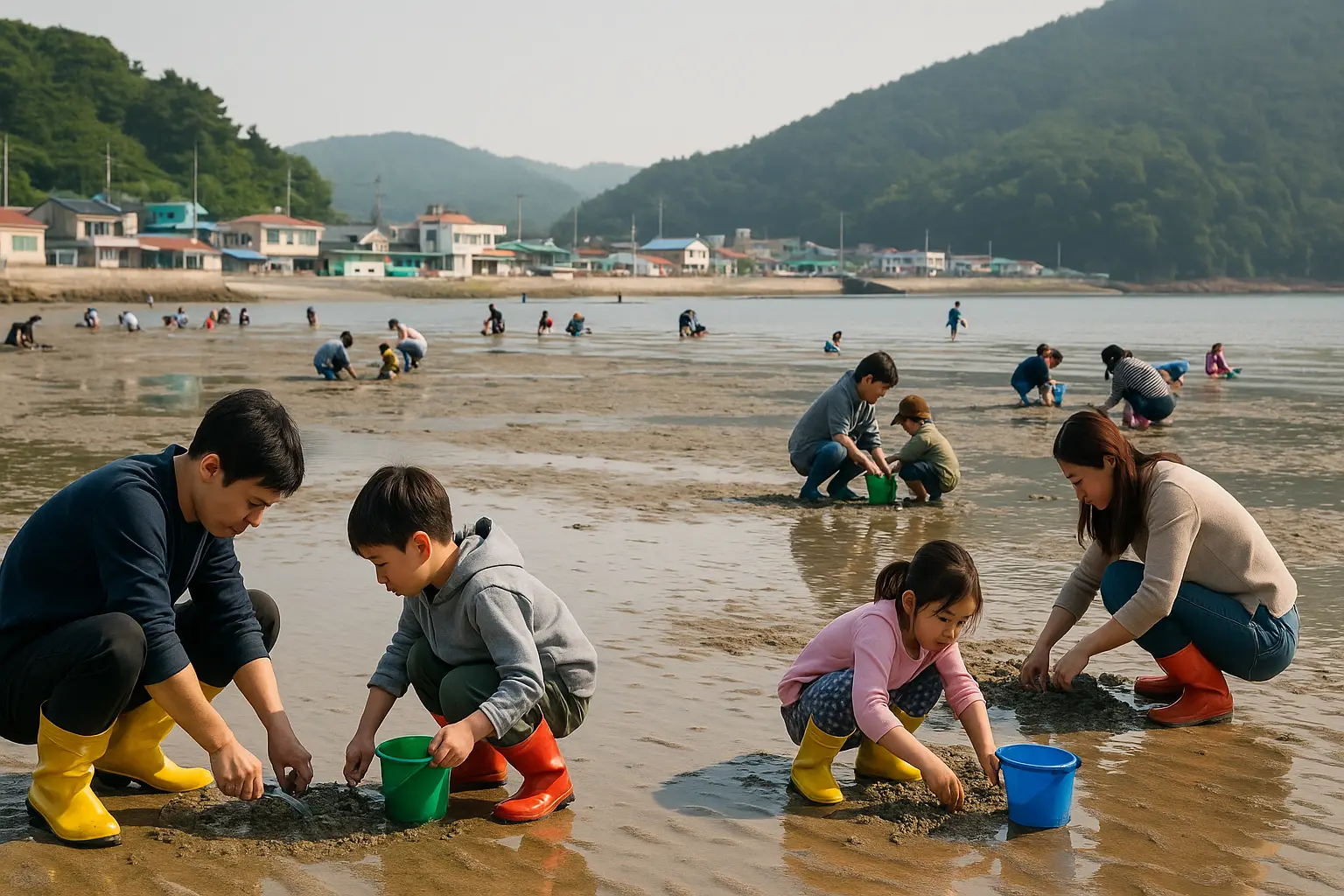
Seonjaedo sits between Daebudo and Yeongheungdo, connected by road. Its village operates designated clam-digging areas, including schedules that can differ between weekdays and weekends. Nearby Mokseom Island is a separate scenic attraction: a sandy path appears at low tide, but that does not mean every exposed flat is open for harvesting.
Search 선재도 어촌체험휴양마을 and reserve through the village’s current notice. Add Mokseom only if the walking window and experience time align safely.
Local tip: Korean village websites often post the month’s tide timetable as an image. If automatic translation misses it, call the number shown on the latest notice or ask your hotel to confirm the date, arrival time, age limits, and whether boots are included.
3. Ponae Fishing Experience Village, Muuido — Best for a Quieter Island Day
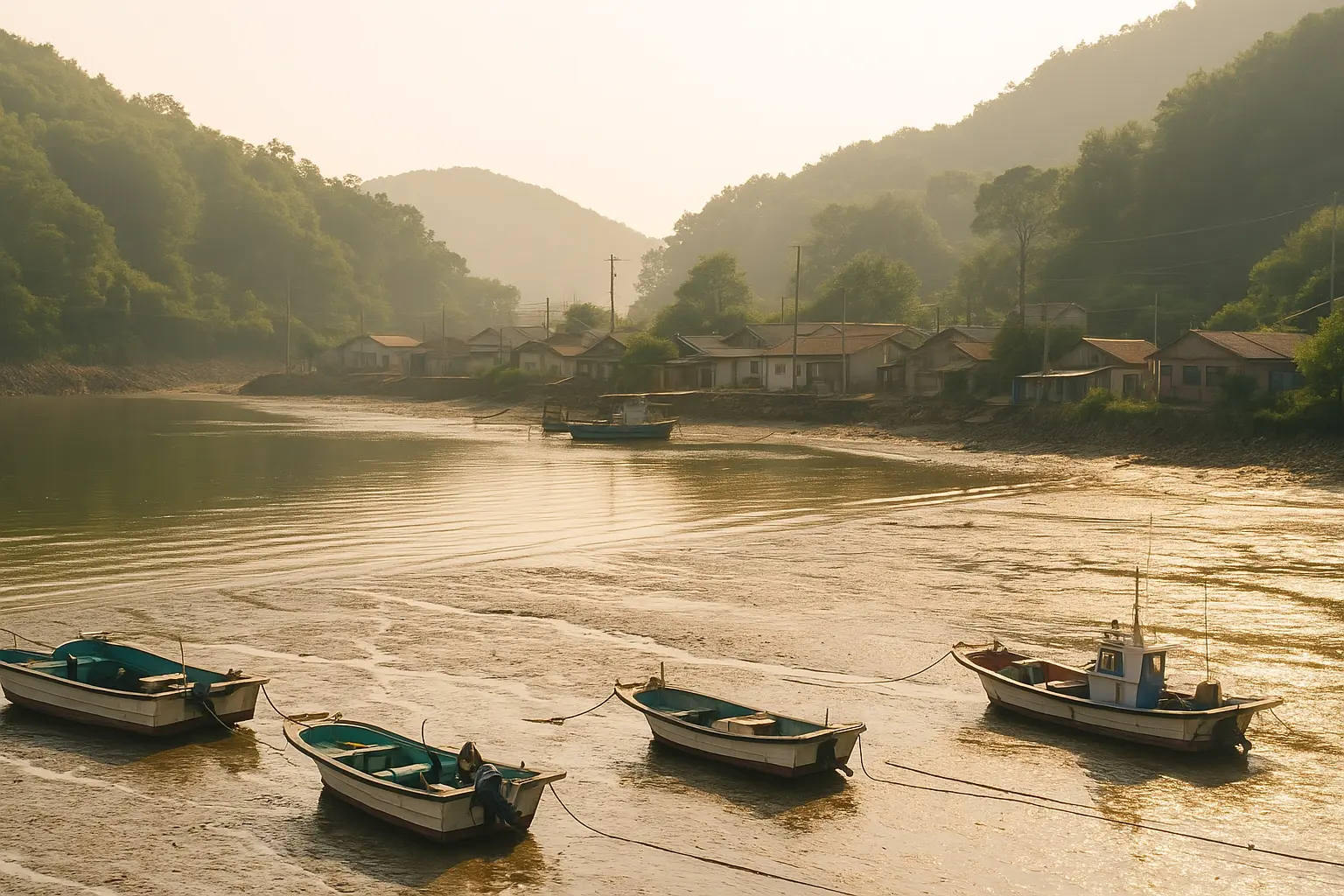
Ponae is one of the equipped mudflat-experience villages identified by Incheon’s tourism authority. It is a better fit for travelers who want a rural island mood than for anyone rushing between major attractions. Muuido is now road-accessible, but narrow local roads and weekend congestion still reward an early start.
Confirm that the clam program—not only a fishing or seasonal village activity—is running on your date. Search 포내어촌체험마을 on Naver Map. Hanagae Beach can be a second stop, though its scenic sea trail and beach activities should be checked separately.
4. Yeongam Fishing Village, Yeongheungdo — Best for a Local Fishing-Village Feel
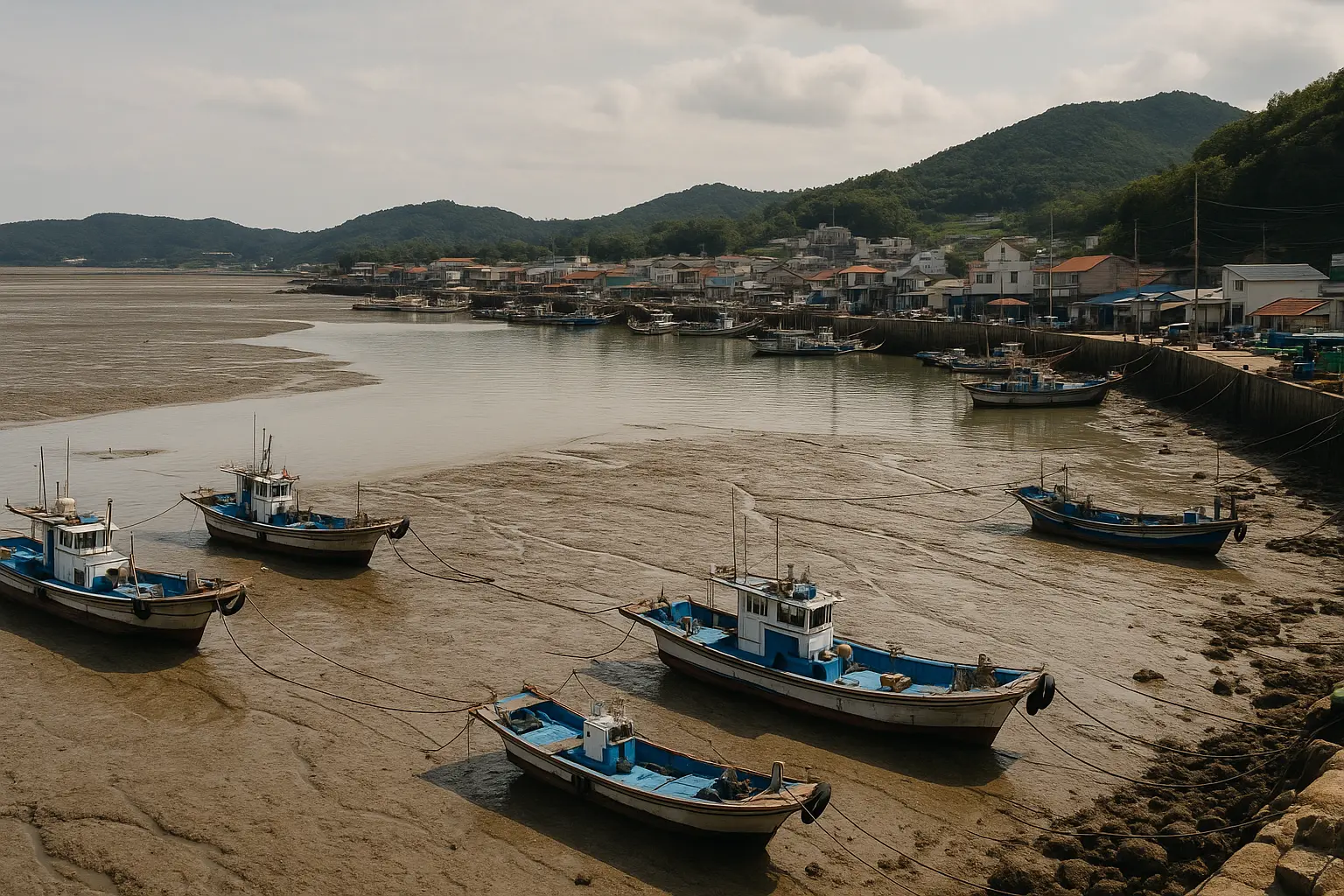
Yeongam is farther from Seoul, but the drive across the connected islands makes the journey part of the day. It appears in Incheon’s official list of equipped mudflat-experience villages. This is the place for travelers who value a local program over polished English-language booking.
Search 영암어촌체험마을 영흥도. Because English service cannot be assumed, have the Korean name, date, number of adults and children, and shoe sizes ready when making an inquiry.
5. Dongmak Beach, Ganghwado — Best for Beach Scenery Plus an Activity
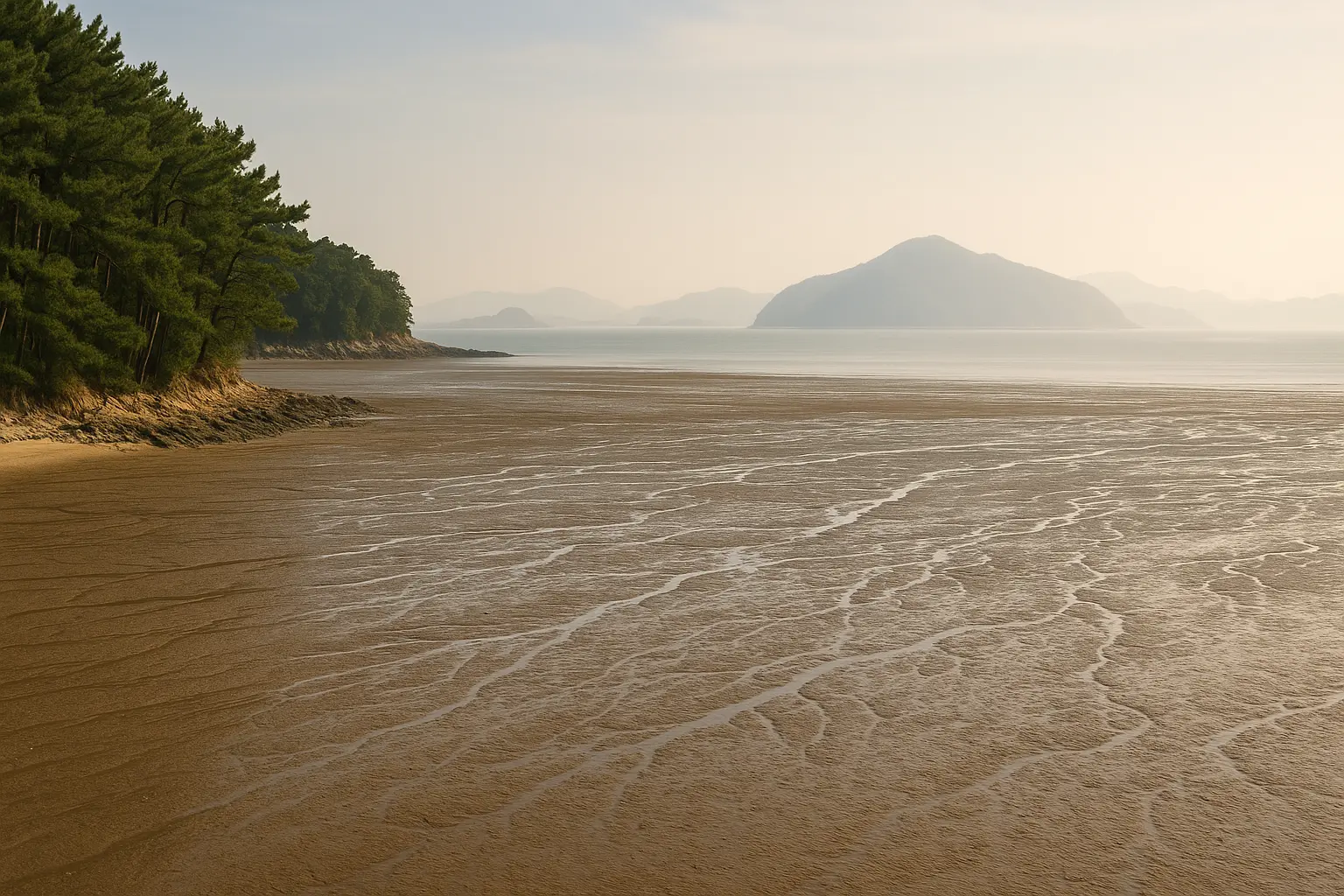
Dongmak is one of Ganghwa Island’s best-known west-coast beaches and is also listed by Incheon tourism for organized clam-digging experiences. Treat the beach and the program as two separate things: you can visit the shoreline freely, but harvesting should only happen in the managed experience area during an announced session.
Ganghwa works well for a full driving loop with a café, temple, or observatory. Search 동막해변 갯벌체험. It is not the best choice if you have an evening flight—the return traffic into Seoul can be unpredictable.
What to skip: Sorae Wetland Ecological Park is excellent for salt fields, reeds, birdlife, and windmill photos, but it is an observation park, not a substitute for a managed clam-digging session.
6. Jonghyeon Fishing Village, Daebudo — Best for Families and Sunset
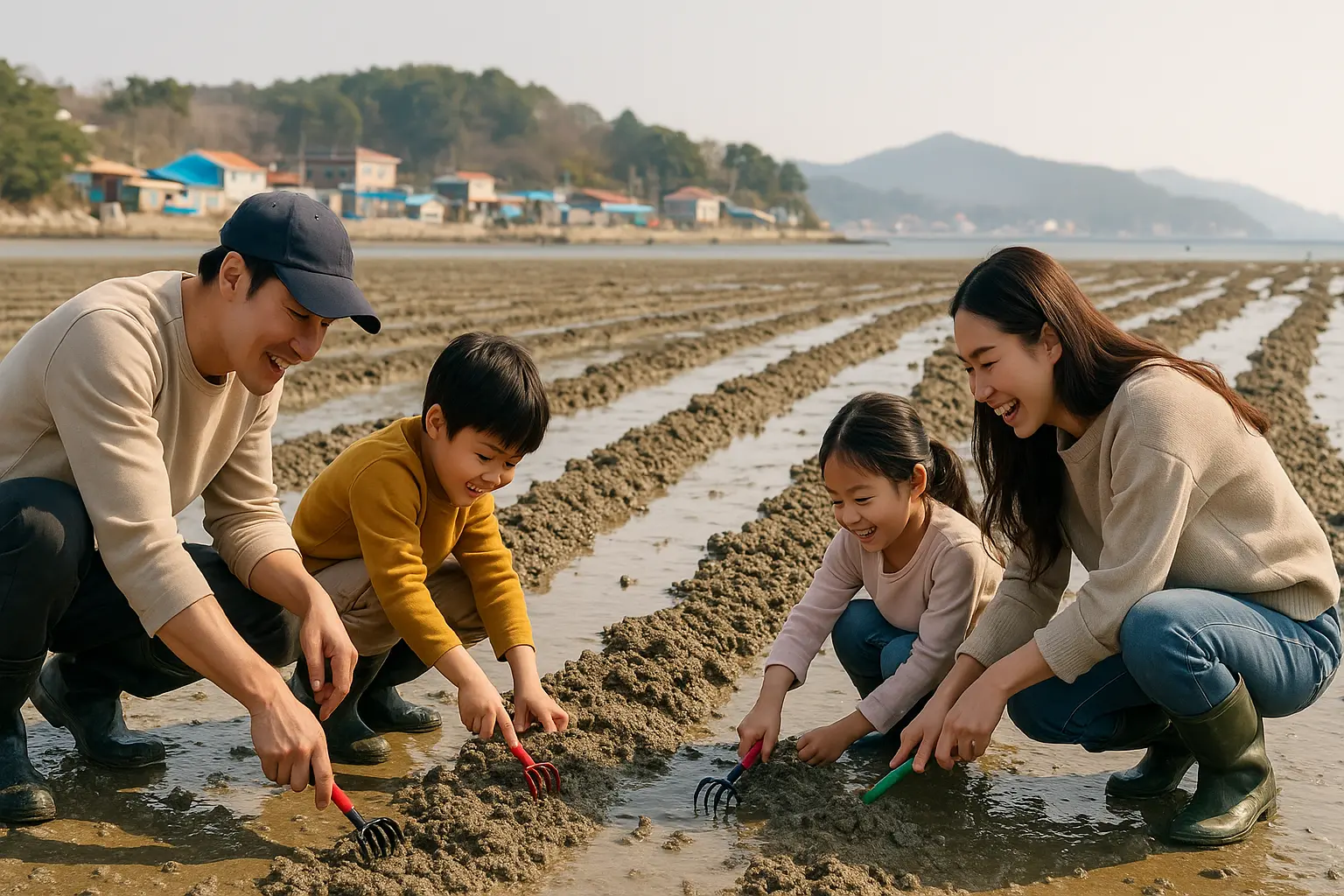
Ansan City lists Jonghyeon’s hands-on programs as clam digging, mud sledding, ecology learning, and seasonal activities. Its location near Gubongdo makes it easy to pair muddy boots in the afternoon with the Gubongdo sunset viewpoint later. Program menus change, so book the exact activity rather than assuming every option runs daily.
Search 종현어촌체험마을 or use the village’s address at 240 Gubong-gil, Danwon-gu, Ansan. Take a change of clothes even if the village supplies boots; children usually find a way to get muddy above the boot line.
7. Jebu Fishing Experience Village — Best Complete West-Coast Day
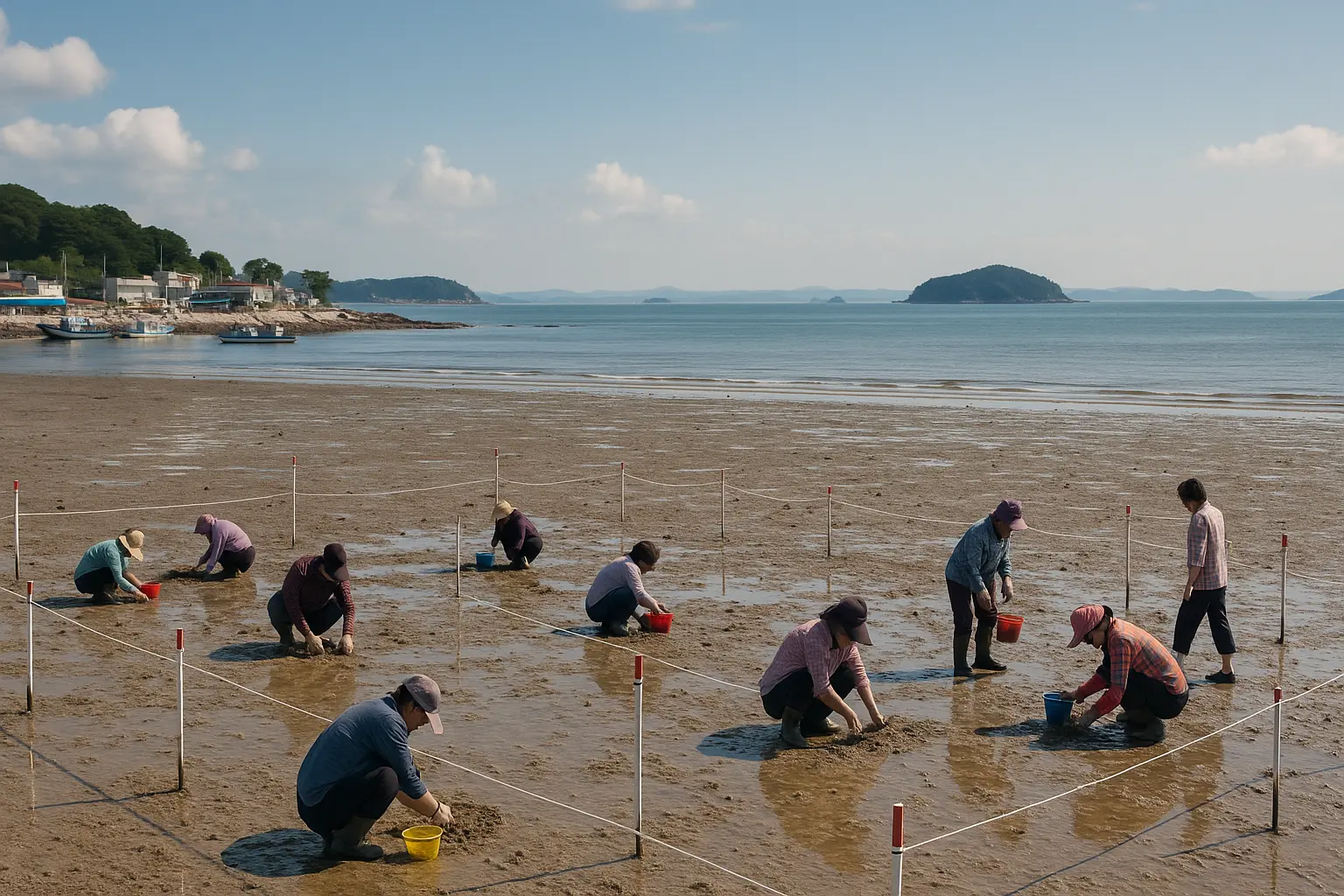
Jebu Fishing Village officially offers clam digging and other tidal-flat activities. It also has the strongest sightseeing combination: Jebudo’s famous sea road, waterfront paths, seafood, and the Seohaerang marine cable car. The cable car links Jeongok Port and Jebudo and gives a clear aerial view of how dramatically the tide reshapes the coast.
The road to the island may be controlled by tide conditions; the cable car offers an alternative crossing, but check current operating notices and decide where to park. Search Jebu Fishing Experience Village on Google Maps or 제부어촌체험휴양마을 on Naver Map.
How Tide Timing Actually Works
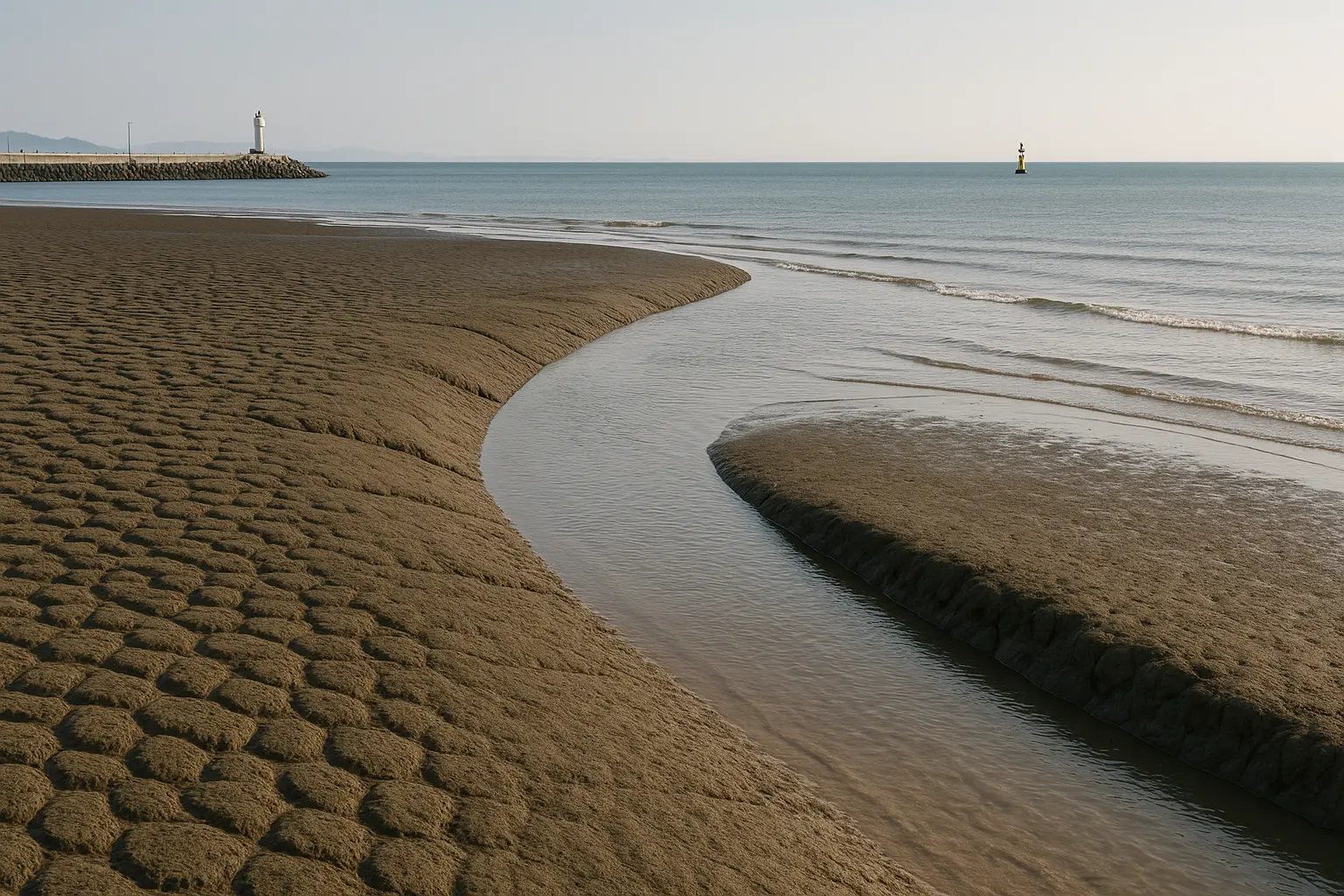
A published low-tide time marks the lowest predicted water level, not the moment you should arrive. A village may open its activity area before that point, stop entry well before the water returns, or cancel because wind and weather change local conditions. Driving access to an island and check-in for a clam-digging program can also follow different schedules.
Plan backward from the village’s assigned check-in time. Allow time to park, pay, change into boots, and hear the safety briefing. If you arrive late, staff may refuse entry even when the mudflat still looks exposed. After the session, wash up before continuing to lunch or a sunset stop; do not schedule a nonrefundable attraction immediately after the projected low tide.
What to Bring—and What Not to Do
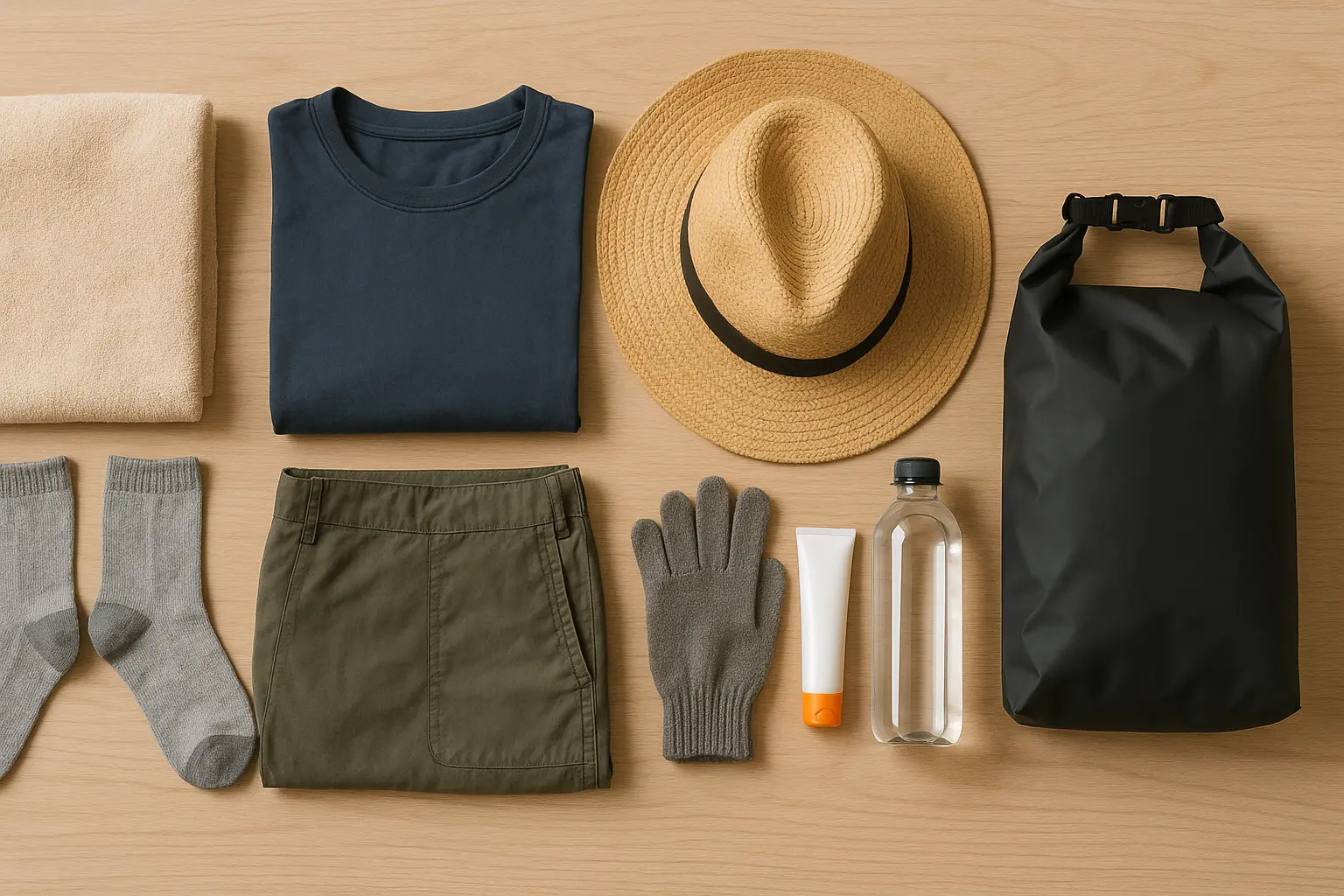
Wear clothes that can be stained, plus socks for rental boots. Pack a towel, full change of clothes, sun hat, sunscreen, water, and a sealable bag for dirty items. Use only the tools and collection container permitted by the village. Many programs cap the amount of shellfish each participant may take; Masian, for example, has publicized a 2 kg limit.
Never enter tidal channels, cross ropes, collect wildlife in conservation zones, or remain after staff call everyone back. Fog and incoming water can erase your return route surprisingly quickly. Wash hands before eating, and cook harvested shellfish thoroughly according to local food-safety guidance.
Payment tip: Bring a physical credit card and some Korean won. Small cooperatives may not support foreign-app reservations, overseas cards, or mobile wallets even when the activity itself is easy for international visitors.
Rental-Car Plan: The Safe Version
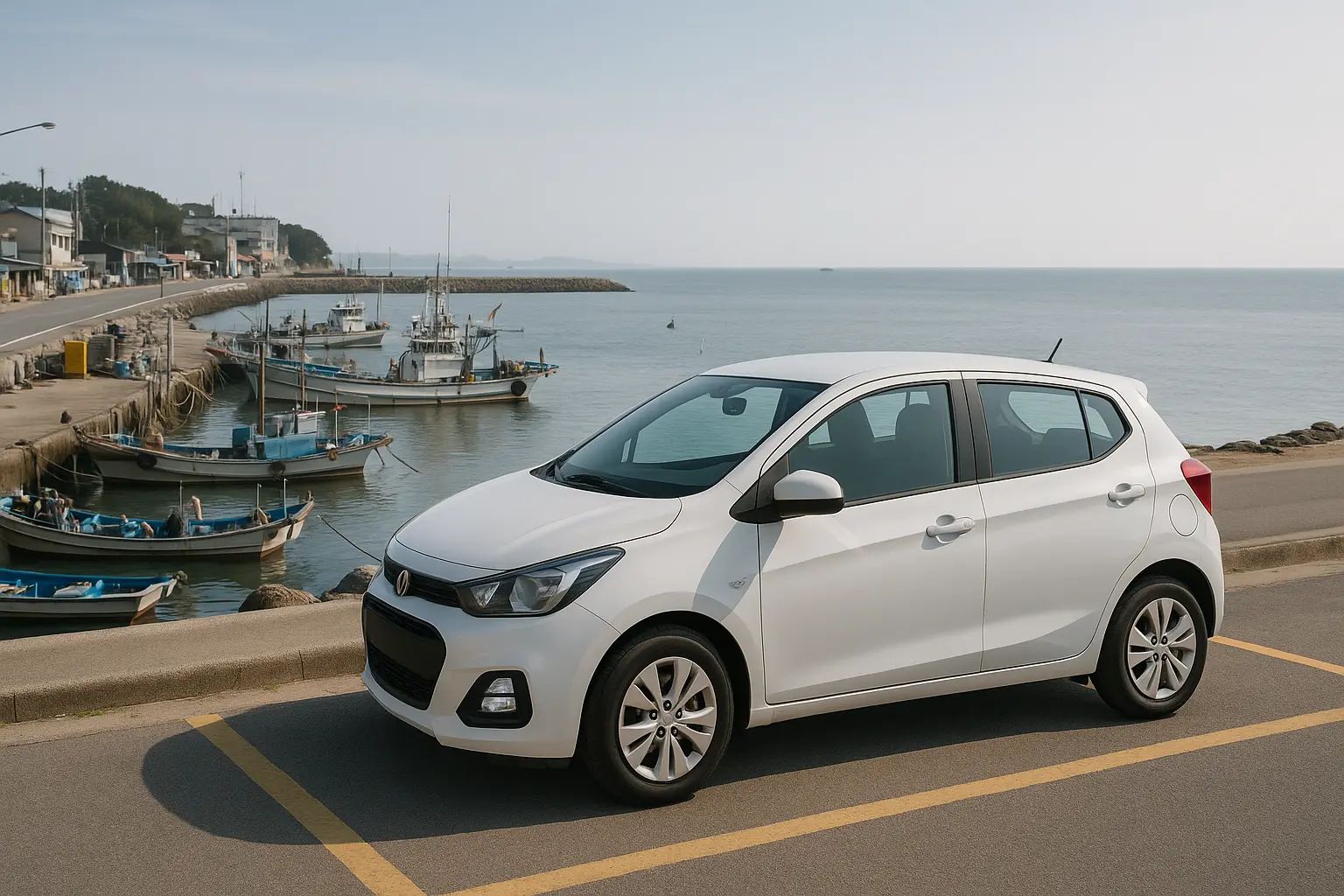
Choose one experience village and at most two nearby stops. Enter the Korean place name in Naver Map or Kakao Map, which usually handles rural entrances more accurately than an English pin. Avoid alcohol if driving, use marked parking only, and expect slow bridge traffic on sunny weekends. An International Driving Permit is generally required alongside your home license and passport for visitors renting in Korea; verify the exact documents with your rental company before payment.
For a no-car trip, Masian is the least difficult area to reach by taxi from the airport zone. For Daebudo, Seonjaedo, Yeongheungdo, and Jebudo, a rental car or organized tour is normally far more practical than chaining local buses.
Best timing: Spring through autumn offers the broadest choice of programs. In midsummer, choose an early session, protect against heat, and never leave children or wet gear in a parked car.
Final Check Before You Leave Seoul

The winning plan is simple: village confirmation first, tide-aware arrival second, sightseeing third. Check the official village notice again the evening before and on the morning of your trip. Ask whether weather, red tide, conservation closures, or harvest conditions have changed the program.
Information and example programs were verified in August 2026 against Korea Tourism Organization, Incheon Tourism Organization, Ansan City, and official fishing-village pages. Tide windows, prices, phone numbers, harvest limits, and opening dates can change without notice; the operating village’s same-day instruction always takes priority.
Photo credits
- Visitors carrying orange baskets across a bright, expansive tidal flat — 문화재청, Wikimedia Commons, KOGL Type 1; resized and converted to WebP.
